
Pamono Workshop of Jan Brueghel the Younger, Noli Me Tangere, 1650, Oil on Canvas
$138.89
Jan Brueghel the Younger (Antwerp 1601–1678) workshop ofNoli me tangereOil on canvas (97 x 128 cm – Framed 114 x 143 c…
Noli me tangere
Oil on canvas (97 x 128 cm – Framed 114 x 143 cm)
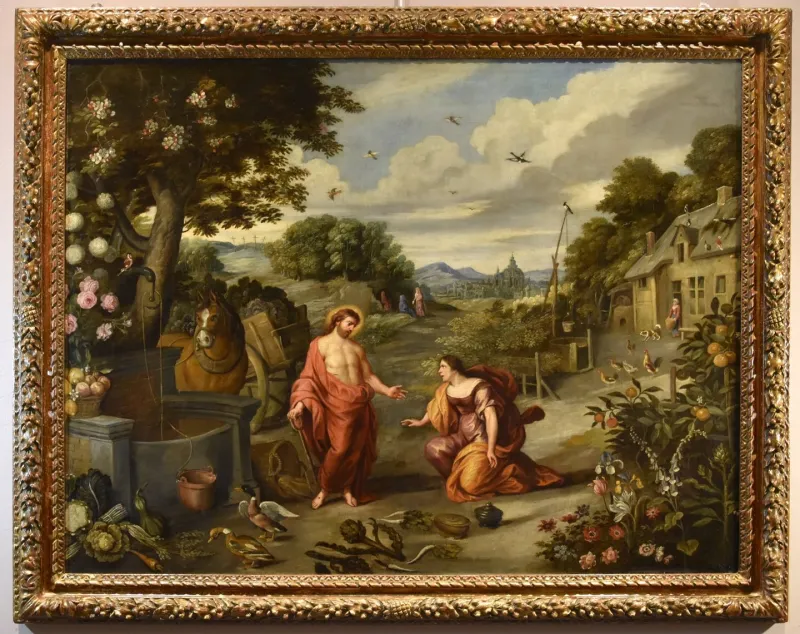
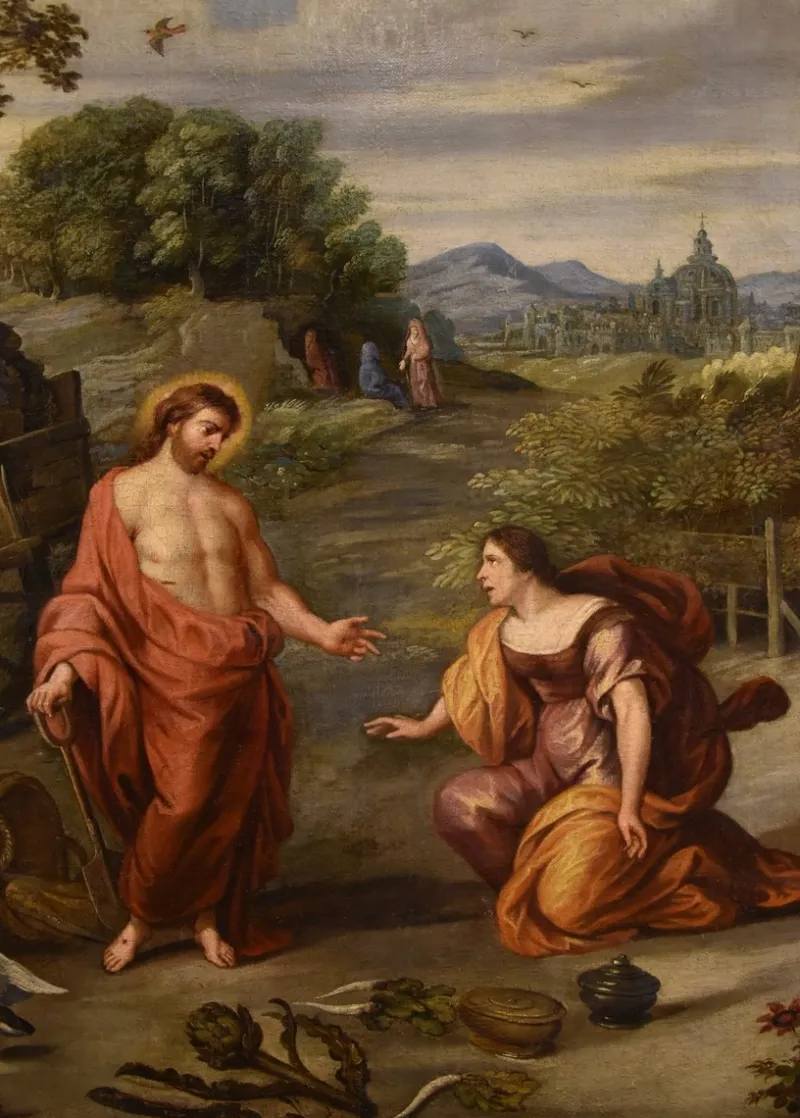
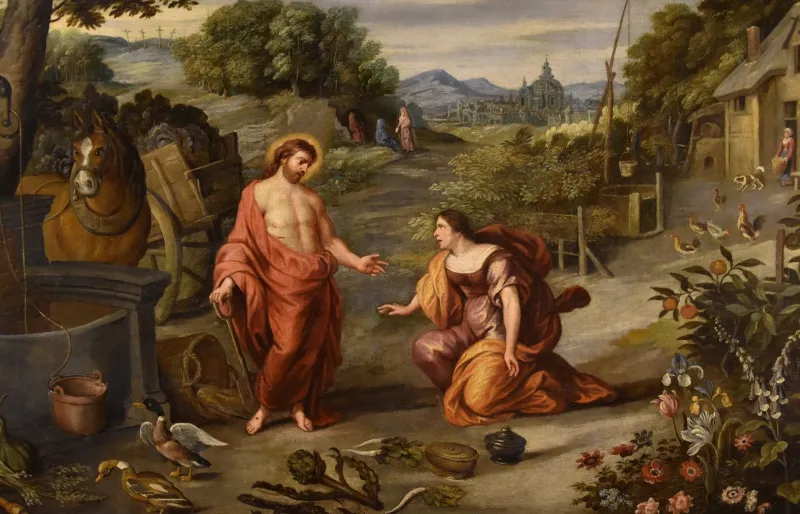
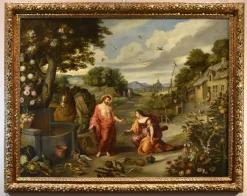
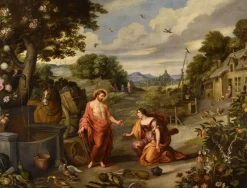
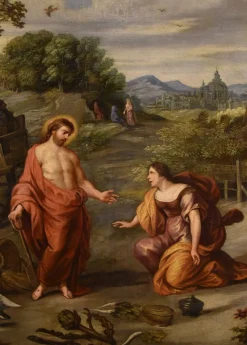
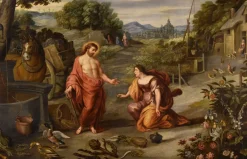
This is a fascinating work, both for the immortalized subject matter, featuring Christ and Mary Magdalene, and for the pictorial execution, displaying all the distinctive pictorial characteristics of the Flemish artist Jan Brueghel the Younger (Antwerp 1601–1678). He was the son of one of the most important dynasties of Flemish painters, being the heir of Jan Brueghel the Elder and grandson of Pieter Brueghel the Elder, from whom he inherited the family studio.
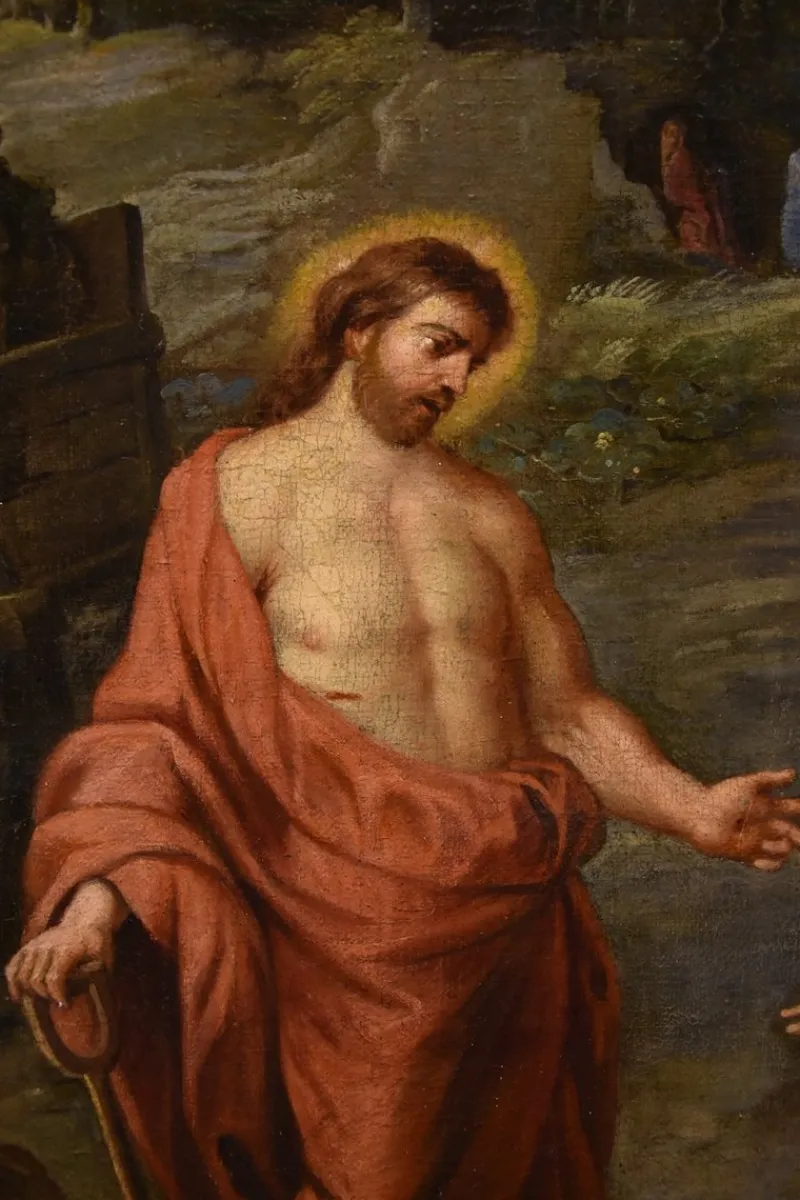
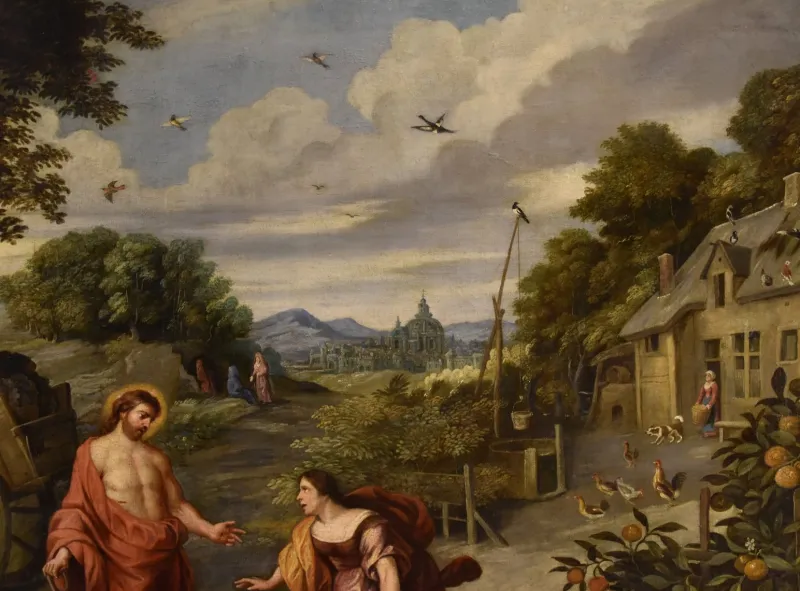
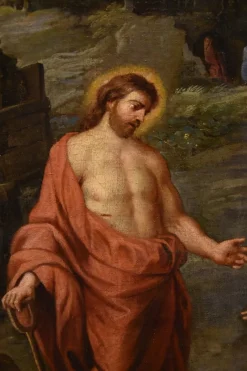
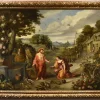
This particular episode, known as “Noli me tangere,” depicts the appearance of the newly resurrected Jesus to Mary Magdalene, who mistakes him for “the gardener.” For this reason, Christ is often depicted holding a spade, precisely to represent the error of Mary Magdalene, who, in the biblical story, does not immediately recognize him.
Once his identity is revealed, Christ utters the famous phrase “Noli me tangere” (Latin for “do not hold me”), commanding Mary Magdalene to let him go and to inform the disciples of his resurrection.
This is a theme dear to 17th-century iconography and was repeatedly explored by Jan Brueghel the Younger or his workshop, with variations and often in collaboration with other painters who painted the figures, from the early versions with Hendrick van Balen and Jan Van Kesse, to the collaboration with artists from the workshop of Pierre Paul Rubens.
For comparison, we can mention Jan Brueghel the Younger’s “Noli Me Tangere” (Noli Me Tangere) from the Musée des Beaux-Arts in Nancy (fig. 1), Jan Bruegel the Younger’s “Noli Me Tangere” (Noli Me Tangere) from the Kunsthalle in Bremen (fig. 2) by Jan Bruegel the Younger with Peter Paul Rubens, or the painting of the same subject attributed to Jan Bruegel the Younger and Victor Wolfvoet, now in Schloss Ahlden (fig. 3).
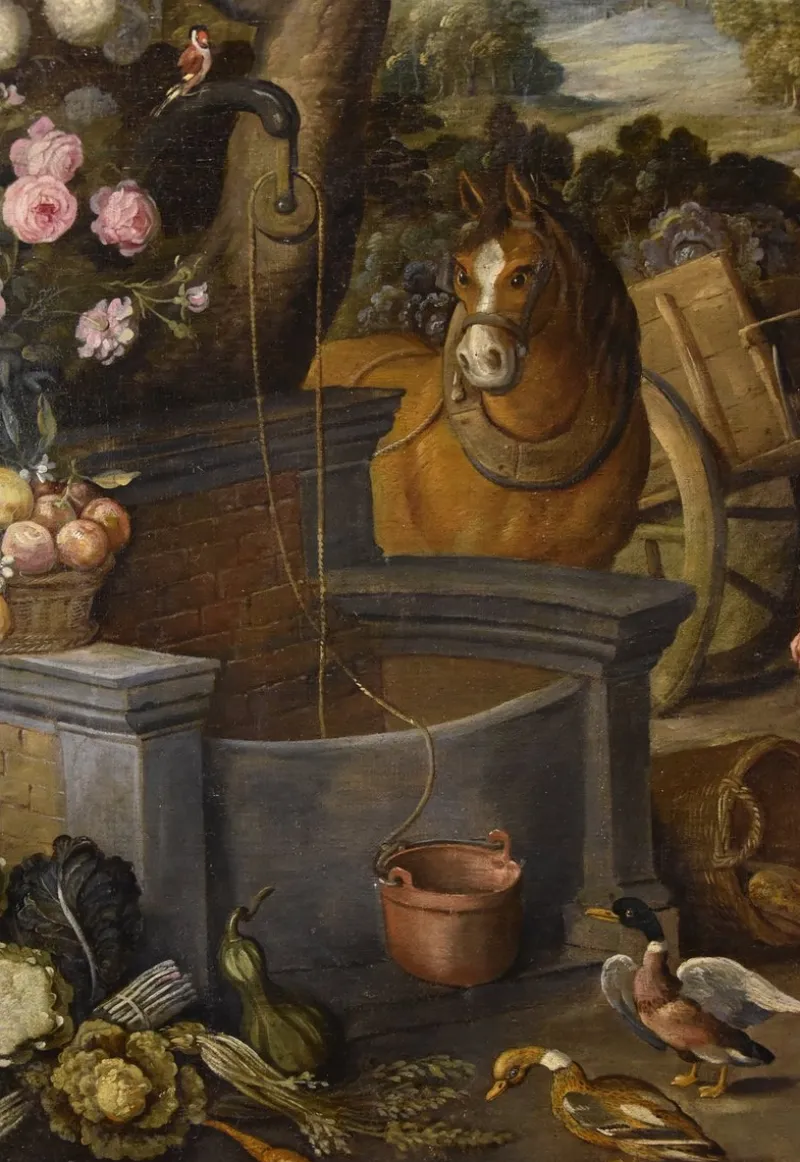
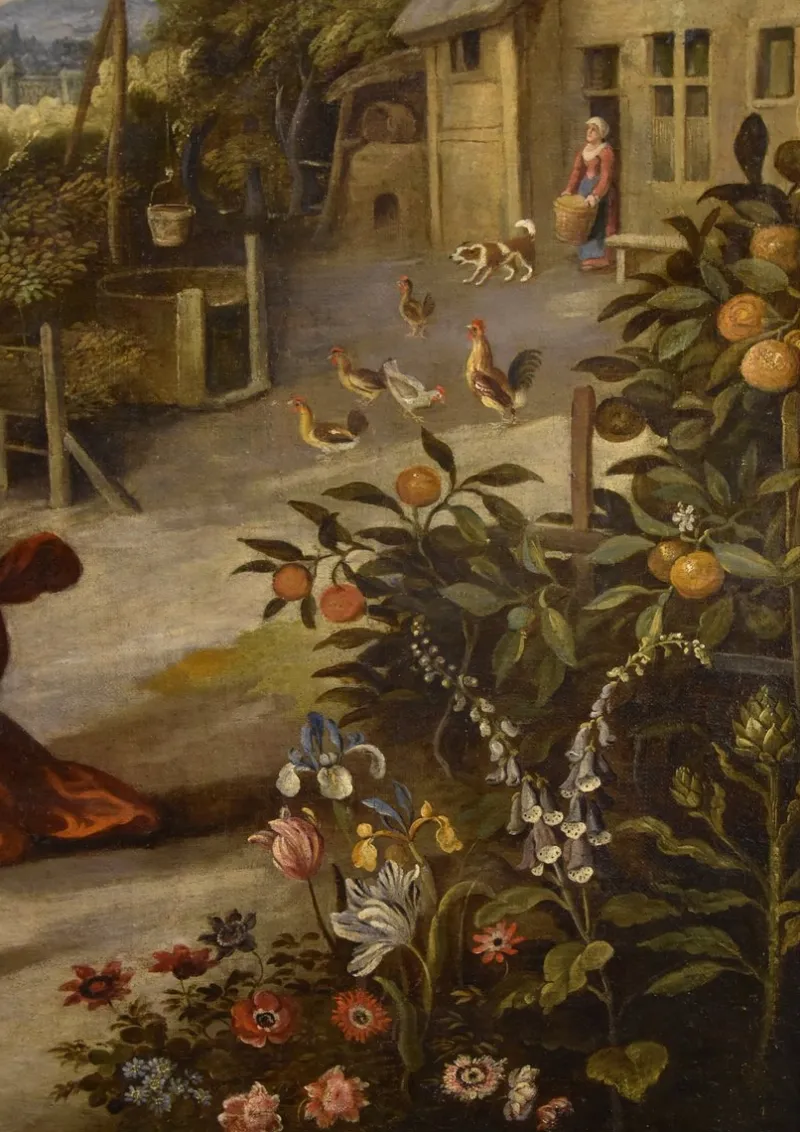
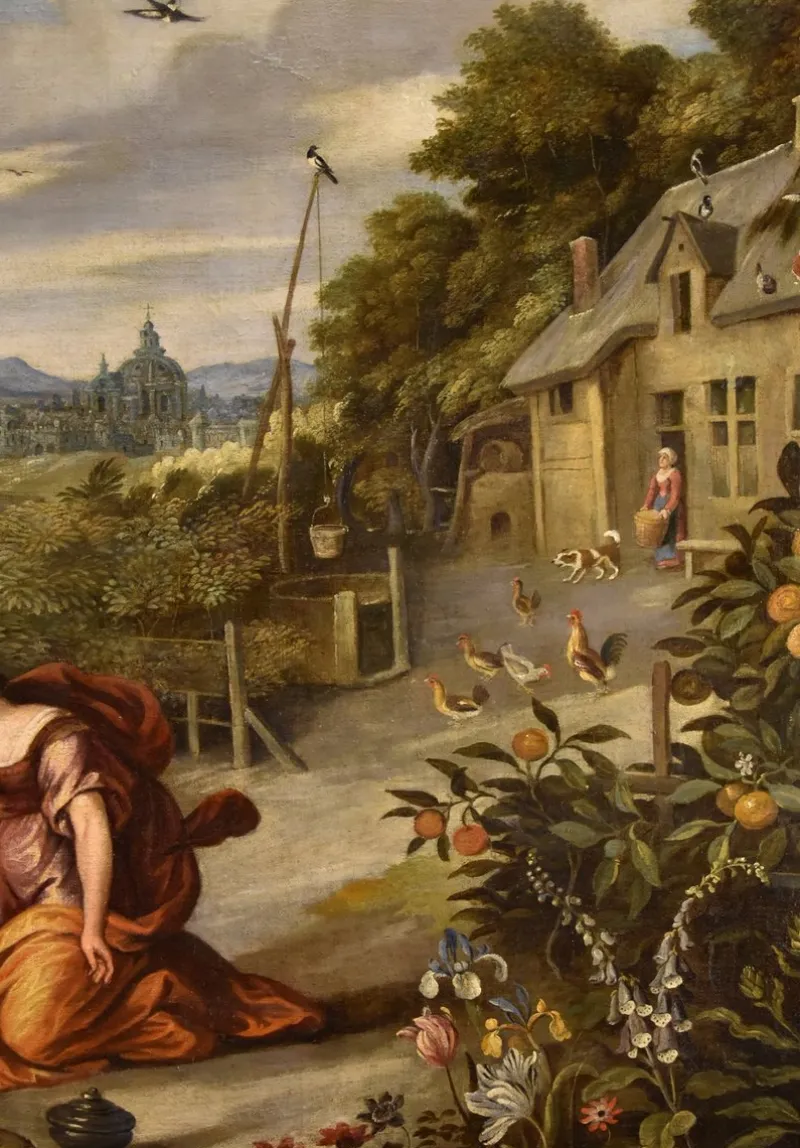
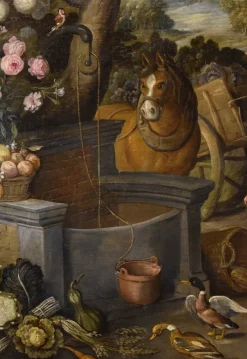
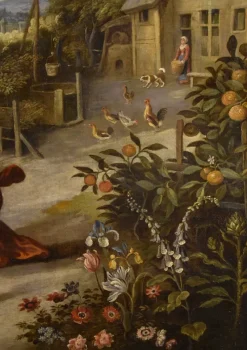
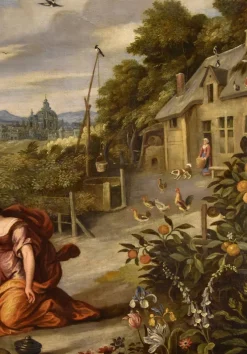
A composition similar to ours in many details—from the tree on the right, with white hydrangeas and pink roses, to the stone fountain, the orange tree, and the two ducks—is Jan Brueghel the Younger’s “Allegory of Love,” exhibited at the Venaria Reale in Turin (fig. 4).
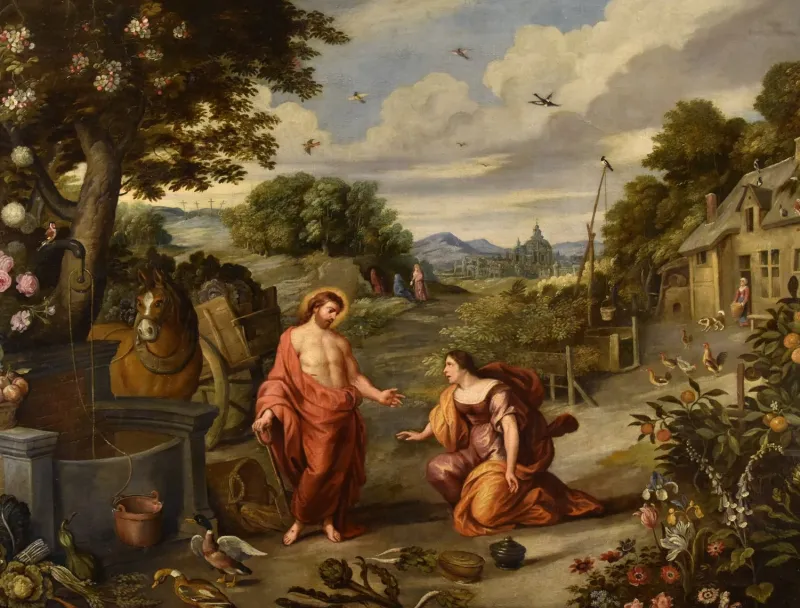
The scene is orchestrated in the typical opulence that has always distinguished the works of the flourishing Brueghel workshop, with the two figures framed by a vast landscape where colorful flowers bloom and trees are laden with ripe fruit, a clear allusion to an earthly paradise.
Every detail is rendered with meticulous fidelity: the birds, the flowering plants, various garden produce scattered across the ground: each element is inserted into a harmonious composition and rendered with meticulousness and delicacy, resulting in a work that is at once rich and extremely refined.
The quality of the rich palette, with its vibrant color accents, deserves praise, enhancing the painting by creating a luminous atmosphere, bathing the scene in a soft, fairytale-like light.
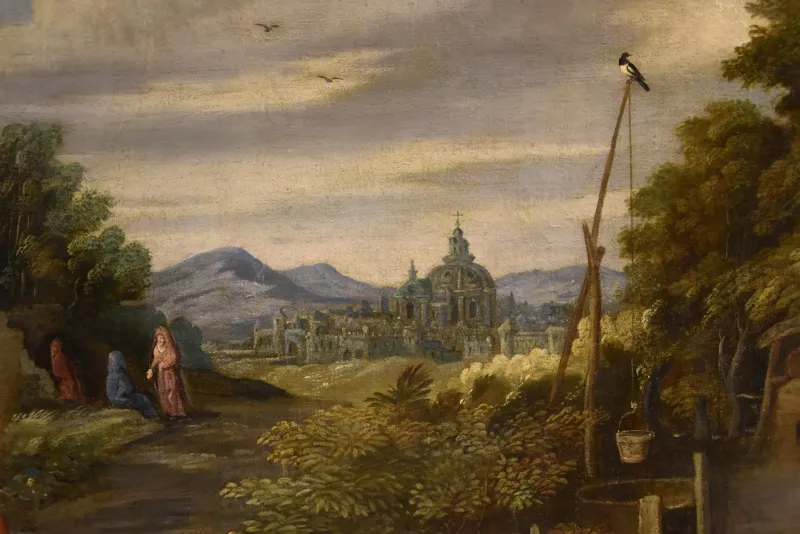
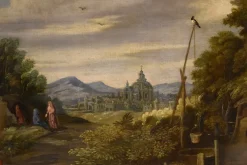
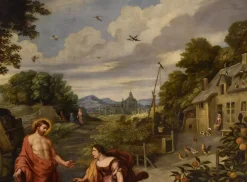
The landscape that opens up in the background is enchanting, featuring a city with fortified walls and a circular building that alludes to the Temple of Jerusalem. In the central section, a hill dotted with trees shelters Christ’s open tomb, carved into the rock, at its feet, with the three Marys having just arrived at the tomb to find it empty.
Finally, a curious detail: on the left, Mount Golgotha with four crosses, one more than usual, following a typical feature of some works by the Brueghel workshop (see Crucifixion, workshop of Pieter Brueghel the Younger, Church of Santa Maria Maddalena, La Spezia). According to some scholars, the fourth cross represents the submission of the Flemish people to Spanish rule during the siege of Ghent, during the Eighty Years’ War (1568-1648).
ADDITIONAL INFORMATION:
The work is sold complete with a beautiful frame and comes with a certificate of authenticity and an iconographic .
The seller assumes all responsibility for this listing.
About This Piece
Noli me tangere
Oil on canvas (97 x 128 cm – Framed 114 x 143 cm)
This is a fascinating work, both for the immortalized subject matter, featuring Christ and Mary Magdalene, and for the pictorial execution, displaying all the distinctive pictorial characteristics of the Flemish artist Jan Brueghel the Younger (Antwerp 1601–1678). He was the son of one of the most important dynasties of Flemish painters, being the heir of Jan Brueghel the Elder and grandson of Pieter Brueghel the Elder, from whom he inherited the family studio.
This particular episode, known as “Noli me tangere,” depicts the appearance of the newly resurrected Jesus to Mary Magdalene, who mistakes him for “the gardener.” For this reason, Christ is often depicted holding a spade, precisely to represent the error of Mary Magdalene, who, in the biblical story, does not immediately recognize him.
Once his identity is revealed, Christ utters the famous phrase “Noli me tangere” (Latin for “do not hold me”), commanding Mary Magdalene to let him go and to inform the disciples of his resurrection.
This is a theme dear to 17th-century iconography and was repeatedly explored by Jan Brueghel the Younger or his workshop, with variations and often in collaboration with other painters who painted the figures, from the early versions with Hendrick van Balen and Jan Van Kesse, to the collaboration with artists from the workshop of Pierre Paul Rubens.
For comparison, we can mention Jan Brueghel the Younger’s “Noli Me Tangere” (Noli Me Tangere) from the Musée des Beaux-Arts in Nancy (fig. 1), Jan Bruegel the Younger’s “Noli Me Tangere” (Noli Me Tangere) from the Kunsthalle in Bremen (fig. 2) by Jan Bruegel the Younger with Peter Paul Rubens, or the painting of the same subject attributed to Jan Bruegel the Younger and Victor Wolfvoet, now in Schloss Ahlden (fig. 3).
A composition similar to ours in many details—from the tree on the right, with white hydrangeas and pink roses, to the stone fountain, the orange tree, and the two ducks—is Jan Brueghel the Younger’s “Allegory of Love,” exhibited at the Venaria Reale in Turin (fig. 4).
The scene is orchestrated in the typical opulence that has always distinguished the works of the flourishing Brueghel workshop, with the two figures framed by a vast landscape where colorful flowers bloom and trees are laden with ripe fruit, a clear allusion to an earthly paradise.
Every detail is rendered with meticulous fidelity: the birds, the flowering plants, various garden produce scattered across the ground: each element is inserted into a harmonious composition and rendered with meticulousness and delicacy, resulting in a work that is at once rich and extremely refined.
The quality of the rich palette, with its vibrant color accents, deserves praise, enhancing the painting by creating a luminous atmosphere, bathing the scene in a soft, fairytale-like light.
The landscape that opens up in the background is enchanting, featuring a city with fortified walls and a circular building that alludes to the Temple of Jerusalem. In the central section, a hill dotted with trees shelters Christ’s open tomb, carved into the rock, at its feet, with the three Marys having just arrived at the tomb to find it empty.
Finally, a curious detail: on the left, Mount Golgotha with four crosses, one more than usual, following a typical feature of some works by the Brueghel workshop (see Crucifixion, workshop of Pieter Brueghel the Younger, Church of Santa Maria Maddalena, La Spezia). According to some scholars, the fourth cross represents the submission of the Flemish people to Spanish rule during the siege of Ghent, during the Eighty Years’ War (1568-1648).
ADDITIONAL INFORMATION:
The work is sold complete with a beautiful frame and comes with a certificate of authenticity and an iconographic .
Click here for full descriptionClose description
| Period | Before 1890 |
|---|---|
| Year | 1650 |
| Production Period | Before 1890 |
| Country of Manufacture | Belgium |
| Identifying Marks | This piece is attributed to the above-mentioned designer/maker. It has no attribution mark |
| Style | Belgian, Classical, Figurative, Italian, Louis XIII, Medieval, Old Masters, Religious, Renaissance, Baroque |
| Detailed Condition | Good — This vintage/antique item may have some wear such as scratches and other signs of ageing. |
| Restoration and Damage Details | Light wear consistent with age and use, Patina consistent with age and use, Reupholstered, Partially restored |
| Product Code | CYT-2275163 |
| Materials | Oil on Canvas |
| Color | Multicolored |
| Width | 143 cm 56.3 inch |
| Depth | 12 cm 4.7 inch |
| Height | 114 cm 44.9 inch |
Be the first to review “Pamono Workshop of Jan Brueghel the Younger, Noli Me Tangere, 1650, Oil on Canvas”
Related products




Dressers, Commodes & Chests




Cabinets & Wardrobes

Cabinets & Wardrobes



Beds & Bedroom Sets




Dining Tables & Sets
New Pamono Vintage Table in Glass and Black Lacquered Metal, 1960s
Login
Reviews
There are no reviews yet.