
Pamono Workshop of Giovanni Francesco Barbieri / Il Guercino, Mary Magdalene, 1650, Oil on Canvas> Old Masters
$132.89
Mary Magdalene in the DesertGiovanni Francesco Barbieri, Il Guercino (Cento, 1591 – Bologna, 1666)Workshop ofOil on canv…
Giovanni Francesco Barbieri, Il Guercino (Cento, 1591 – Bologna, 1666)
Workshop of
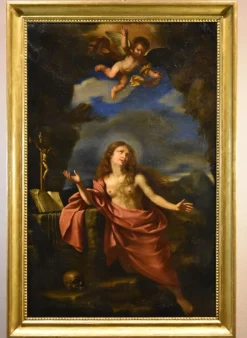
Oil on canvas (122 x 78 cm. – Framed 136 x 92 cm.)
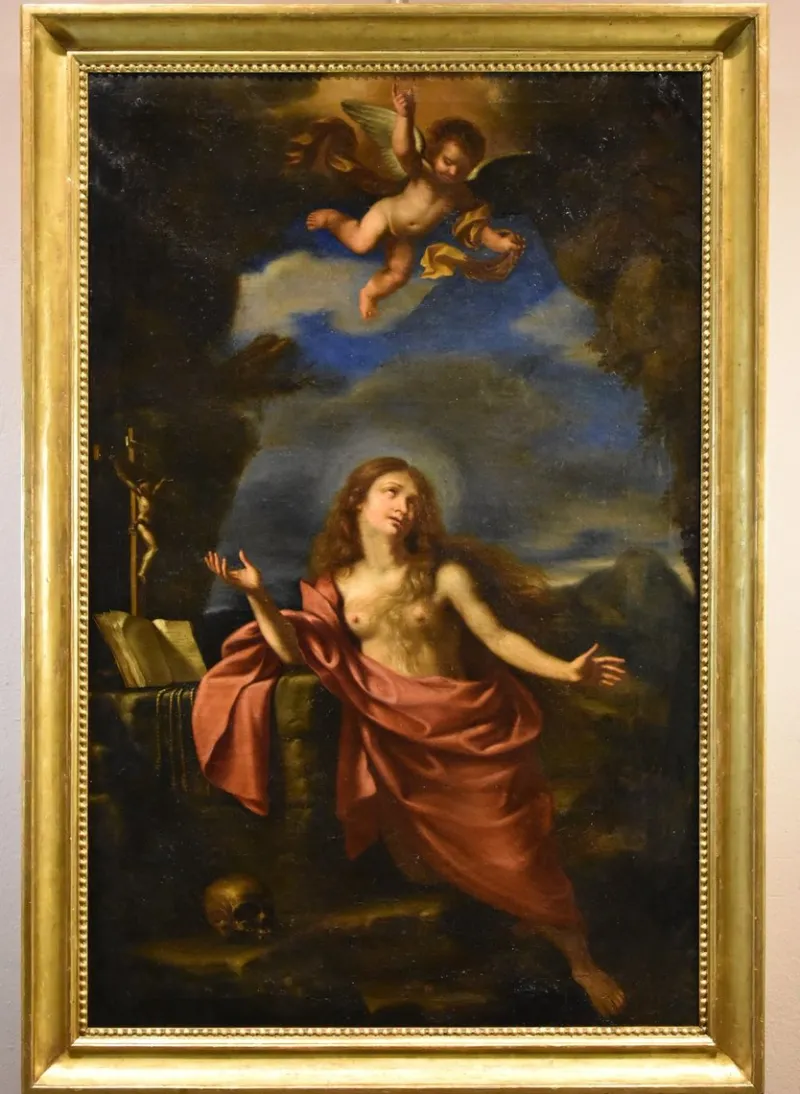
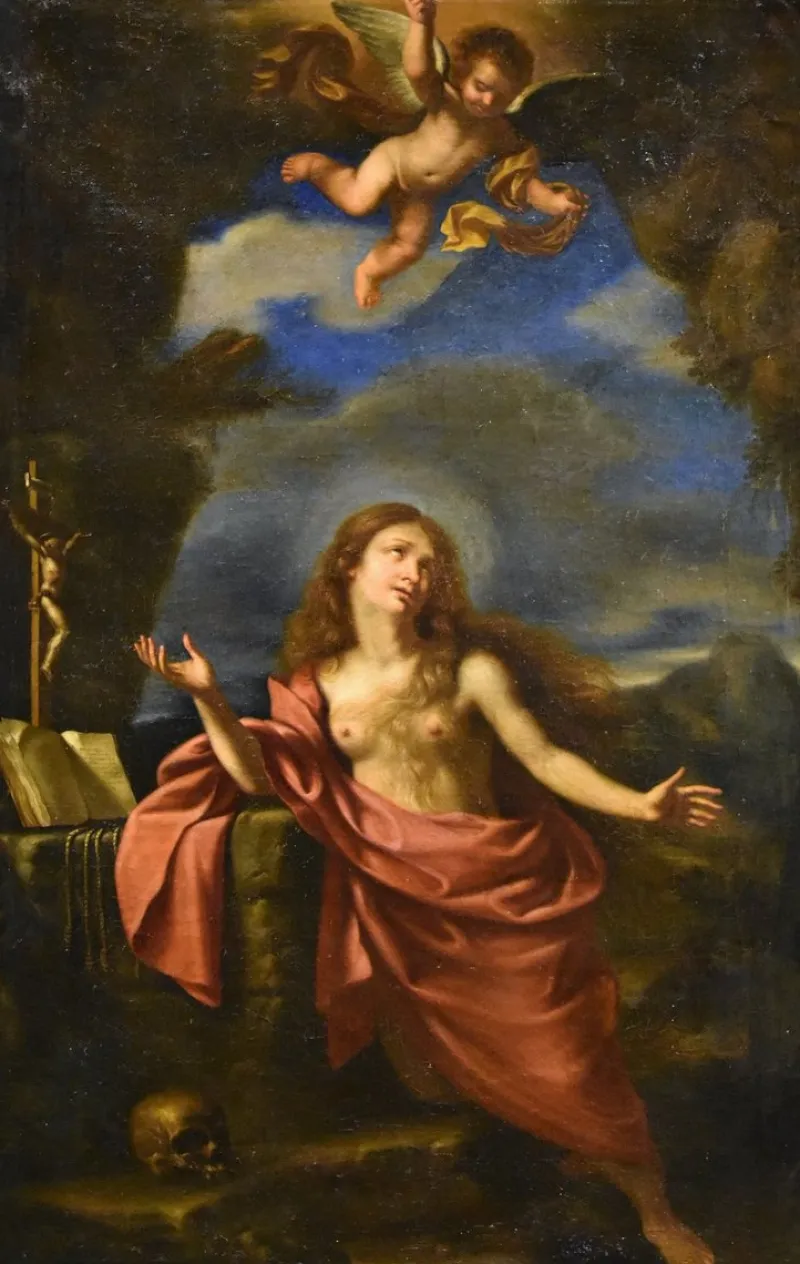
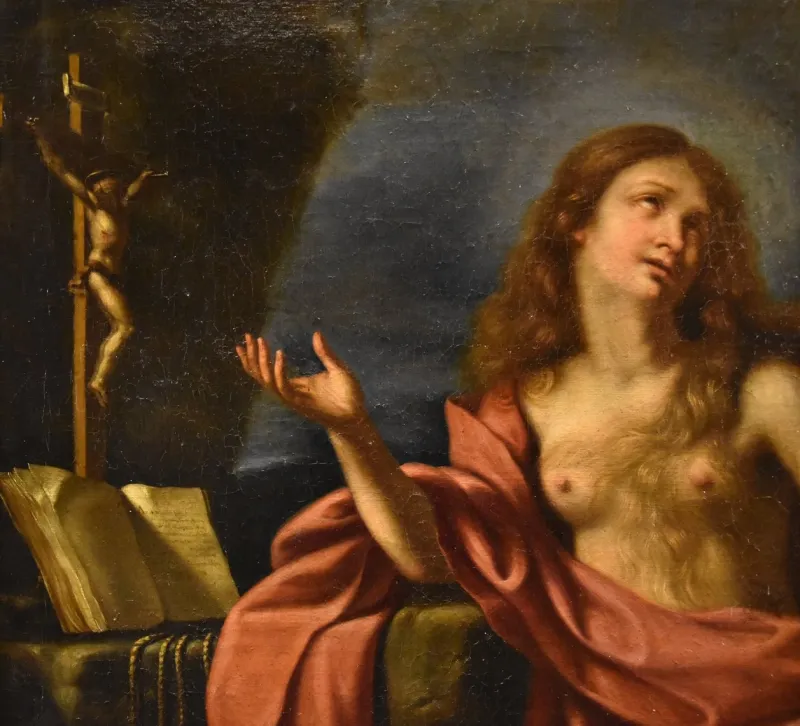
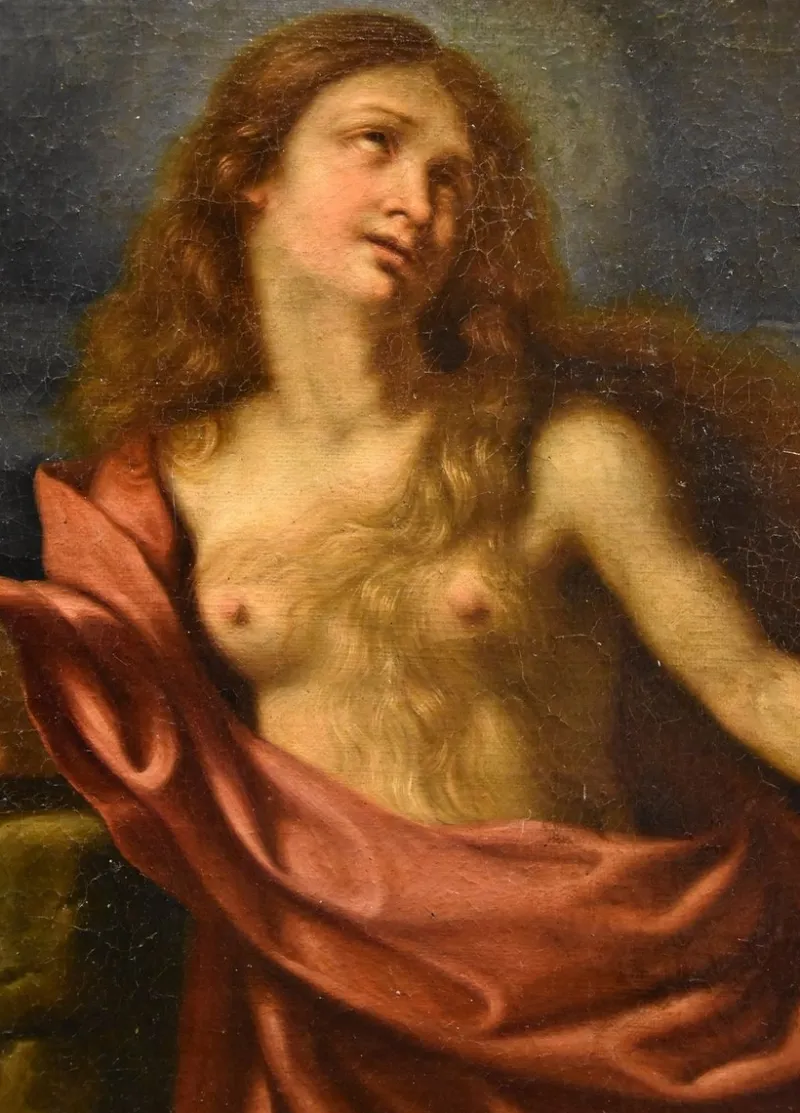
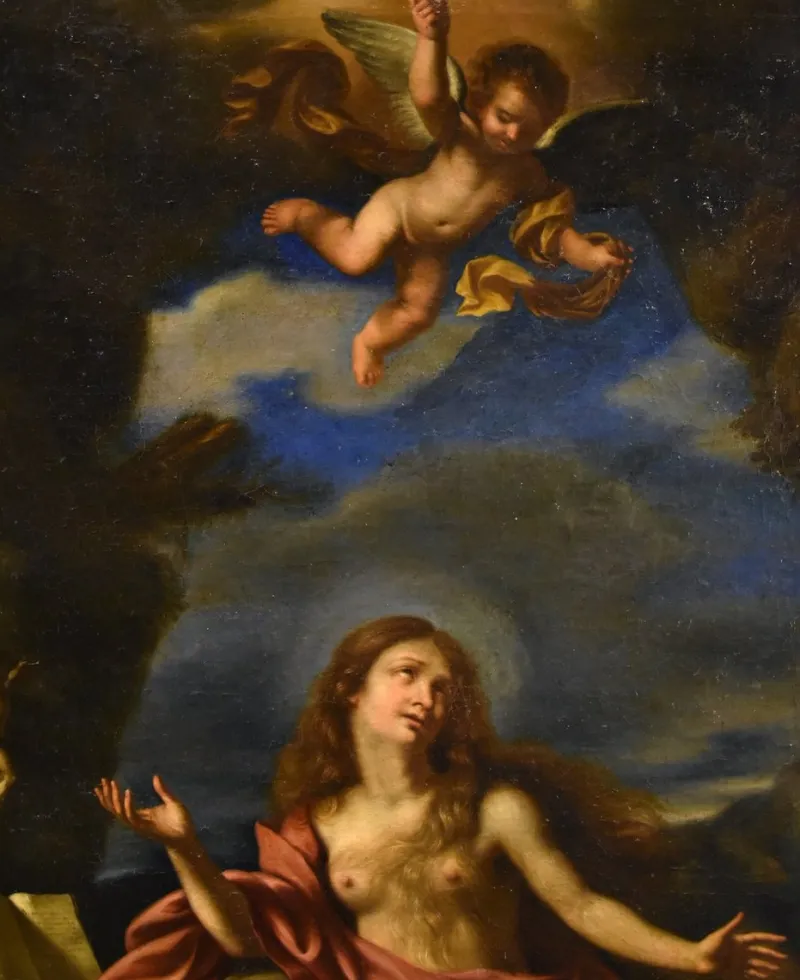
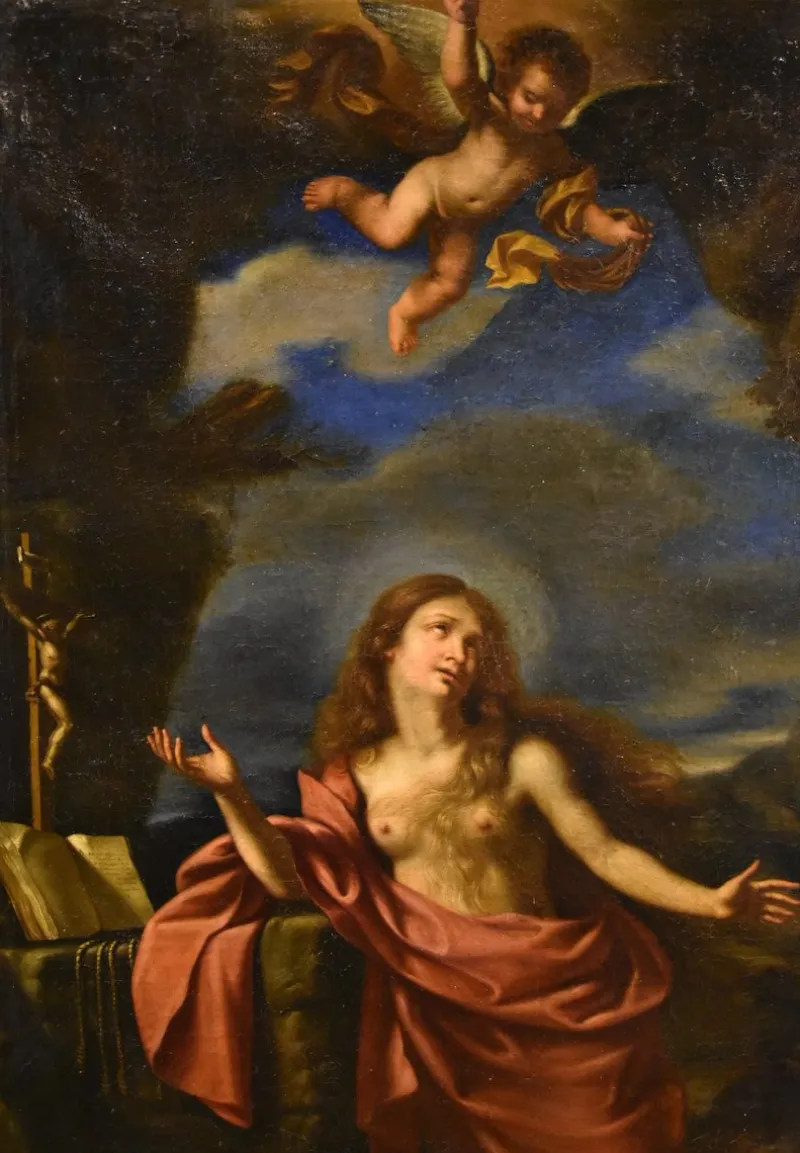
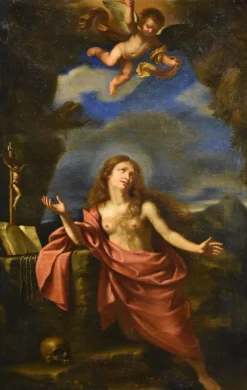
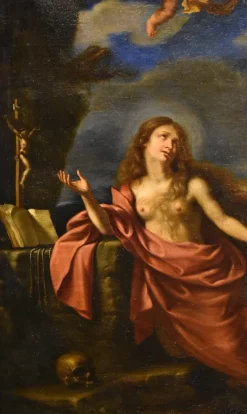
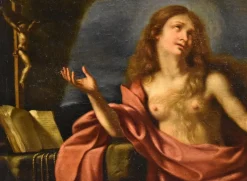
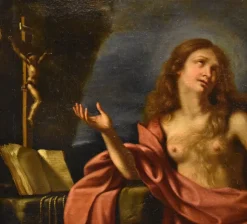
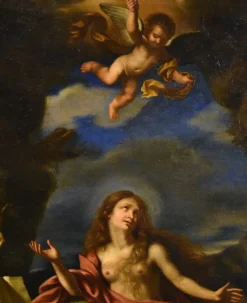
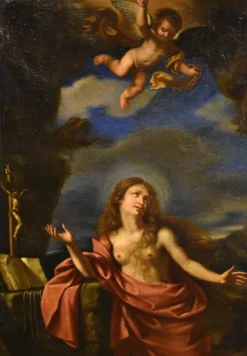
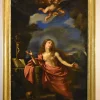
The painting presents a superb image of the penitent Magdalene, portrayed as a comely young girl, mischievously undressed, a reminder of her sinful past, her gaze filled with devotion turned toward the messenger angel arriving from above.
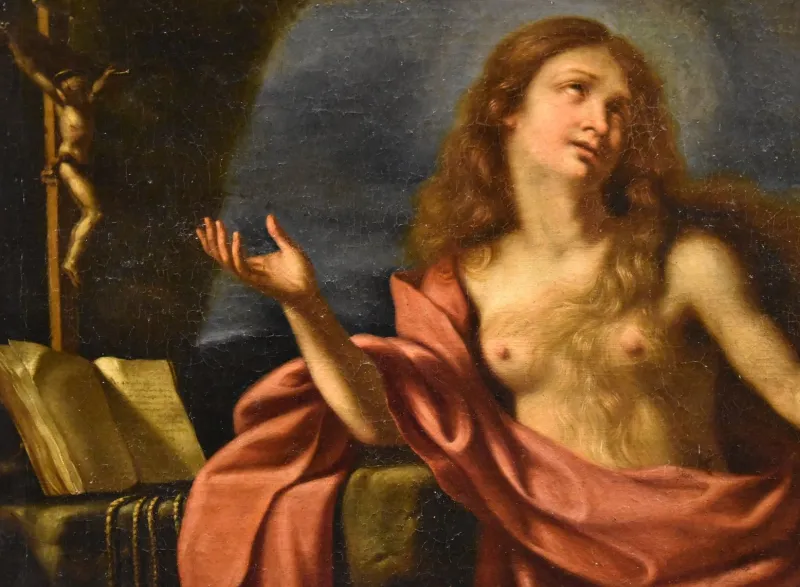
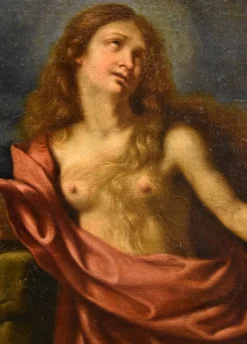
The composition is captivated by her long, loose hair that falls softly over her body, revealing her breasts, a further reminder of the strong femininity of this saint, both sinner and penitent, and thus perpetually portrayed in the ambivalence between the sacred and the profane.
Stylistically, the work, which can still be dated to the first half of the 17th century, clearly shows its belonging to the Emilian school, and the complex Guercino-esque features undoubtedly point to its execution by an artist from his workshop.
The painting’s iconography reinterprets a work by Guercino, “The Vision of Saint Jerome”, painted in 1641 for the Confraternity of Saint Jerome in Rimini: the two works appear similar in their setting, the composition of the scene, the treatment of the protagonists’ bodies, and even the pose, colors, and the inclusion of the angel at the top of the painting.
Returning to our beautiful Magdalene, although Guercino’s original work is untraceable, other versions remain by his talented students and workshop, most notably that of Cesare Gennari (Cento, 1637 – Bologna, 1688), now in the Pinacoteca Civica in Cento (FE), considered one of the finest talents to emerge from the master’s prestigious teachings.
*Gennari Cesare – Penitent Magdalene, oil on canvas, 276 x 171 cm, 1662, no. 0342
Il Guercino Civic Art Gallery, Cento (FE)
Also regarding our canvas, of high quality, although it is difficult to establish a specific name, we can trace its authorship to the great master’s workshop, hypothesizing either Cesare Gennari himself or, alternatively, an artist close to the latter’s style; among these, Giuseppe Maria Ficatelli, from whom he derived his particular sense of light and vigorous naturalism.
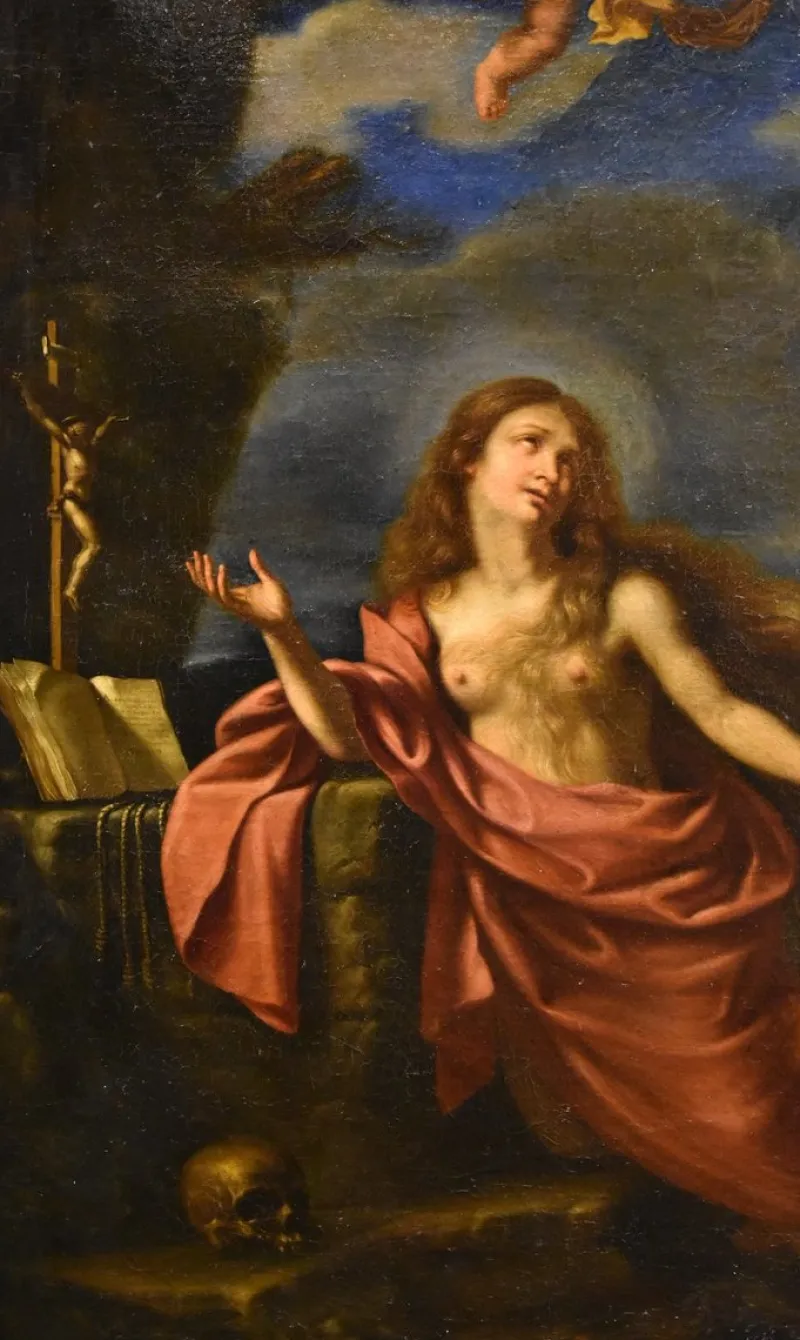
Our painter follows the robust and synthetic naturalism typical of Cesare’s style: his touch is refined yet distinctive in delineating the Magdalene, with her sensual flesh, particularly those breasts, barely visible and barely hidden by her long, curly, golden hair.
The woman embodies a three-dimensional strength that makes her the focal point of the painting, around which everything else revolves, thanks in part to her diagonal pose, which emphasizes its depth.
She leans, kneeling, on a rock altar, on which are placed the crucifix and the open book, as well as the skull at her feet, as a warning against Vanitas.
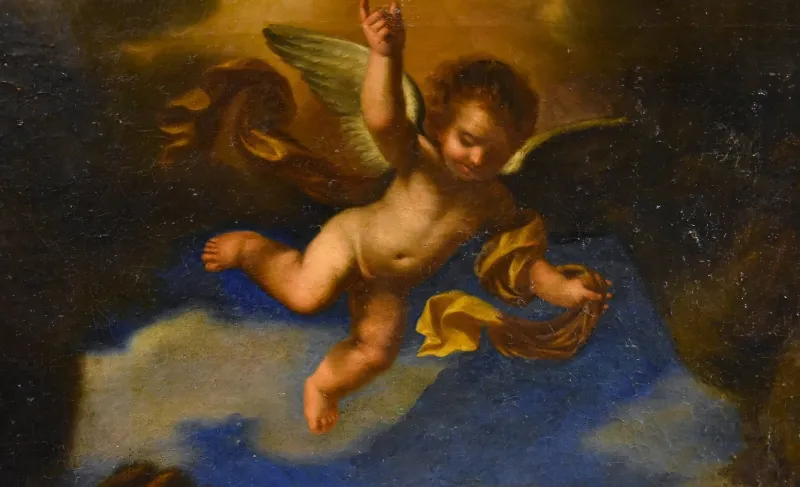
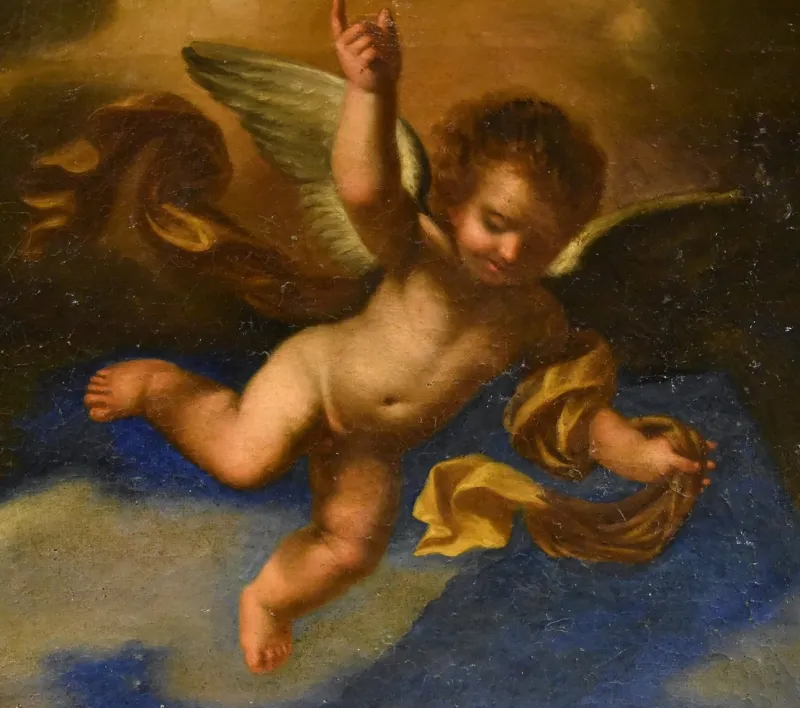
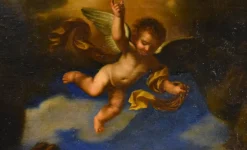
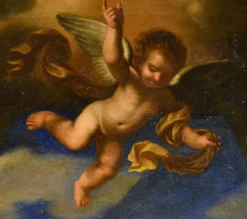
In this dark setting, with its deep colors and functional message of faith, for which the Magdalene is the spokesperson, the only source of light illuminating everything is the angel at the top of the painting, indicating the true source of that glow, which stands out against the magnificent lapis lazuli blue glimpse of the sky.
ADDITIONAL INFORMATION:
Good condition, with some ancient restorations appropriate for the painting’s age, complete with a gilded frame (19th century).
The work is sold complete with a certificate of authenticity and an iconographic .
The seller assumes all responsibility for this listing.
About This Piece
Giovanni Francesco Barbieri, Il Guercino (Cento, 1591 – Bologna, 1666)
Workshop of
Oil on canvas (122 x 78 cm. – Framed 136 x 92 cm.)
The painting presents a superb image of the penitent Magdalene, portrayed as a comely young girl, mischievously undressed, a reminder of her sinful past, her gaze filled with devotion turned toward the messenger angel arriving from above.
The composition is captivated by her long, loose hair that falls softly over her body, revealing her breasts, a further reminder of the strong femininity of this saint, both sinner and penitent, and thus perpetually portrayed in the ambivalence between the sacred and the profane.
Stylistically, the work, which can still be dated to the first half of the 17th century, clearly shows its belonging to the Emilian school, and the complex Guercino-esque features undoubtedly point to its execution by an artist from his workshop.
The painting’s iconography reinterprets a work by Guercino, “The Vision of Saint Jerome”, painted in 1641 for the Confraternity of Saint Jerome in Rimini: the two works appear similar in their setting, the composition of the scene, the treatment of the protagonists’ bodies, and even the pose, colors, and the inclusion of the angel at the top of the painting.
Returning to our beautiful Magdalene, although Guercino’s original work is untraceable, other versions remain by his talented students and workshop, most notably that of Cesare Gennari (Cento, 1637 – Bologna, 1688), now in the Pinacoteca Civica in Cento (FE), considered one of the finest talents to emerge from the master’s prestigious teachings.
*Gennari Cesare – Penitent Magdalene, oil on canvas, 276 x 171 cm, 1662, no. 0342
Il Guercino Civic Art Gallery, Cento (FE)
Also regarding our canvas, of high quality, although it is difficult to establish a specific name, we can trace its authorship to the great master’s workshop, hypothesizing either Cesare Gennari himself or, alternatively, an artist close to the latter’s style; among these, Giuseppe Maria Ficatelli, from whom he derived his particular sense of light and vigorous naturalism.
Our painter follows the robust and synthetic naturalism typical of Cesare’s style: his touch is refined yet distinctive in delineating the Magdalene, with her sensual flesh, particularly those breasts, barely visible and barely hidden by her long, curly, golden hair.
The woman embodies a three-dimensional strength that makes her the focal point of the painting, around which everything else revolves, thanks in part to her diagonal pose, which emphasizes its depth.
She leans, kneeling, on a rock altar, on which are placed the crucifix and the open book, as well as the skull at her feet, as a warning against Vanitas.
In this dark setting, with its deep colors and functional message of faith, for which the Magdalene is the spokesperson, the only source of light illuminating everything is the angel at the top of the painting, indicating the true source of that glow, which stands out against the magnificent lapis lazuli blue glimpse of the sky.
ADDITIONAL INFORMATION:
Good condition, with some ancient restorations appropriate for the painting’s age, complete with a gilded frame (19th century).
The work is sold complete with a certificate of authenticity and an iconographic .
Click here for full descriptionClose description
| Period | Before 1890 |
|---|---|
| Year | 1650 |
| Production Period | Before 1890 |
| Country of Manufacture | Italy |
| Identifying Marks | This piece is attributed to the above-mentioned designer/maker. It has no attribution mark |
| Style | Classical, Figurative, Italian, Louis XIII, Mediterranean, Old Masters, Portraiture, Religious, Baroque |
| Detailed Condition | Good — This vintage/antique item may have some wear such as scratches and other signs of ageing. |
| Restoration and Damage Details | Light wear consistent with age and use, Patina consistent with age and use, Reupholstered, Partially restored |
| Product Code | CYT-2283633 |
| Materials | Oil on Canvas |
| Color | Multicolored |
| Width | 92 cm 36.2 inch |
| Depth | 12 cm 4.7 inch |
| Height | 136 cm 53.5 inch |
Be the first to review “Pamono Workshop of Giovanni Francesco Barbieri / Il Guercino, Mary Magdalene, 1650, Oil on Canvas> Old Masters”
Related products


Daybeds & Chaises Lounges







Children's Chairs

Cabinets & Wardrobes












Login
Reviews
There are no reviews yet.