
Pamono Sculpture Bust of Girl, 1940s, Terracotta> Sculpture
$130.89
Sculpture “Girl Bust” in terracotta, Signed “Made in Italy”, 40’s – ItalyMagnificent terracotta bust made in Italy in th…
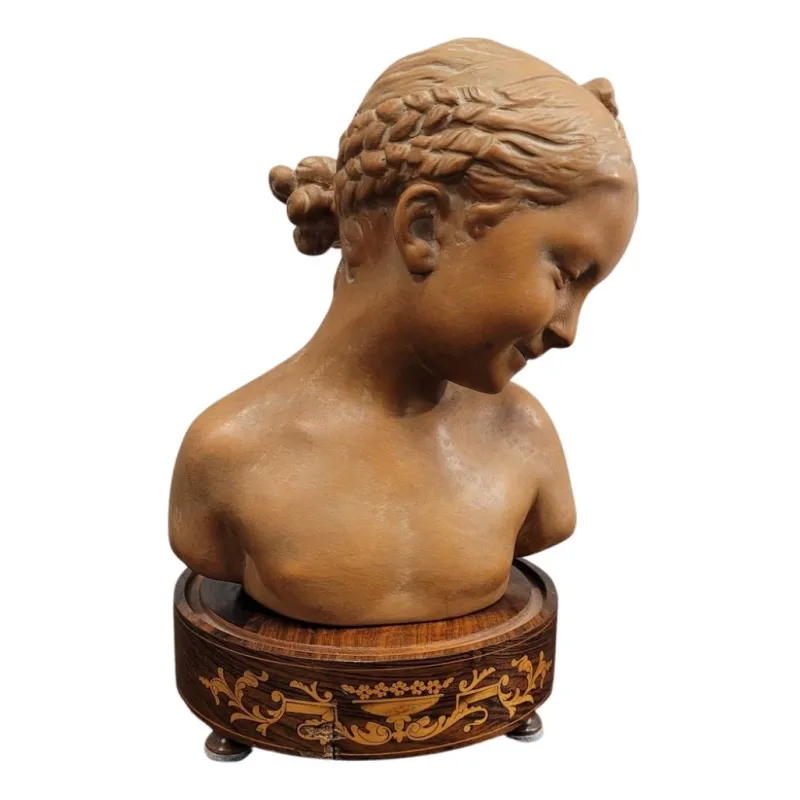
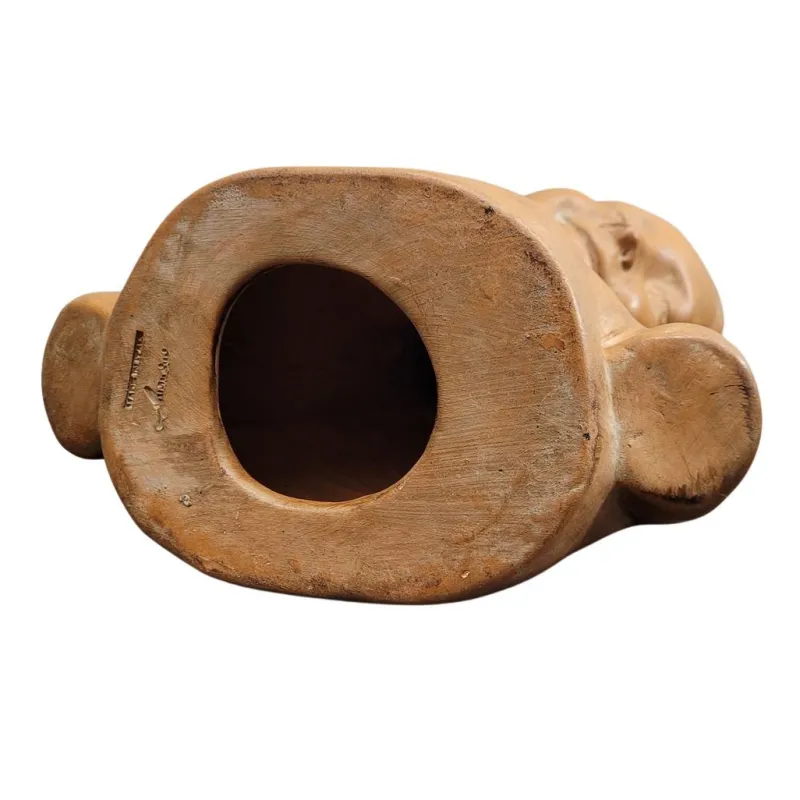
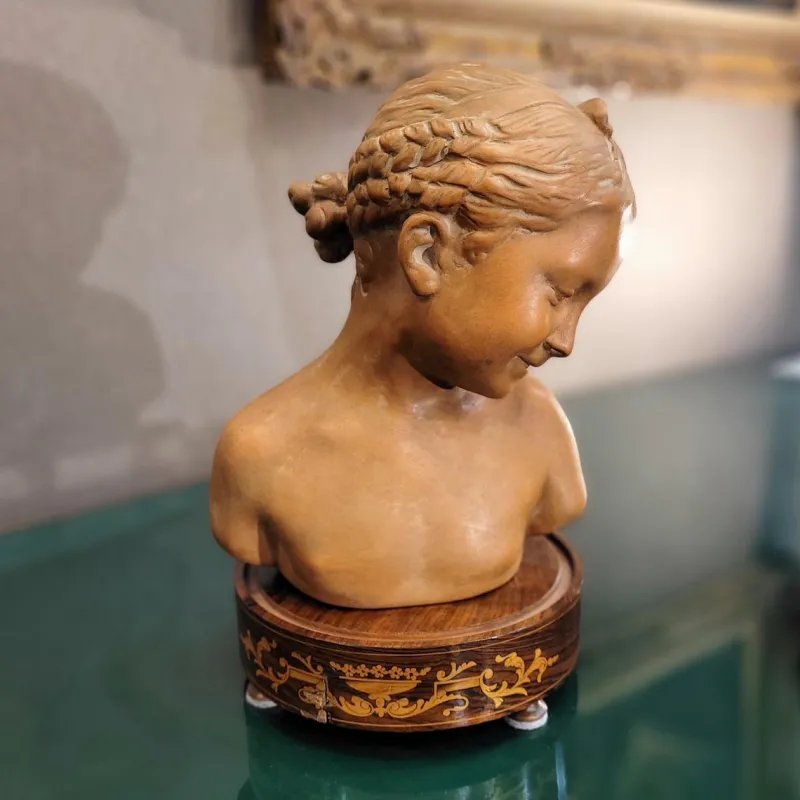
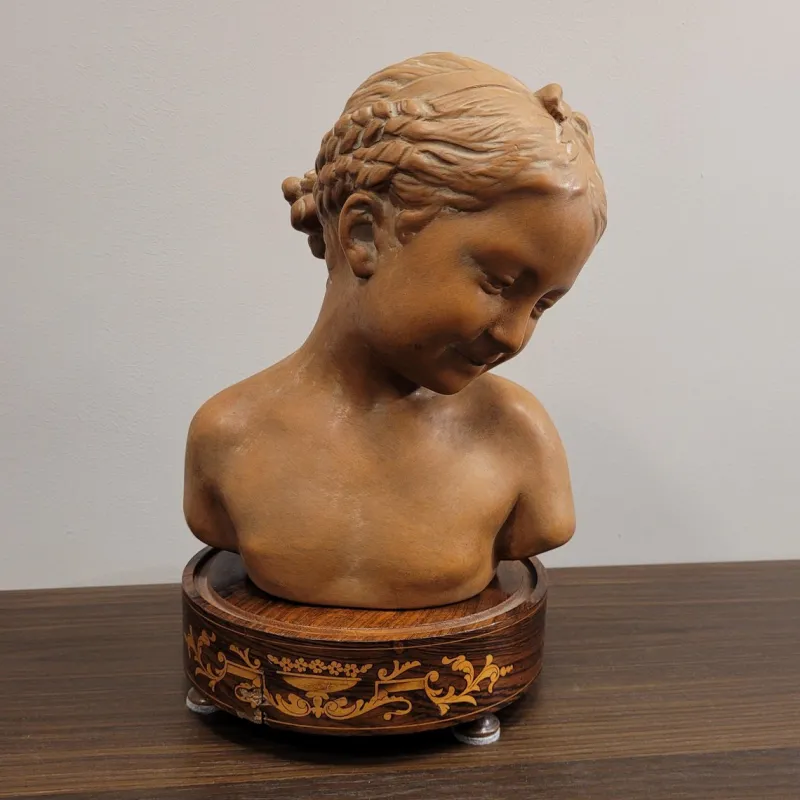
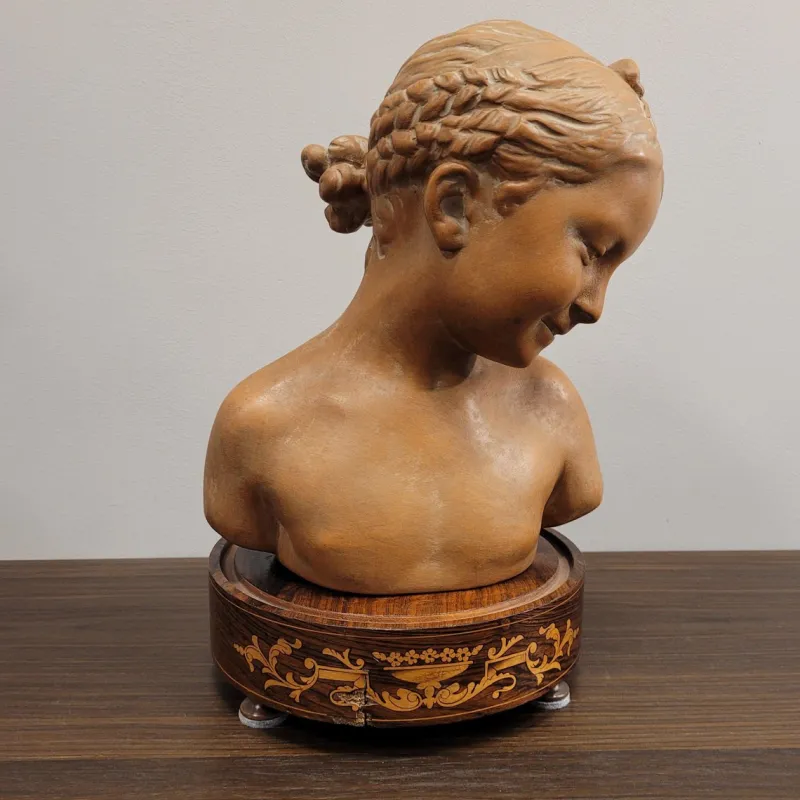
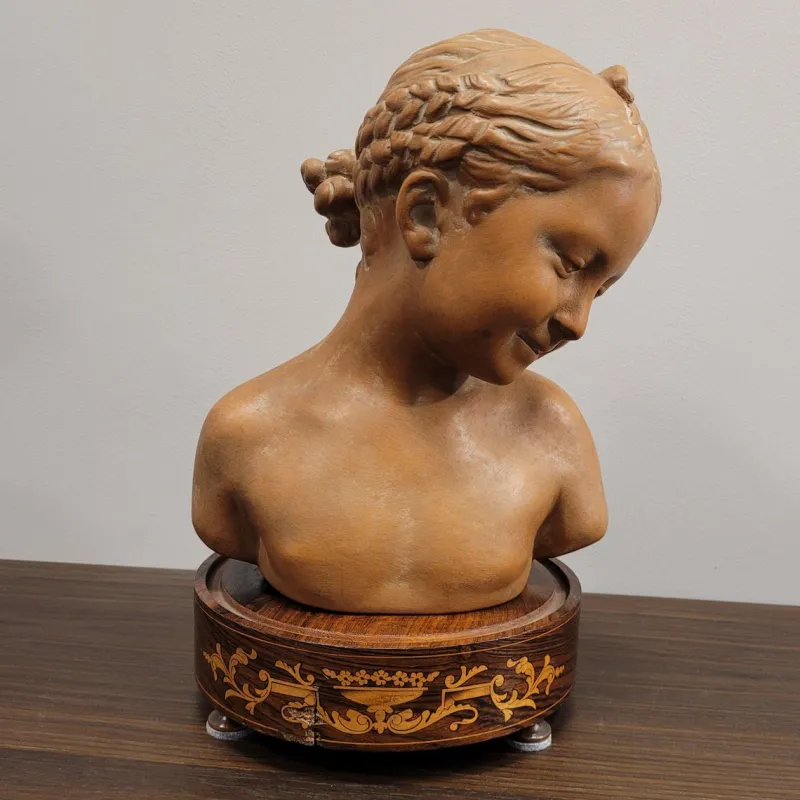
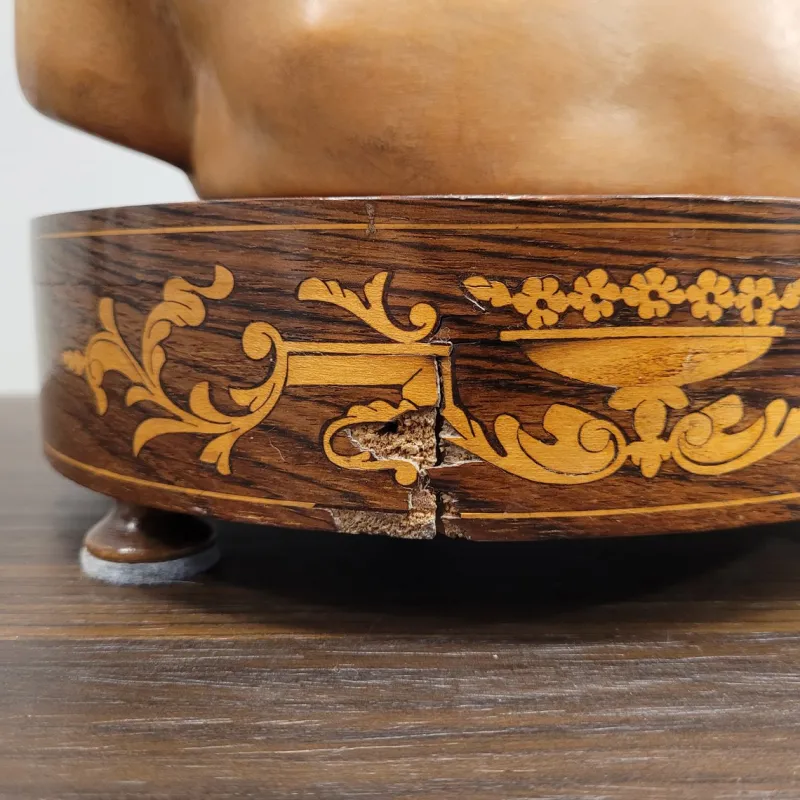
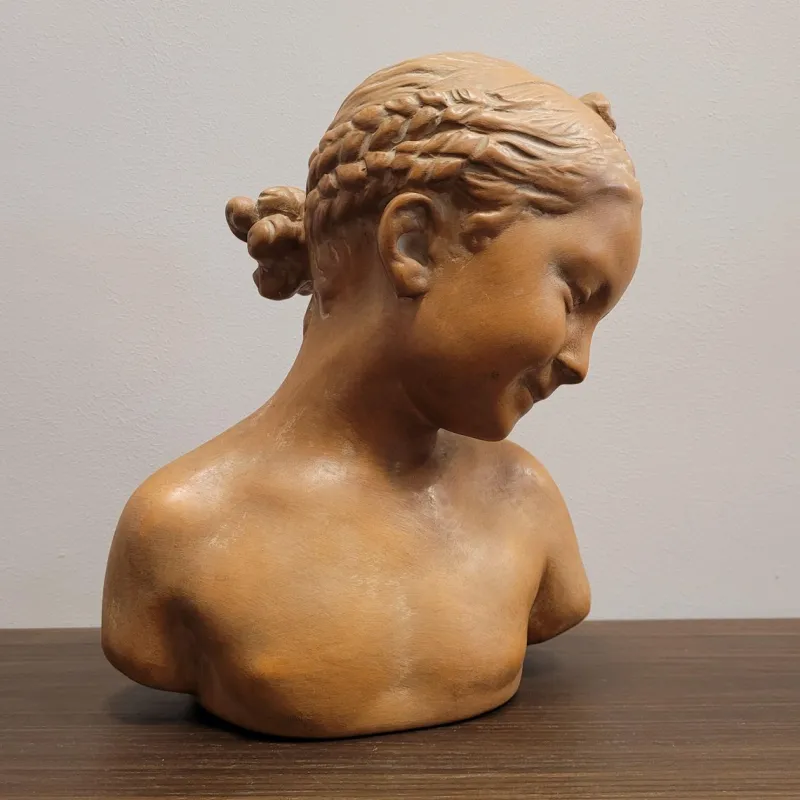
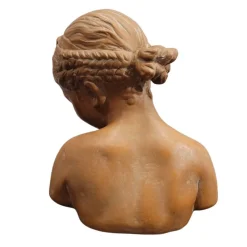
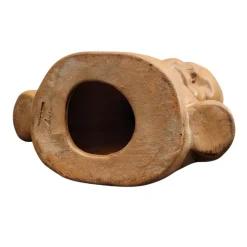
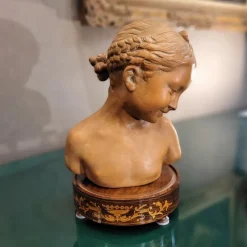
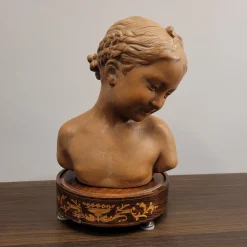
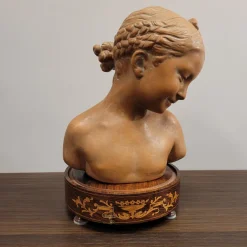
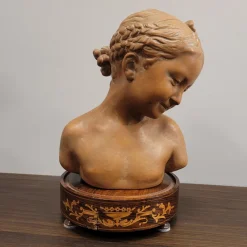
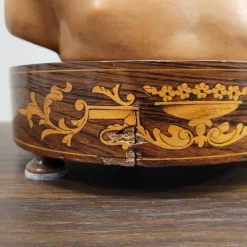
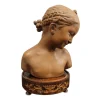
Magnificent terracotta bust made in Italy in the 1940’s. This sculpture is modeled after the “Allegory of Laughter” by Jean Baptiste Pigalle (1714-1785), an important French neoclassical sculptor. It therefore exudes a classicist air directly inspired by Classical Antiquity. At the bottom, stamped “Made in Italy” next to the incised signature of the author. It presents a pedestal with wooden marquetry.
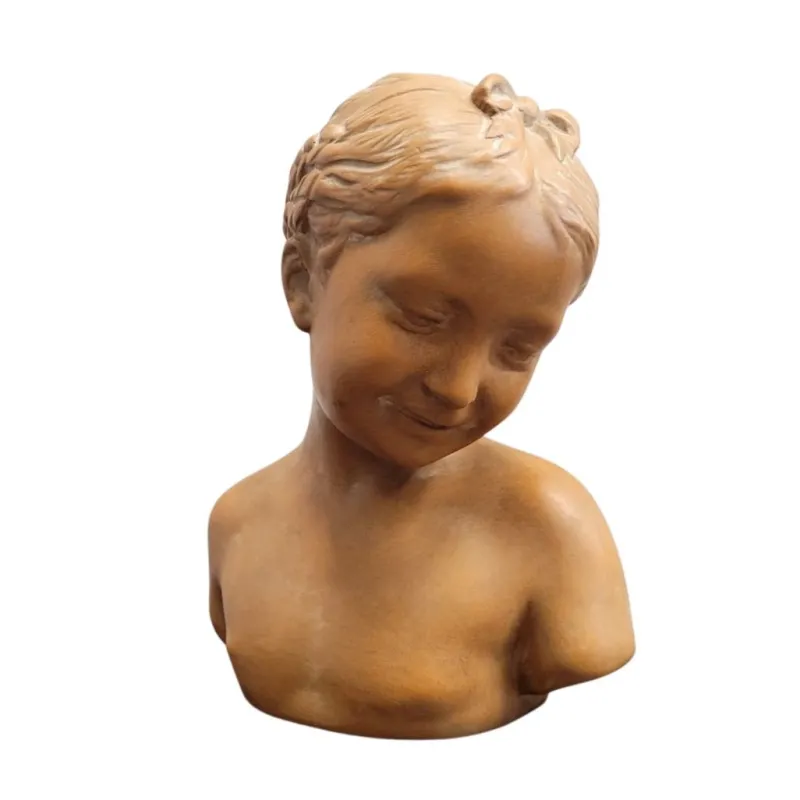
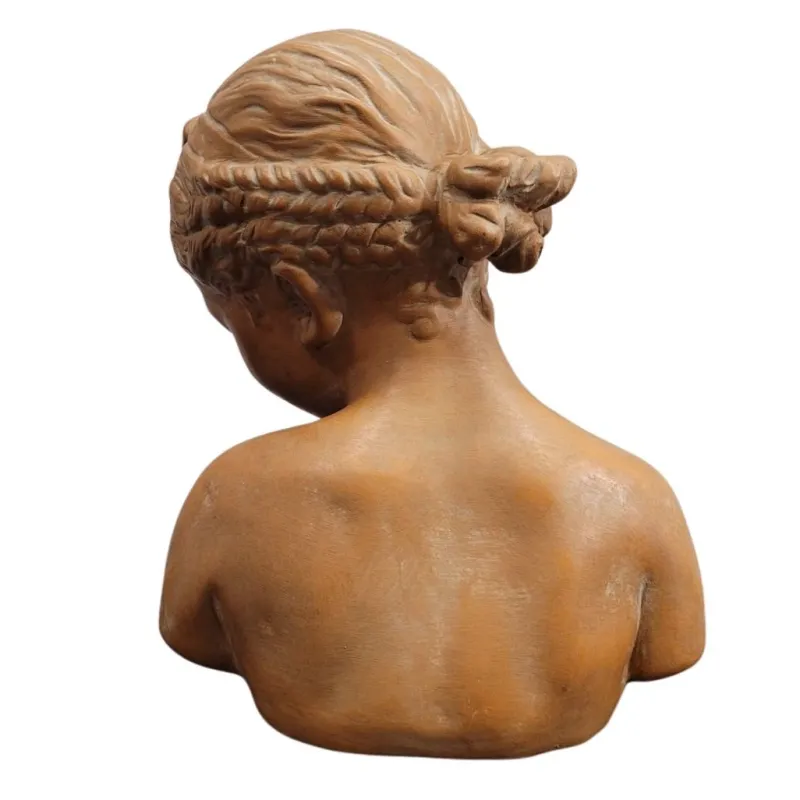
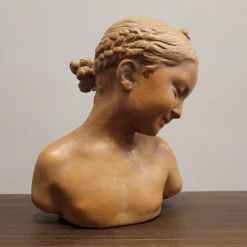
It is a smiling young woman, with sweet and delicate features. with her face turned to one side, the softness of her complexion stands out in contrast with the work of her hair, gathered in braids and topped with a bow. Magnificent expression and precision of the piece, elegance and serenity are imposed, that is to say, moderation in expressions and feelings.
On the back it can be observed that the piece is hollow, one of the distinctive characteristics of the working process in this type of material: terracotta or fired clay.
On the other hand, it should be noted that one of the most important aspects of neoclassical sculpture is its subject matter. Mainly the stories of mythology were taken, although they are also inspired by the prevailing arguments during Antiquity as the civic and moral virtues embodied by allegories, as in this case, the innocence and laughter embodied by a girl.
Brief biographical summary of Pigalle
Jean-Baptiste Pigalle (1714-1785 was an important French sculptor. He was apprenticed to the sculptor Robert Le Lorrain and also studied with Jean Baptiste Lemoyne, sculptor appointed by Louis XV). He studied in Rome from 1736 to 1739. His most famous work is the classic statue of “Mercury tying his wings” (1744). In 1744 he became a member of the Académie Royale. In 1752 Pigalle was appointed professor at this Académie. He enjoyed the protection of Madame de Pompadour from 1750 to 1758 and made the allegorical figure group “Love and Friendship” for her in 1758. He gained popularity with smaller studies of children in the Rococo style, such as “Boy with Birdcage” (1750). Pigalle was a talented portrait sculptor, as is evident in his “Nude Voltaire” (1776) and his bust of Diderot (1777). His tomb of the Duke of Harcourt (1769-1776) and the tomb of the Count of Saxe (1753-1776) are fine examples of French sculpture.
Material: Terracotta
Period: 1940s
Country of origin: Italy
Good condition according to its age and use.
Sculpture dimensions: 30 x 23 x 21 cm.
Stand dimensions: 6 x 24 x 24 cm
The seller assumes all responsibility for this listing.
About This Piece
Magnificent terracotta bust made in Italy in the 1940’s. This sculpture is modeled after the “Allegory of Laughter” by Jean Baptiste Pigalle (1714-1785), an important French neoclassical sculptor. It therefore exudes a classicist air directly inspired by Classical Antiquity. At the bottom, stamped “Made in Italy” next to the incised signature of the author. It presents a pedestal with wooden marquetry.
It is a smiling young woman, with sweet and delicate features. with her face turned to one side, the softness of her complexion stands out in contrast with the work of her hair, gathered in braids and topped with a bow. Magnificent expression and precision of the piece, elegance and serenity are imposed, that is to say, moderation in expressions and feelings.
On the back it can be observed that the piece is hollow, one of the distinctive characteristics of the working process in this type of material: terracotta or fired clay.
On the other hand, it should be noted that one of the most important aspects of neoclassical sculpture is its subject matter. Mainly the stories of mythology were taken, although they are also inspired by the prevailing arguments during Antiquity as the civic and moral virtues embodied by allegories, as in this case, the innocence and laughter embodied by a girl.
Brief biographical summary of Pigalle
Jean-Baptiste Pigalle (1714-1785 was an important French sculptor. He was apprenticed to the sculptor Robert Le Lorrain and also studied with Jean Baptiste Lemoyne, sculptor appointed by Louis XV). He studied in Rome from 1736 to 1739. His most famous work is the classic statue of “Mercury tying his wings” (1744). In 1744 he became a member of the Académie Royale. In 1752 Pigalle was appointed professor at this Académie. He enjoyed the protection of Madame de Pompadour from 1750 to 1758 and made the allegorical figure group “Love and Friendship” for her in 1758. He gained popularity with smaller studies of children in the Rococo style, such as “Boy with Birdcage” (1750). Pigalle was a talented portrait sculptor, as is evident in his “Nude Voltaire” (1776) and his bust of Diderot (1777). His tomb of the Duke of Harcourt (1769-1776) and the tomb of the Count of Saxe (1753-1776) are fine examples of French sculpture.
Material: Terracotta
Period: 1940s
Country of origin: Italy
Good condition according to its age and use.
Sculpture dimensions: 30 x 23 x 21 cm.
Stand dimensions: 6 x 24 x 24 cm
Click here for full descriptionClose description
| Period | 1920 to 1949 |
|---|---|
| Production Period | Unknown |
| Country of Manufacture | Italy |
| Style | Neo-Classical |
| Detailed Condition | Good — This vintage/antique item may have some wear such as scratches and other signs of ageing. |
| Restoration and Damage Details | Light wear consistent with age and use |
| Product Code | NUC-1905463 |
| Materials | Terracotta |
| Color | Tan |
| Width | 23 cm 9.1 inch |
| Depth | 21 cm 8.3 inch |
| Height | 30 cm 11.8 inch |
Be the first to review “Pamono Sculpture Bust of Girl, 1940s, Terracotta> Sculpture”
Related products

Children's Chairs

Children's Chairs


Daybeds & Chaises Lounges
New Pamono Antique Victorian Oak Chaise Longue in Green Leather with Brass Castors




Dining Tables & Sets
New Pamono Vintage Table in Glass and Black Lacquered Metal, 1960s
Cabinets & Wardrobes
Login
Reviews
There are no reviews yet.