
Pamono Giulio Carpioni, Bacchanal Bacchus Mythological Carpioni Scene, 1660, Oil on Canvas, Framed> Old Masters
$140.89
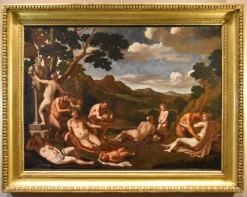
Giulio Carpioni (Venice, 1613 – Vicenza, 1678) attributableBaccanaleOil on canvas (98 x 132 cm. – Framed 120 x 154 cm.)F…
Baccanale
Oil on canvas (98 x 132 cm. – Framed 120 x 154 cm.)
Full details of the work (click HERE)
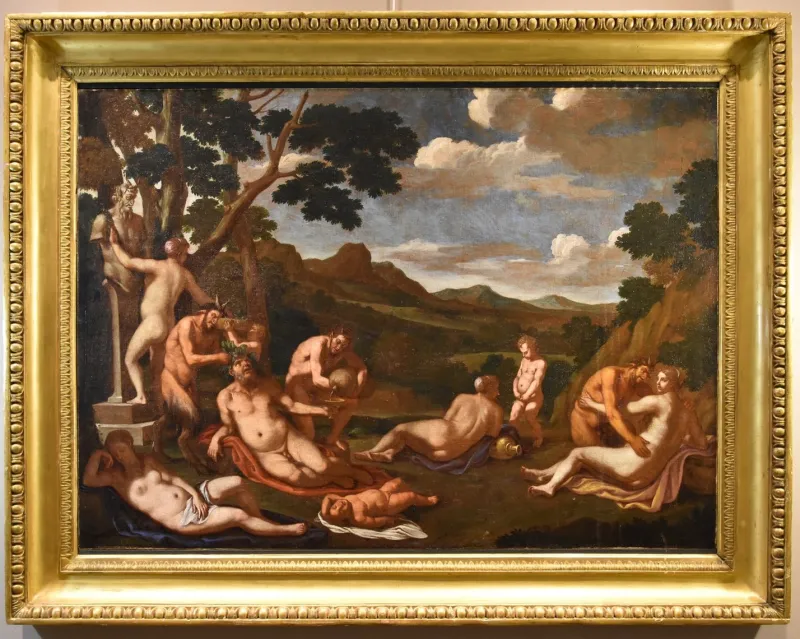
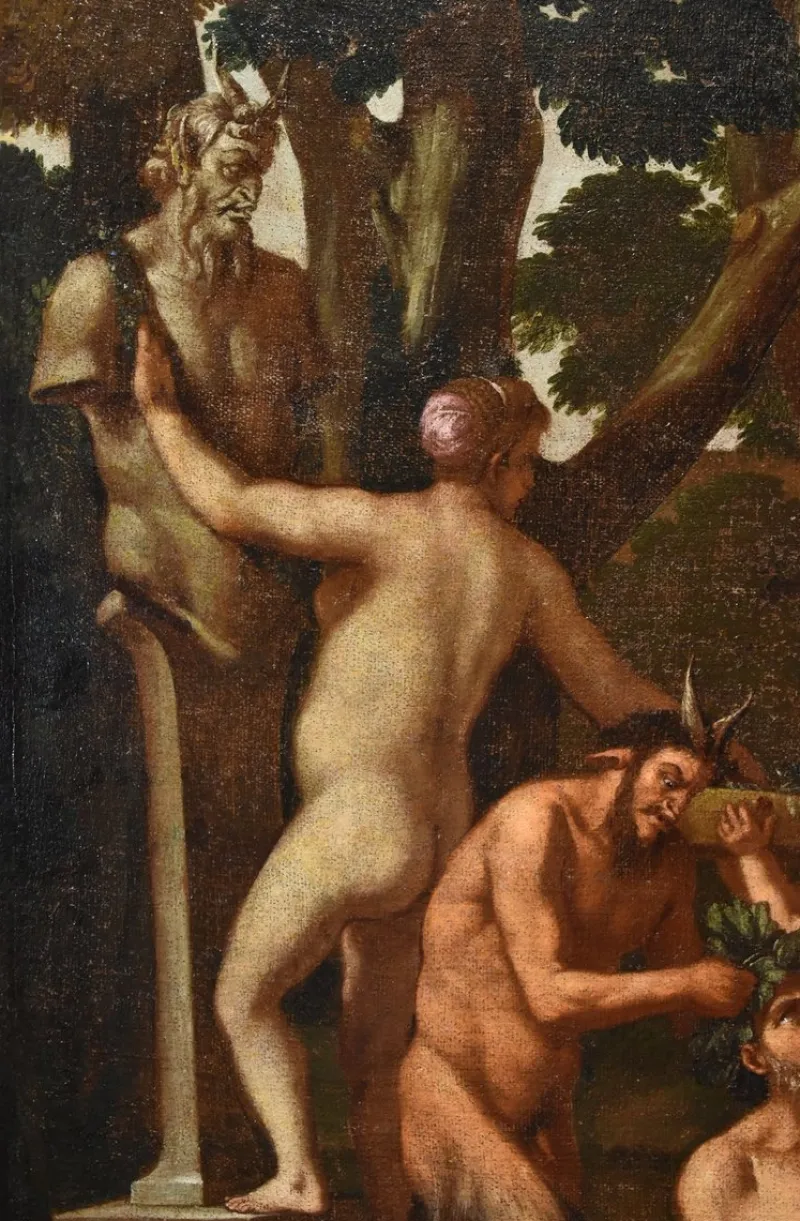
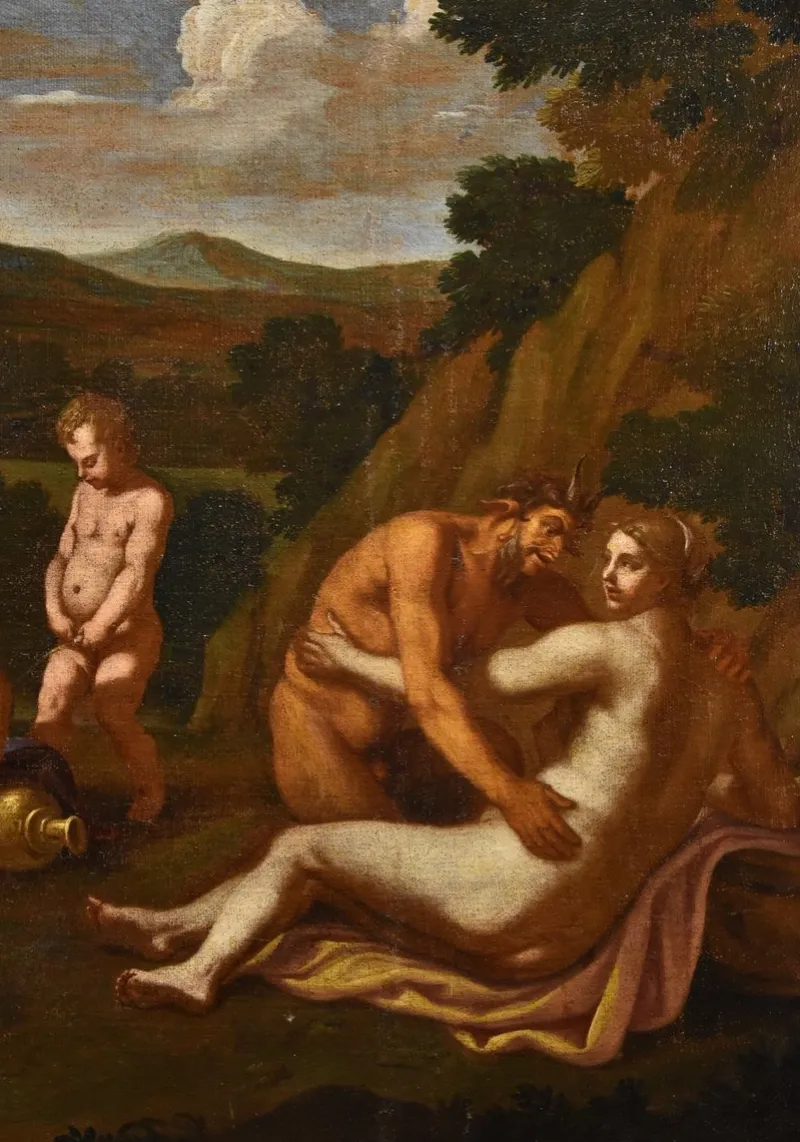
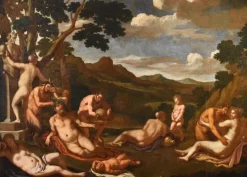
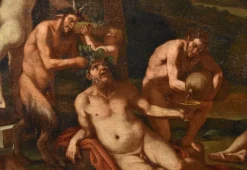
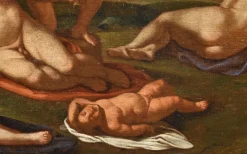
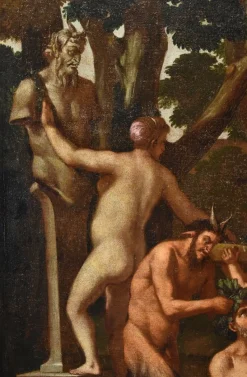
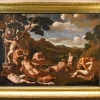
The painting, of high quality and well preserved, is a refined pictorial test by Giulio Carpioni (Venice, 1613 – Vicenza, 1678), one of the most talented Venetian painters of the 17th century, and depicts a typical “Baccanale”, a favorite subject and often portrayed.
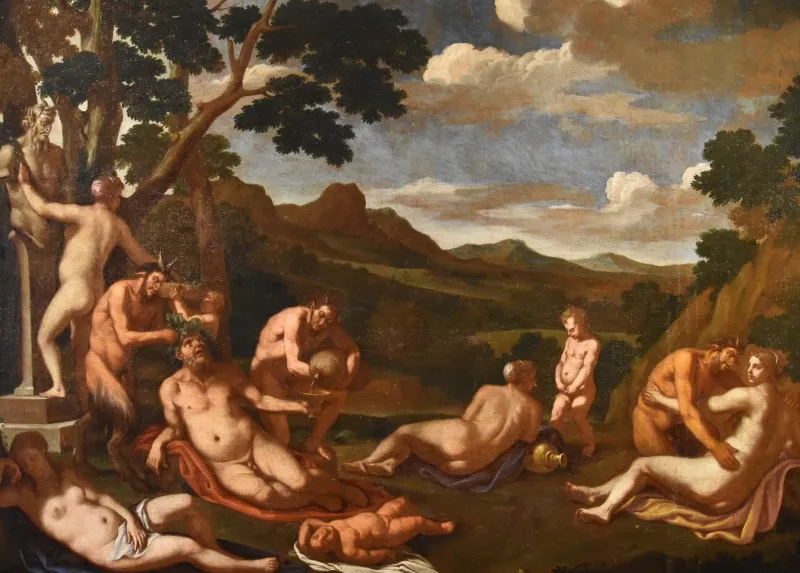
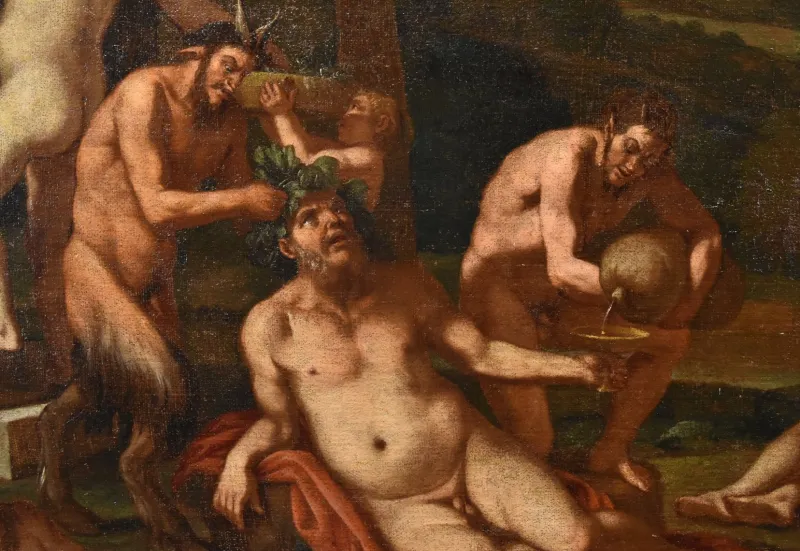
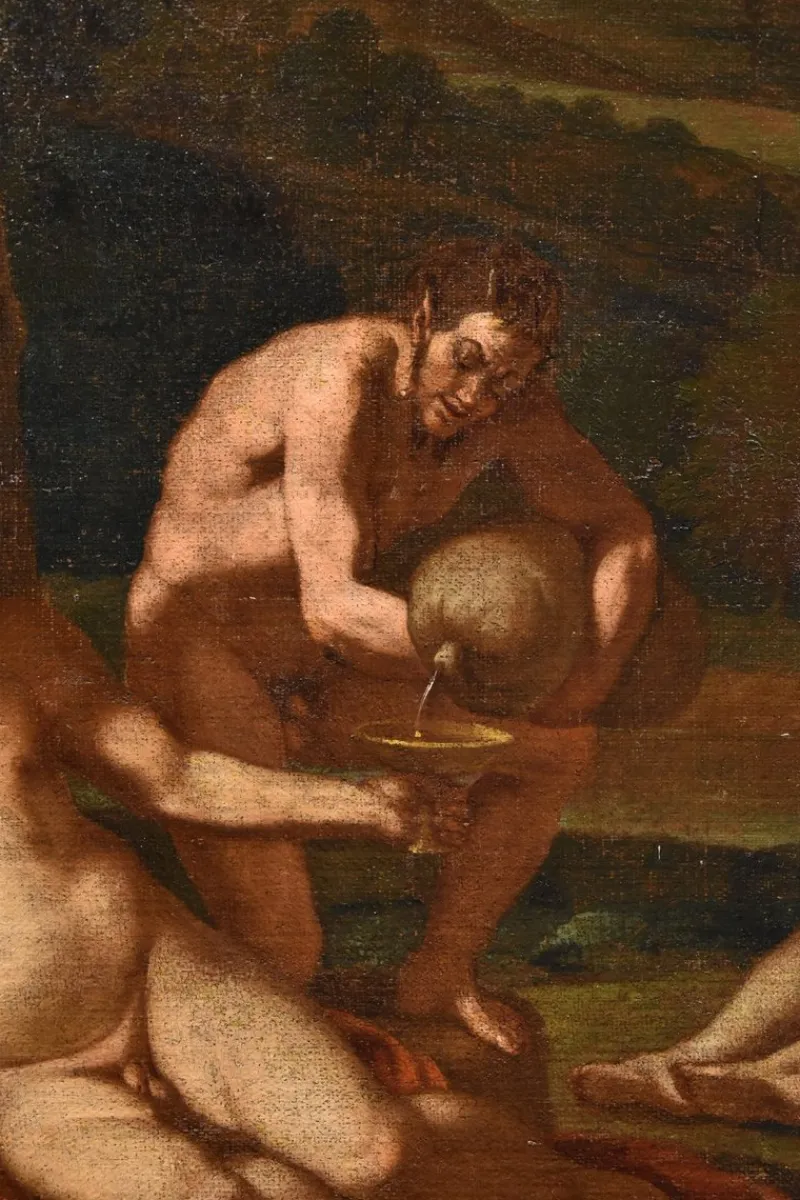
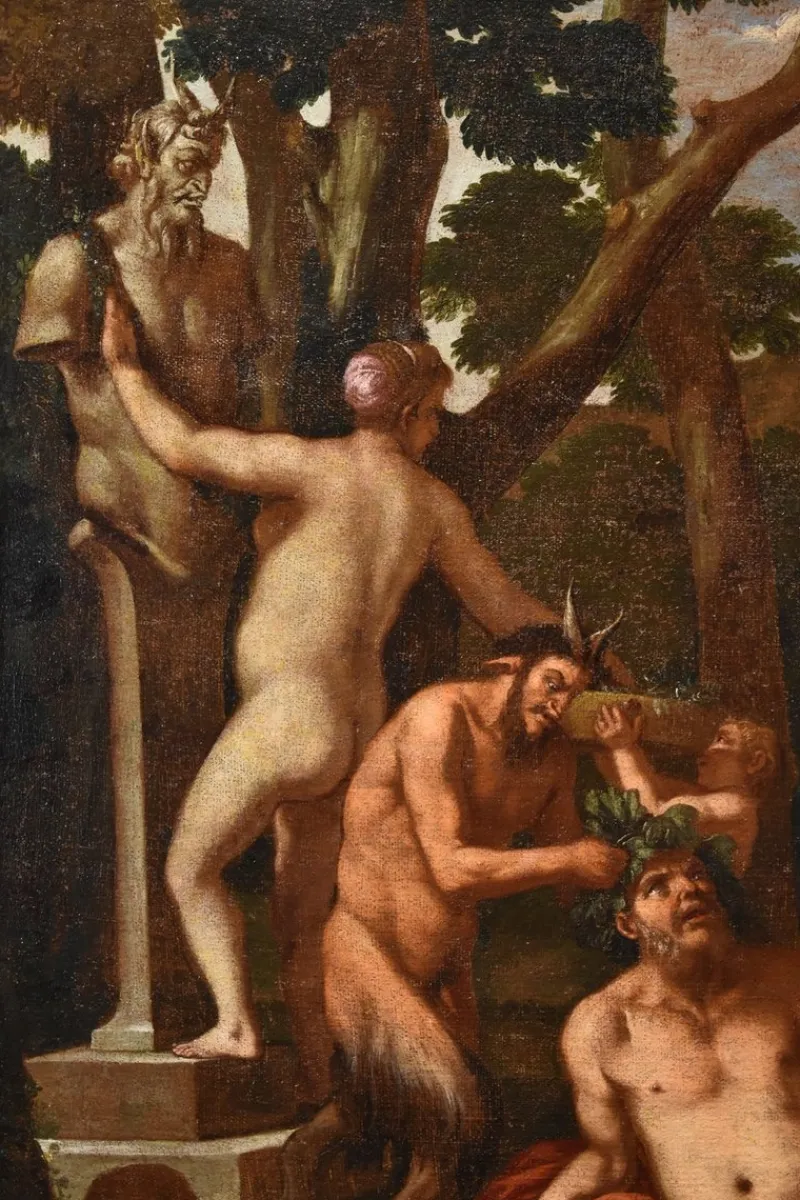
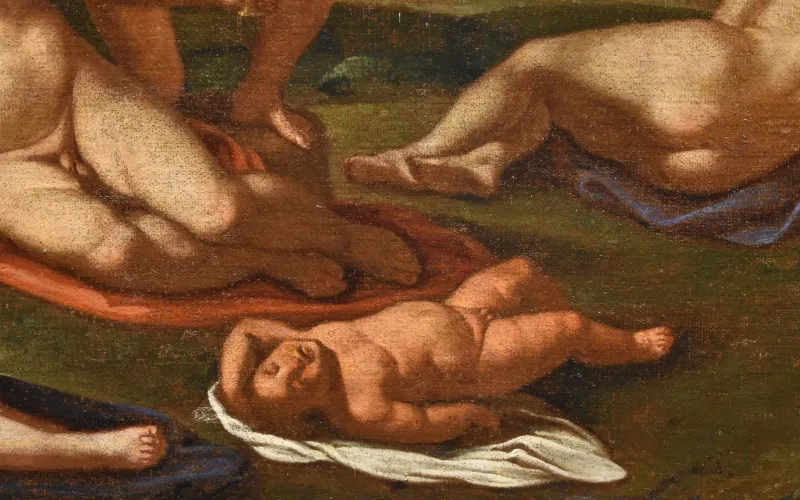
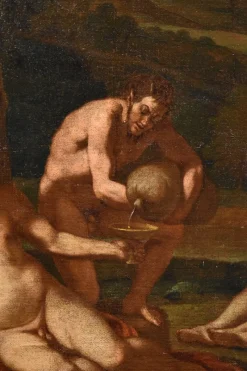
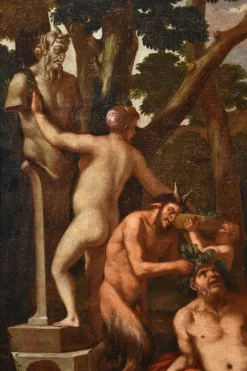
In particular, it is a celebration in honor of Bacchus, the Roman god of wine (or Dionysus in Greek mythology), characterized by nude or semi-nude mythological figures, such as satyrs, nymphs, maenads and cherubs, who dedicate themselves to idleness and the consumption of wine in a natural environment, abandoning themselves to unbridled pleasures, libations, dance, music and eroticism.
Trained with Padovanino and on the classicism of the sixteenth-century Venetian tradition, Carpioni drew great inspiration from the youthful works of Titian, especially the mythological compositions and in particular his famous Bacchanals; it was in particular during his trip to Rome that he had the opportunity to see and study the “Baccanale degli Andrii”, today at the Museo del Prado in Madrid, datable between 1523 and 1526.
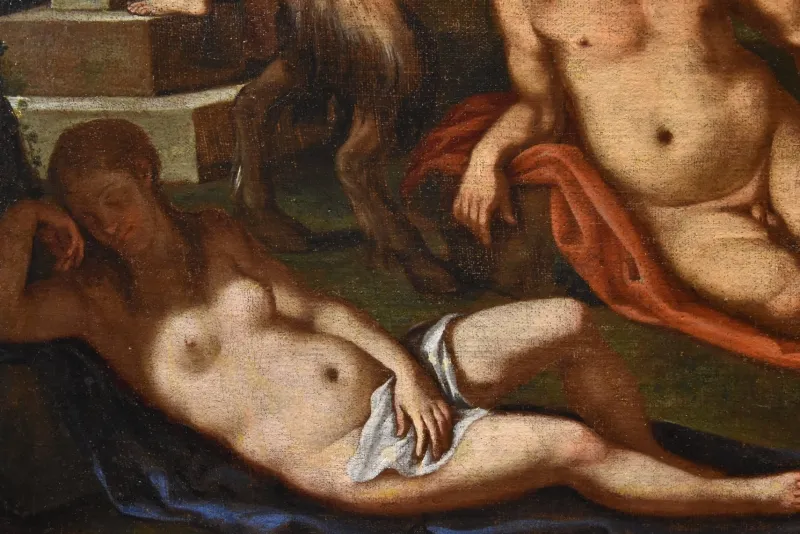
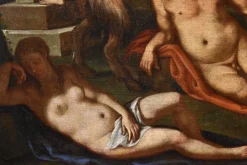
He was fascinated by the dynamic movement, the sensuality of the bodies and the interaction of light and shadow of these works. He then took up, reworking them, many characters from Titian’s painting such as the sensual nude of the nymph lying at the bottom left.
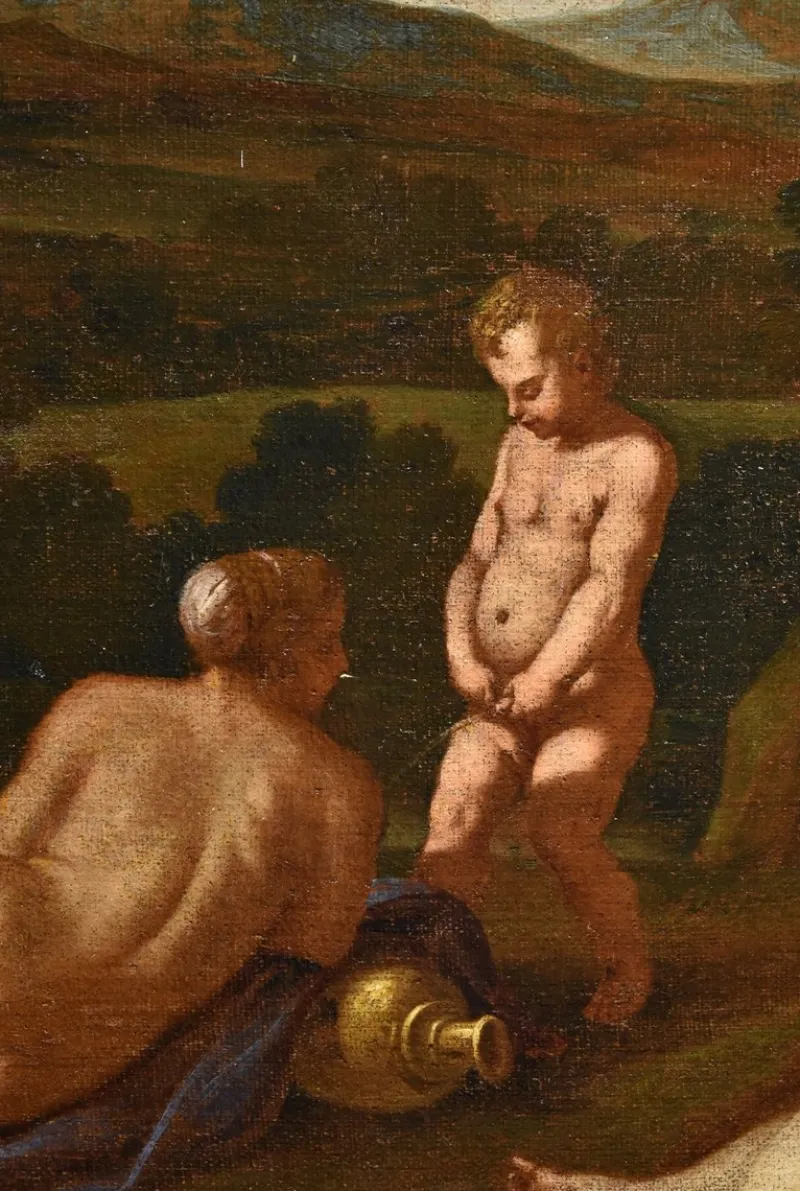
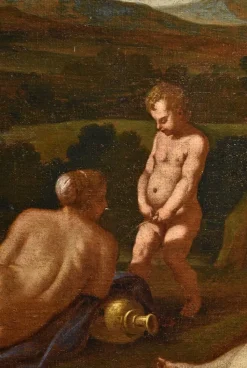
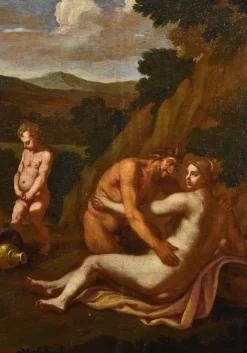
Then, moving to the right, there is the nice “puer mingens” (a figure in a work of art depicted as a prepubescent boy in the act of urinating) who spurts urine at a nymph who turns away annoyed by this mischievous gesture.
In Rome, the artist was also influenced by the realism of the Bamboccianti, as well as the classicist instances of Poussin, who devoted himself with great success to the same theme of the Bacchanalia.
The painting presented here can be compared in particular with the Bacchanal of the Accademia Carrara in Bergamo (https://catalogo.fondazionezeri.unibo.it/scheda/fotografia/108771/), similar in size, in which the figure of the fat drunken Silenus supported by young helpers is reproduced almost identically in the counterpart (https://www.lombardiabeniculturali.it/opere-arte/schede/C0050-00068/), and again with the Bacchanal of the Pinacoteca del Castello Sforzesco (https://www.lombardiabeniculturali.it/opere-arte/schede/B0020-00078/), as well as the painting of the Musei Civici di Vicenza through the legacy of Carlo Vicentini Dal Giglio in 1834.
ADDITIONAL INFORMATION:
The work is sold complete with a pleasant gilded frame and is accompanied by a certificate of authenticity and descriptive iconographic sheet.
We take care of and organize the transport of the purchased works, both for Italy and abroad, through professional and insured carriers.
It is also possible to see the painting in the gallery of Riva del Garda, we will be happy to welcome you to show you our collection of works.
Contact us, without obligation, for any additional information.
Follow us also on:
INSTAGRAM https://www.instagram.com/galleriacastelbarco/?hl=it
FACEBOOK https://www.facebook.com/galleriacastelbarco/
The seller assumes all responsibility for this listing.
About This Piece
Baccanale
Oil on canvas (98 x 132 cm. – Framed 120 x 154 cm.)
Full details of the work (click HERE)
The painting, of high quality and well preserved, is a refined pictorial test by Giulio Carpioni (Venice, 1613 – Vicenza, 1678), one of the most talented Venetian painters of the 17th century, and depicts a typical “Baccanale”, a favorite subject and often portrayed.
In particular, it is a celebration in honor of Bacchus, the Roman god of wine (or Dionysus in Greek mythology), characterized by nude or semi-nude mythological figures, such as satyrs, nymphs, maenads and cherubs, who dedicate themselves to idleness and the consumption of wine in a natural environment, abandoning themselves to unbridled pleasures, libations, dance, music and eroticism.
Trained with Padovanino and on the classicism of the sixteenth-century Venetian tradition, Carpioni drew great inspiration from the youthful works of Titian, especially the mythological compositions and in particular his famous Bacchanals; it was in particular during his trip to Rome that he had the opportunity to see and study the “Baccanale degli Andrii”, today at the Museo del Prado in Madrid, datable between 1523 and 1526.
He was fascinated by the dynamic movement, the sensuality of the bodies and the interaction of light and shadow of these works. He then took up, reworking them, many characters from Titian’s painting such as the sensual nude of the nymph lying at the bottom left.
Then, moving to the right, there is the nice “puer mingens” (a figure in a work of art depicted as a prepubescent boy in the act of urinating) who spurts urine at a nymph who turns away annoyed by this mischievous gesture.
In Rome, the artist was also influenced by the realism of the Bamboccianti, as well as the classicist instances of Poussin, who devoted himself with great success to the same theme of the Bacchanalia.
The painting presented here can be compared in particular with the Bacchanal of the Accademia Carrara in Bergamo (https://catalogo.fondazionezeri.unibo.it/scheda/fotografia/108771/), similar in size, in which the figure of the fat drunken Silenus supported by young helpers is reproduced almost identically in the counterpart (https://www.lombardiabeniculturali.it/opere-arte/schede/C0050-00068/), and again with the Bacchanal of the Pinacoteca del Castello Sforzesco (https://www.lombardiabeniculturali.it/opere-arte/schede/B0020-00078/), as well as the painting of the Musei Civici di Vicenza through the legacy of Carlo Vicentini Dal Giglio in 1834.
ADDITIONAL INFORMATION:
The work is sold complete with a pleasant gilded frame and is accompanied by a certificate of authenticity and descriptive iconographic sheet.
We take care of and organize the transport of the purchased works, both for Italy and abroad, through professional and insured carriers.
It is also possible to see the painting in the gallery of Riva del Garda, we will be happy to welcome you to show you our collection of works.
Contact us, without obligation, for any additional information.
Follow us also on:
INSTAGRAM https://www.instagram.com/galleriacastelbarco/?hl=it
FACEBOOK https://www.facebook.com/galleriacastelbarco/
Click here for full descriptionClose description
| Period | Before 1890 |
|---|---|
| Year | 1660 |
| Production Period | Before 1890 |
| Country of Manufacture | Italy |
| Identifying Marks | This piece is attributed to the above-mentioned designer/maker. It has no attribution mark |
| Style | Classical, Coastal, Figurative, Italian, Louis XIII, Medieval, Old Masters, Portraiture, Renaissance, Baroque, Rococo |
| Detailed Condition | Good — This vintage/antique item may have some wear such as scratches and other signs of ageing. |
| Restoration and Damage Details | Light wear consistent with age and use, Patina consistent with age and use, Reupholstered, Partially restored |
| Product Code | CYT-2268512 |
| Materials | Oil on Canvas |
| Color | Multicolored |
| Width | 154 cm 60.6 inch |
| Depth | 12 cm 4.7 inch |
| Height | 120 cm 47.2 inch |
Be the first to review “Pamono Giulio Carpioni, Bacchanal Bacchus Mythological Carpioni Scene, 1660, Oil on Canvas, Framed> Old Masters”
Related products
Daybeds & Chaises Lounges
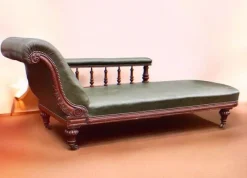
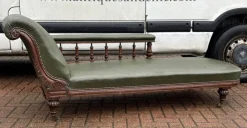
New Pamono Antique Victorian Oak Chaise Longue in Green Leather with Brass Castors

Daybeds & Chaises Lounges
Beds & Bedroom Sets

Cabinets & Wardrobes


Cabinets & Wardrobes

Coffee & Side Tables
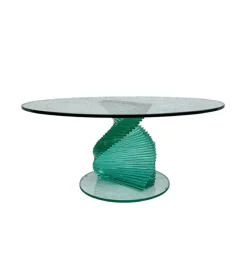
Sale Pamono Helix Spiral Sculptural Glass Coffee Table in the style of Danny Lane, 1980s
Login
Reviews
There are no reviews yet.