
Pamono Francesco Trevisani & Niccolò Stanchi, Garland of Flowers Still Life with Virgin, 1600s, Oil on Canvas> Old Masters|Classical
$140.89
Flower Garland with Portrait of the VirginFrancesco Trevisani (Koper 1656 – Rome 1746) and Niccolò Stanchi (Rome 1623 -…
Francesco Trevisani (Koper 1656 – Rome 1746) and Niccolò Stanchi (Rome 1623 – 1690), attributed
Oil on canvas
66 x 49 cm – framed 76 x 60 cm.
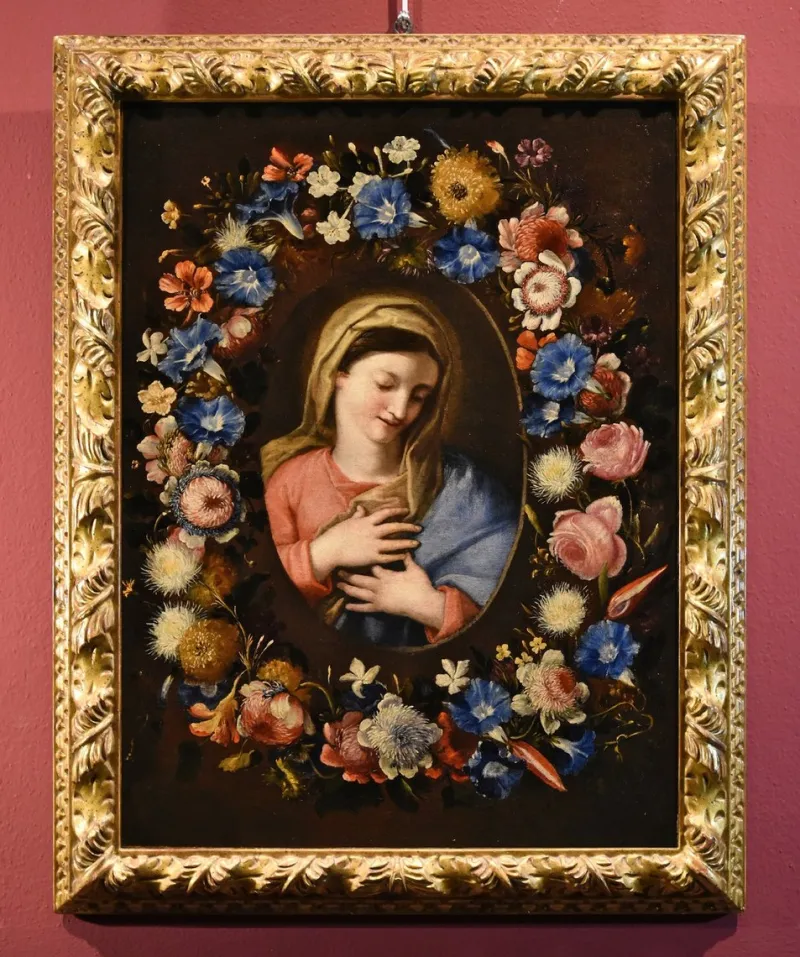
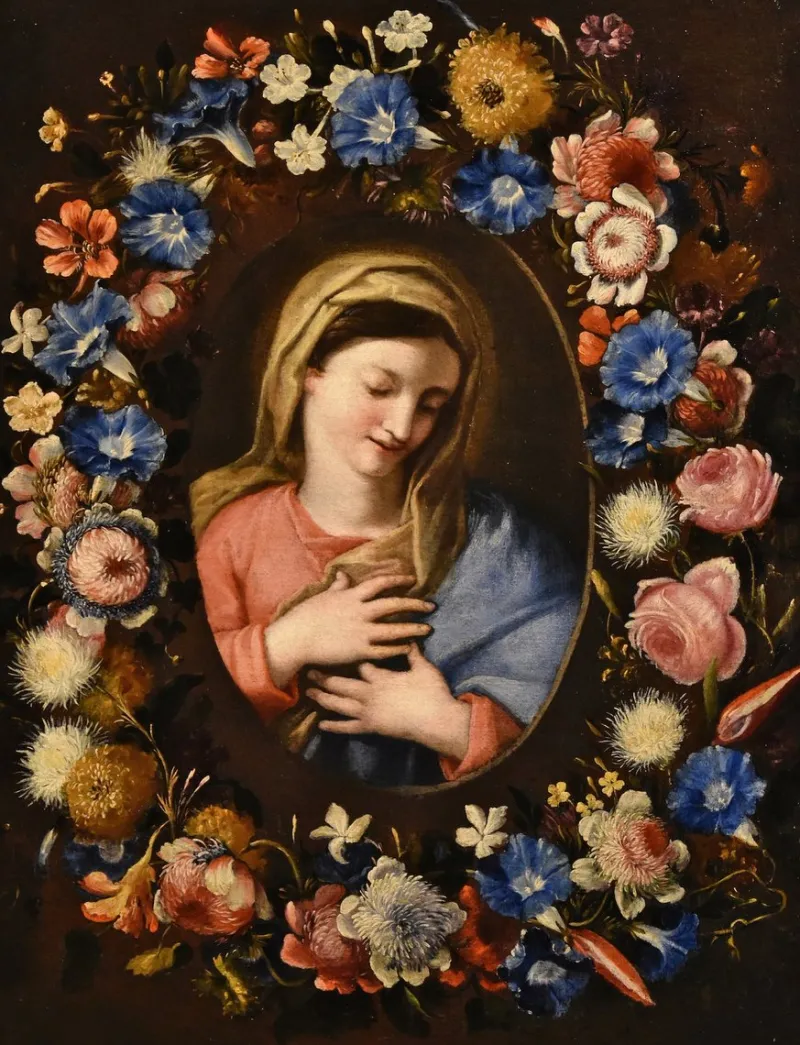
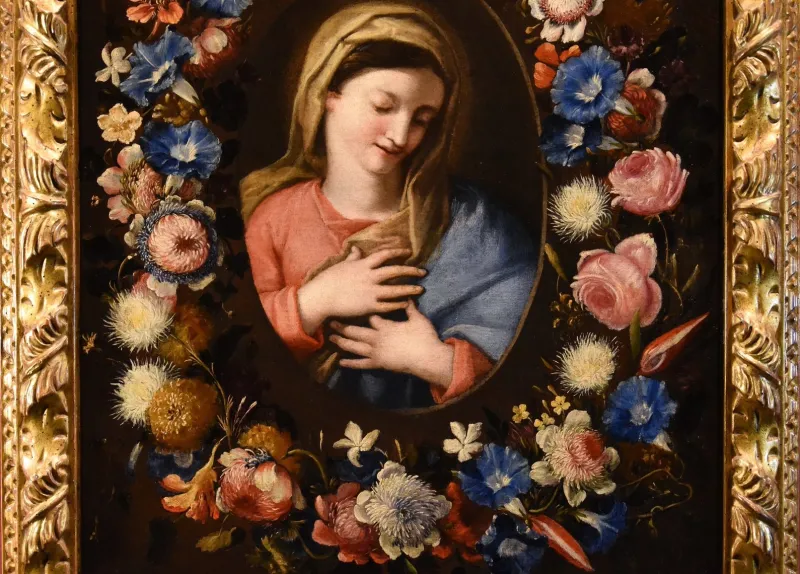
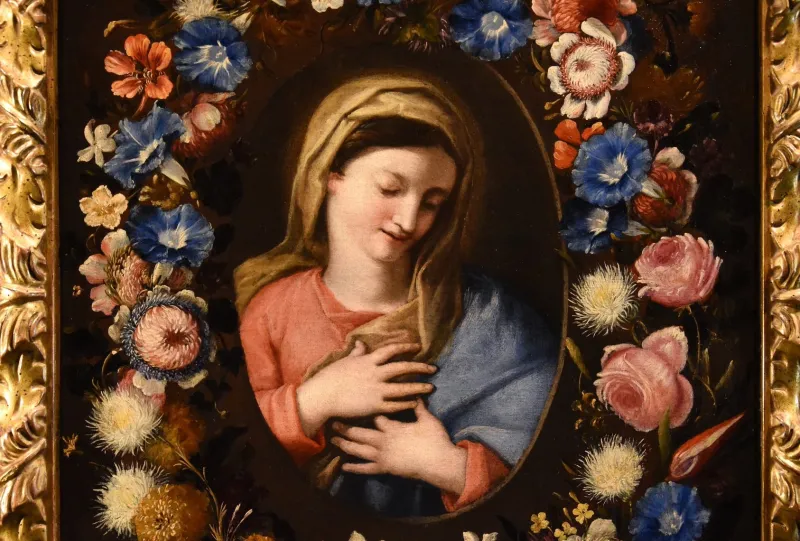
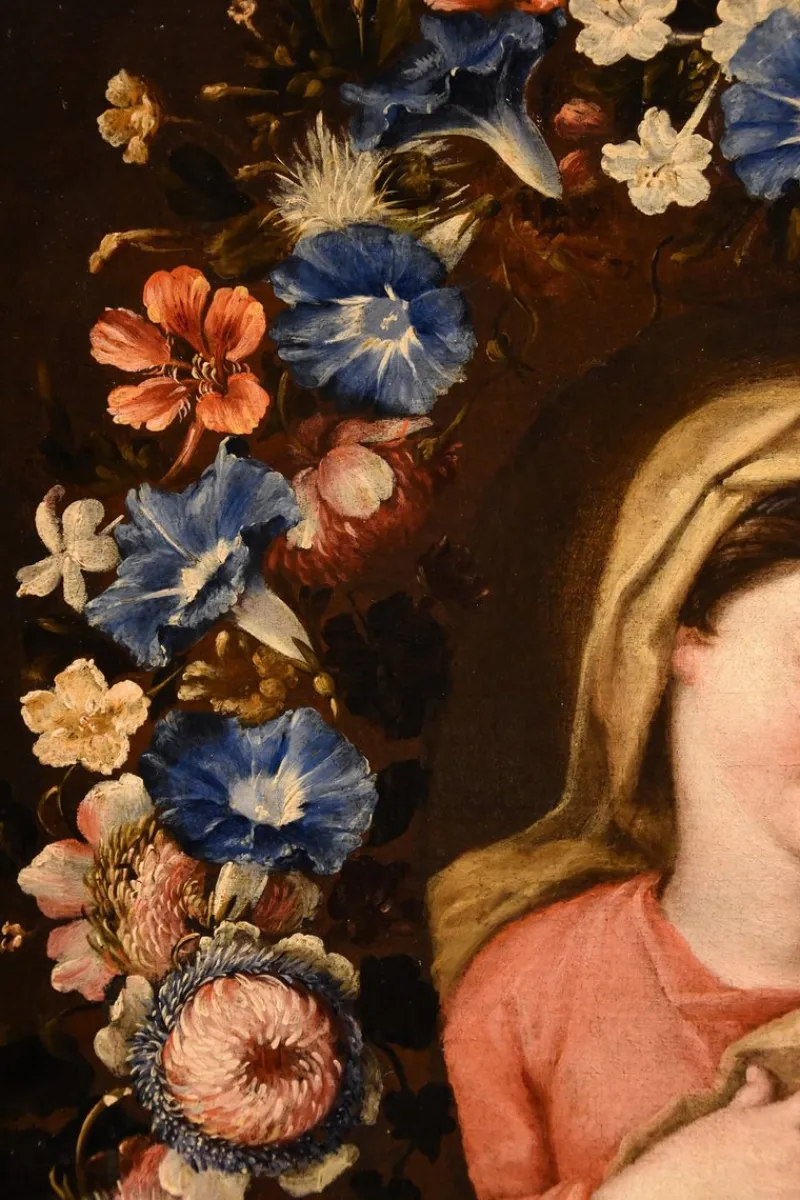
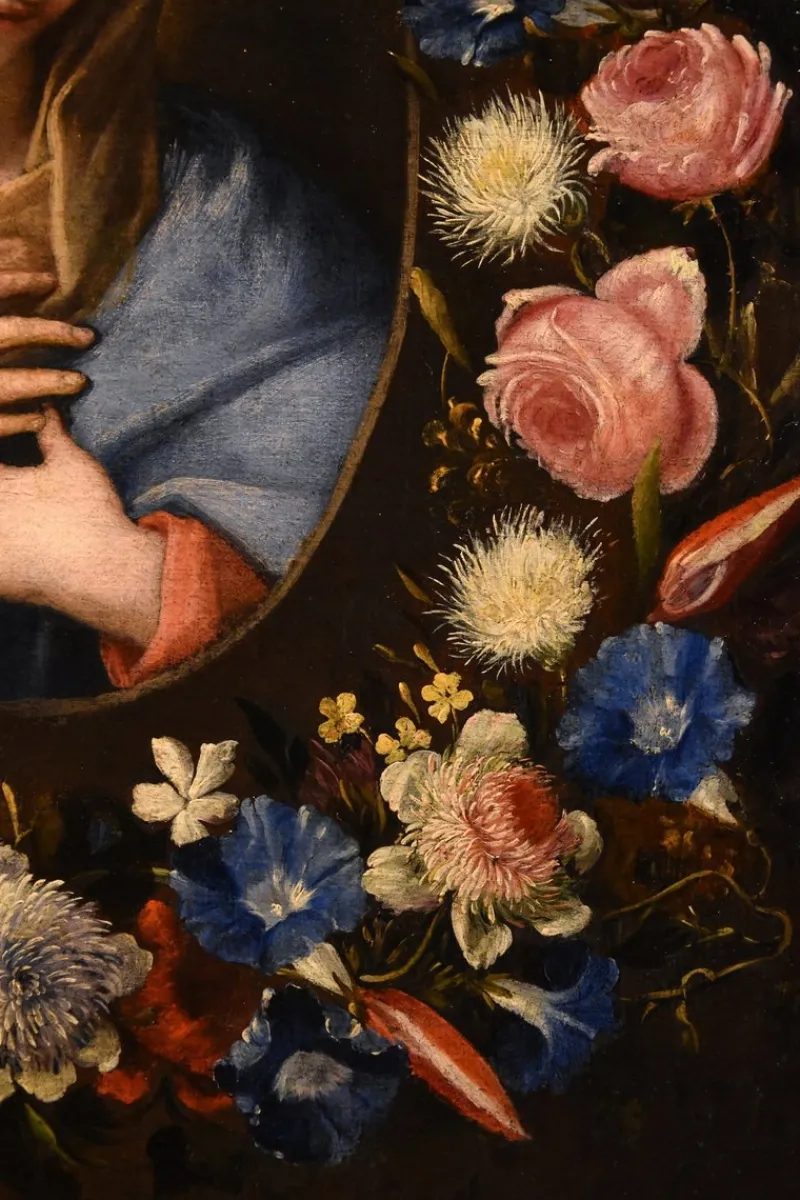
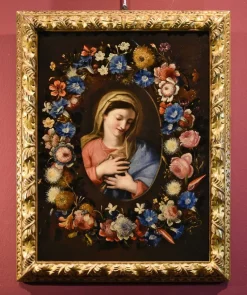
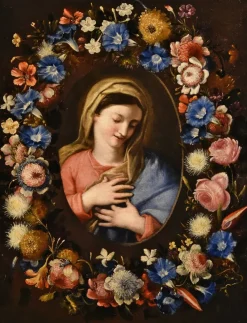
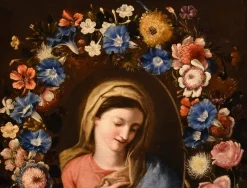
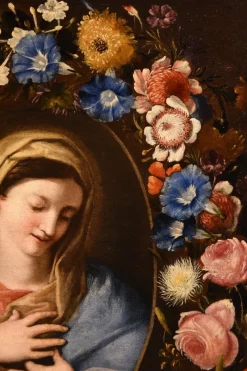
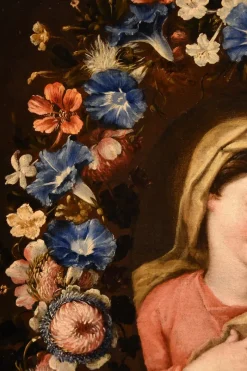
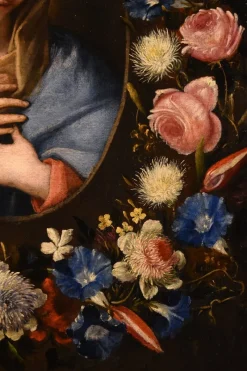
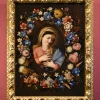
The beautiful painting we are pleased to present depicts an opulent garland dotted with a sophisticated variety of flowers, highlighted by the contrast with the black background, distinguished by an elegant structure and the characteristic liveliness and brilliance of the colors. Within it is a portrait of the Virgin in prayer with her hands clasped to her chest.
This iconographic typology, namely the garland of flowers enclosing a sacred subject, has Flemish origins and later spread to Italy, particularly Rome, where the first experiments in this direction can be traced back to Giovanni Stanchi and Mario Nuzzi, who will always remain indebted to Nordic culture, as can be seen in the ethereal naturalism that characterizes their creations.
Looking at the details of our canvas, it’s easy to deduce that it is the result of a successful collaboration between two painters who, as was customary for such creations, could devote themselves to their respective specialties: one to the religious image, the other to the garland of fresh flowers.
In particular, the half-length portrait of the Virgin draws on the Marian inventions of Francesco Trevisani (Koper 1656 – Rome 1746), fully reflecting his modus pingendi, with his typical expressive delicacy and marked taste for nuanced, pearly colors. Particularly strong are the similarities with the work of the master, a fundamental reference for many artists in Rome during the second half of the 17th century and a subject of study and inspiration still relevant in the 18th century.
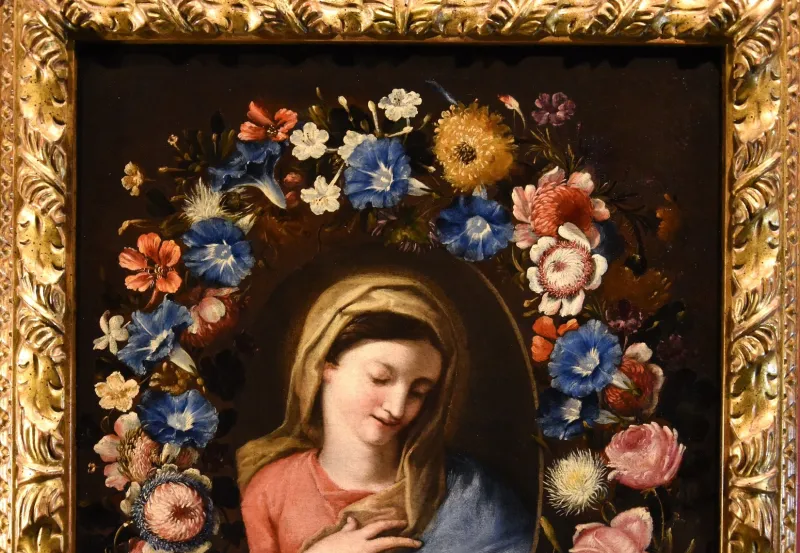
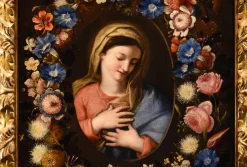
The elegant fluidity of touch and the sensual refinement typical of Trevisani, combined with a very accurate chiaroscuro rendering inherited from his artistic training in Venice, the exceptional softness of the drawing, the richness of the flesh tones, and finally, the distinctive pose of the figure portrayed (the unmistakable beauty of the two hands raised to the chest), further support our attribution.
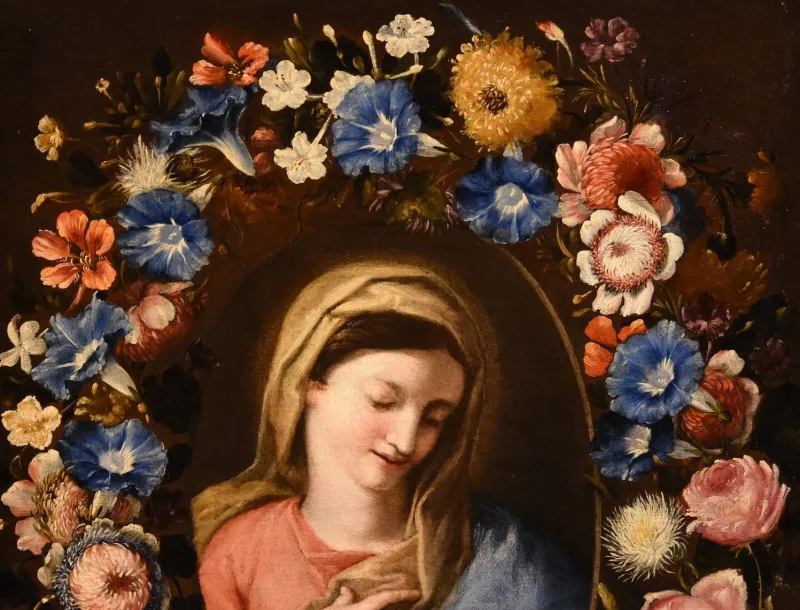
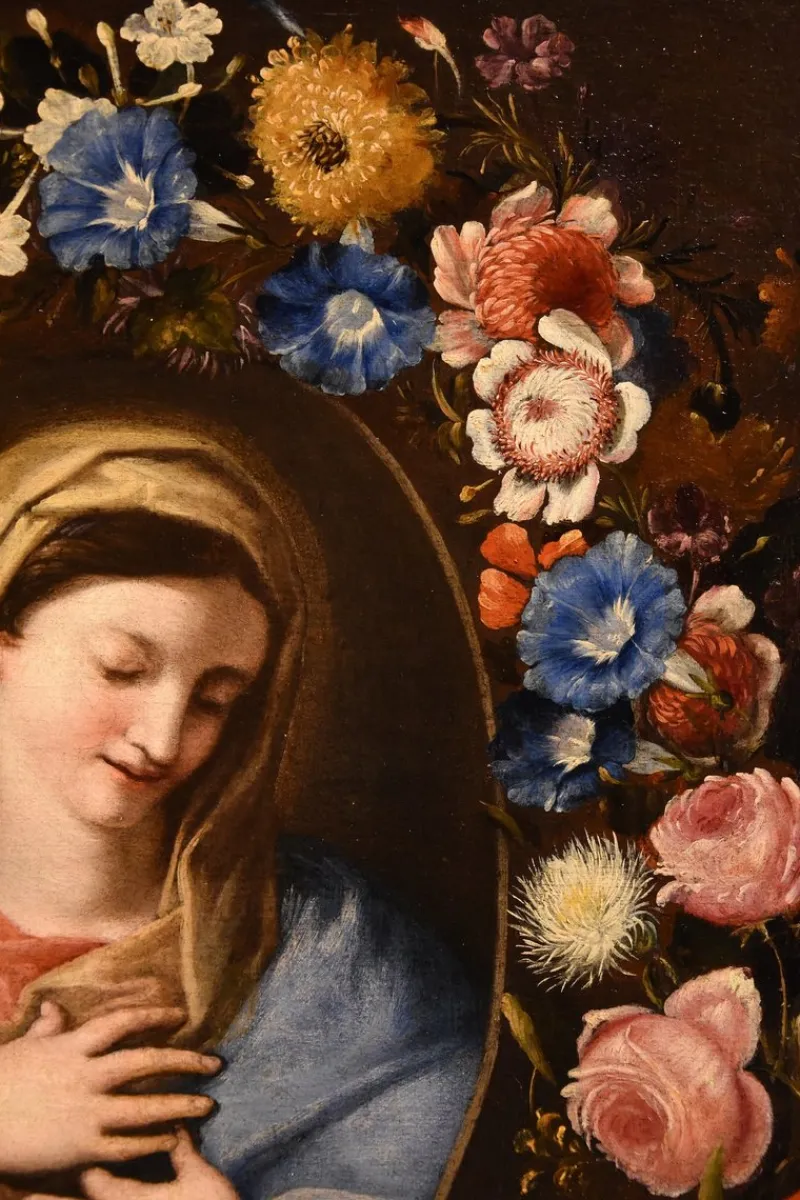
The garland, however, is attributable to the hand of the Roman painter Niccolò Stanchi (Rome 1623 – 1690), who distinguished himself among the finest still life painters active in Rome during the Baroque period.
The Stanchi family—Niccolò, Angelo, and Giovanni, the founder of the workshop—formed one of the most vibrant still life studios in Baroque Rome from 1630 onward. Their work was sought after by the most important families of the Roman aristocracy, from the Colonna to the Chigi and the Rospigliosi, and was present in the Medici collections from the end of the century.
The painting is imbued with a sumptuous elegance, given by the sinuous movement of the flowers, drawn with precision and intertwined in a sort of melody that unites them in a Baroque style, as well as by the ethereal figure of the Virgin at the center of the canvas.
The counterpoint of the color palette harmonizes the pale pinks of the peonies with the ethereal white of the roses and orange blossoms, although what undoubtedly stands out and makes our canvas aristocratic is the preponderance of the intense blue of the anemones and hyacinths, which gives the composition a masterful touch of aristocratic elegance.
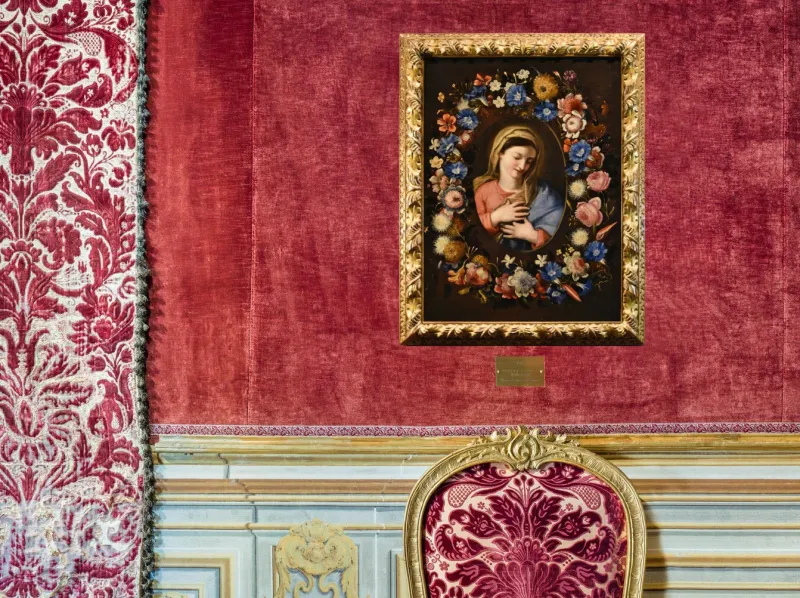
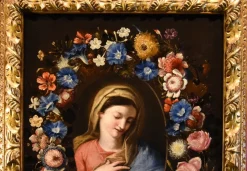
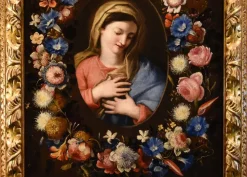
The work is completed by a beautiful gold frame and is sold with a legally required photographic certificate of authenticity.
ADDITIONAL INFORMATION:
We handle and organize the shipping of purchased works, both in Italy and abroad, using professional and insured carriers.
The seller assumes all responsibility for this listing.
About This Piece
Francesco Trevisani (Koper 1656 – Rome 1746) and Niccolò Stanchi (Rome 1623 – 1690), attributed
Oil on canvas
66 x 49 cm – framed 76 x 60 cm.
The beautiful painting we are pleased to present depicts an opulent garland dotted with a sophisticated variety of flowers, highlighted by the contrast with the black background, distinguished by an elegant structure and the characteristic liveliness and brilliance of the colors. Within it is a portrait of the Virgin in prayer with her hands clasped to her chest.
This iconographic typology, namely the garland of flowers enclosing a sacred subject, has Flemish origins and later spread to Italy, particularly Rome, where the first experiments in this direction can be traced back to Giovanni Stanchi and Mario Nuzzi, who will always remain indebted to Nordic culture, as can be seen in the ethereal naturalism that characterizes their creations.
Looking at the details of our canvas, it’s easy to deduce that it is the result of a successful collaboration between two painters who, as was customary for such creations, could devote themselves to their respective specialties: one to the religious image, the other to the garland of fresh flowers.
In particular, the half-length portrait of the Virgin draws on the Marian inventions of Francesco Trevisani (Koper 1656 – Rome 1746), fully reflecting his modus pingendi, with his typical expressive delicacy and marked taste for nuanced, pearly colors. Particularly strong are the similarities with the work of the master, a fundamental reference for many artists in Rome during the second half of the 17th century and a subject of study and inspiration still relevant in the 18th century.
The elegant fluidity of touch and the sensual refinement typical of Trevisani, combined with a very accurate chiaroscuro rendering inherited from his artistic training in Venice, the exceptional softness of the drawing, the richness of the flesh tones, and finally, the distinctive pose of the figure portrayed (the unmistakable beauty of the two hands raised to the chest), further support our attribution.
The garland, however, is attributable to the hand of the Roman painter Niccolò Stanchi (Rome 1623 – 1690), who distinguished himself among the finest still life painters active in Rome during the Baroque period.
The Stanchi family—Niccolò, Angelo, and Giovanni, the founder of the workshop—formed one of the most vibrant still life studios in Baroque Rome from 1630 onward. Their work was sought after by the most important families of the Roman aristocracy, from the Colonna to the Chigi and the Rospigliosi, and was present in the Medici collections from the end of the century.
The painting is imbued with a sumptuous elegance, given by the sinuous movement of the flowers, drawn with precision and intertwined in a sort of melody that unites them in a Baroque style, as well as by the ethereal figure of the Virgin at the center of the canvas.
The counterpoint of the color palette harmonizes the pale pinks of the peonies with the ethereal white of the roses and orange blossoms, although what undoubtedly stands out and makes our canvas aristocratic is the preponderance of the intense blue of the anemones and hyacinths, which gives the composition a masterful touch of aristocratic elegance.
The work is completed by a beautiful gold frame and is sold with a legally required photographic certificate of authenticity.
ADDITIONAL INFORMATION:
We handle and organize the shipping of purchased works, both in Italy and abroad, using professional and insured carriers.
Click here for full descriptionClose description
| Period | Before 1890 |
|---|---|
| Year | 1700 |
| Production Period | Before 1890 |
| Country of Manufacture | Italy |
| Identifying Marks | This piece is attributed to the above-mentioned designer/maker. It has no attribution mark |
| Style | Classical, Figurative, Italian, Louis XIII, Medieval, Mediterranean, Old Masters, Portraiture, Religious, Antique, Baroque |
| Detailed Condition | Good — This vintage/antique item may have some wear such as scratches and other signs of ageing. |
| Restoration and Damage Details | Light wear consistent with age and use, Patina consistent with age and use, Reupholstered, Partially restored |
| Product Code | CYT-2339694 |
| Materials | Oil on Canvas |
| Color | Multicolored |
| Width | 60 cm 23.6 inch |
| Depth | 12 cm 4.7 inch |
| Height | 76 cm 29.9 inch |
Be the first to review “Pamono Francesco Trevisani & Niccolò Stanchi, Garland of Flowers Still Life with Virgin, 1600s, Oil on Canvas> Old Masters|Classical”
Related products


Cabinets & Wardrobes






Daybeds & Chaises Lounges
New Pamono Antique Victorian Oak Chaise Longue in Green Leather with Brass Castors




Children's Chairs


Daybeds & Chaises Lounges

Login
Reviews
There are no reviews yet.