
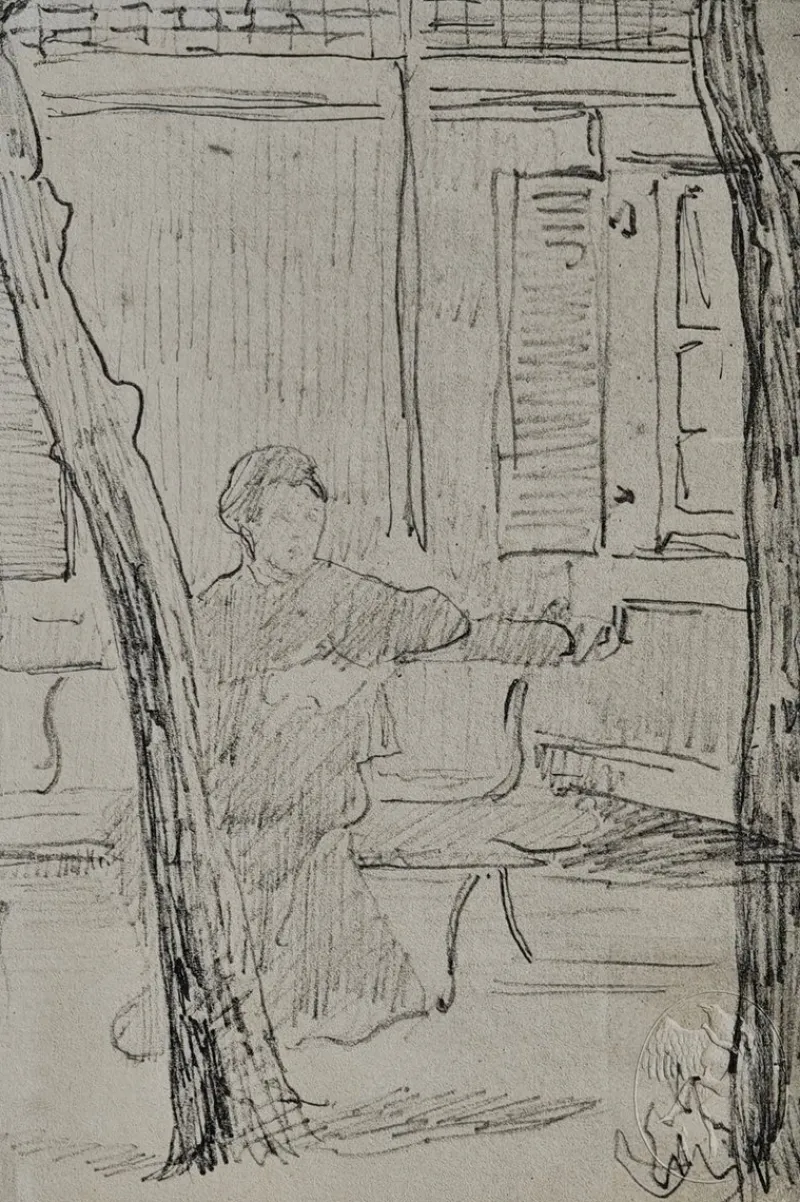
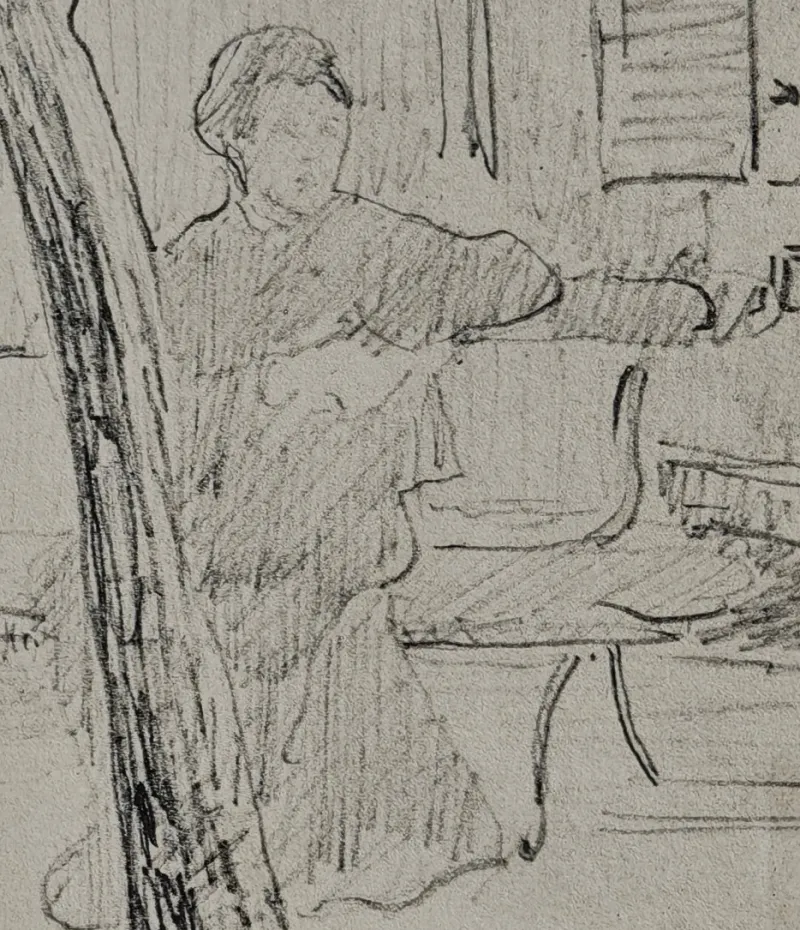
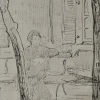
Pamono Edouard Manet, Mrs. Manet in the Garden, Lithograph
$126.99
A lithograph after Edouard Manet from “Die Skizzenmappe – Zeichnungen französischer Meister des neunzehnten Jahrhundert…
As stated in the colophon, it took the publisher 7 years to complete the series.
The artwork is accompanied by a copy of the colophon.
Edouard Manet (1832-1883), after
“Frau Manet in Garten” (Mrs. Manet in the Garden)
Colour Photo-lithograph
Year (conceived): second half of XIX Century
Year (printed): 1918
Edition: 57/100
Size (overall): 480 x 322 mm
Size of the image: 166 x 110 mm
in the original passepartout, blind-numbered 4
Blind seal of the publisher, lower right corner
Numbered 57 on the colophon, from an overall edition of 100
Printer: André Marty
Publisher: Marées-Gesellschaft, R. Piper & Co., München, 1918
Excellent condition (few signs of age in the passepartout)
Sold with Certificate
___
Suzanne Manet (née Leenhoff, 1829–1906) was a Dutch-born pianist and the wife of the French painter Édouard Manet. Born in Heerenveen, she moved to Paris and was hired in 1849 as a piano teacher for the Manet family. It was here that she began a long and complex relationship with Édouard, which culminated in their marriage in 1863 after his father’s death.
As a talented musician and a constant presence in Manet’s life, Suzanne became one of his most frequent and important models. Her calm and graceful presence is captured in some of his most significant works, including The Reading (c. 1865), Madame Manet at the Piano (1868), and various portraits showing her in different settings. She provided him with a private, domestic subject matter that contrasted with his more controversial public scenes.
Suzanne’s role as a model was not limited to her husband. She was also portrayed by Édouard’s close friend, Edgar Degas. Degas painted a double portrait of the couple, Monsieur and Madame Manet (c. 1868-69), which famously shows Suzanne at the piano while her husband reclines on a couch. This painting has a fascinating history, as Manet himself was said to have slashed the canvas through his wife’s face, likely due to his dissatisfaction with the portrayal. This act of artistic rivalry and personal frustration highlights Suzanne’s central position in the lives and work of two of the most celebrated artists of the era.
The seller assumes all responsibility for this listing.
About This Piece
As stated in the colophon, it took the publisher 7 years to complete the series.
The artwork is accompanied by a copy of the colophon.
Edouard Manet (1832-1883), after
“Frau Manet in Garten” (Mrs. Manet in the Garden)
Colour Photo-lithograph
Year (conceived): second half of XIX Century
Year (printed): 1918
Edition: 57/100
Size (overall): 480 x 322 mm
Size of the image: 166 x 110 mm
in the original passepartout, blind-numbered 4
Blind seal of the publisher, lower right corner
Numbered 57 on the colophon, from an overall edition of 100
Printer: André Marty
Publisher: Marées-Gesellschaft, R. Piper & Co., München, 1918
Excellent condition (few signs of age in the passepartout)
Sold with Certificate
___
Suzanne Manet (née Leenhoff, 1829–1906) was a Dutch-born pianist and the wife of the French painter Édouard Manet. Born in Heerenveen, she moved to Paris and was hired in 1849 as a piano teacher for the Manet family. It was here that she began a long and complex relationship with Édouard, which culminated in their marriage in 1863 after his father’s death.
As a talented musician and a constant presence in Manet’s life, Suzanne became one of his most frequent and important models. Her calm and graceful presence is captured in some of his most significant works, including The Reading (c. 1865), Madame Manet at the Piano (1868), and various portraits showing her in different settings. She provided him with a private, domestic subject matter that contrasted with his more controversial public scenes.
Suzanne’s role as a model was not limited to her husband. She was also portrayed by Édouard’s close friend, Edgar Degas. Degas painted a double portrait of the couple, Monsieur and Madame Manet (c. 1868-69), which famously shows Suzanne at the piano while her husband reclines on a couch. This painting has a fascinating history, as Manet himself was said to have slashed the canvas through his wife’s face, likely due to his dissatisfaction with the portrayal. This act of artistic rivalry and personal frustration highlights Suzanne’s central position in the lives and work of two of the most celebrated artists of the era.
Click here for full descriptionClose description
| Period | Before 1890 |
|---|---|
| Year | 1918 |
| Production Period | 1890 to 1919 |
| Country of Manufacture | Germany |
| Identifying Marks | This piece has an attribution mark |
| Style | French, Impressionist |
| Detailed Condition | Excellent — This vintage/antique piece is in near original condition. It may show minimal traces of use and/or have slight restorations. |
| Product Code | YWW-2319832 |
| Restoration and Damage Details | A few signs of age in the passepartout |
| Materials | Lithograph, Paper |
| Color | Multicolored |
| Width | 33 cm 12.7 inch |
| Depth | 1 cm 0.0 inch |
| Height | 48 cm 18.9 inch |
Be the first to review “Pamono Edouard Manet, Mrs. Manet in the Garden, Lithograph”
Related products
Dressers, Commodes & Chests
Cabinets & Wardrobes



Children's Chairs



Login
Reviews
There are no reviews yet.