
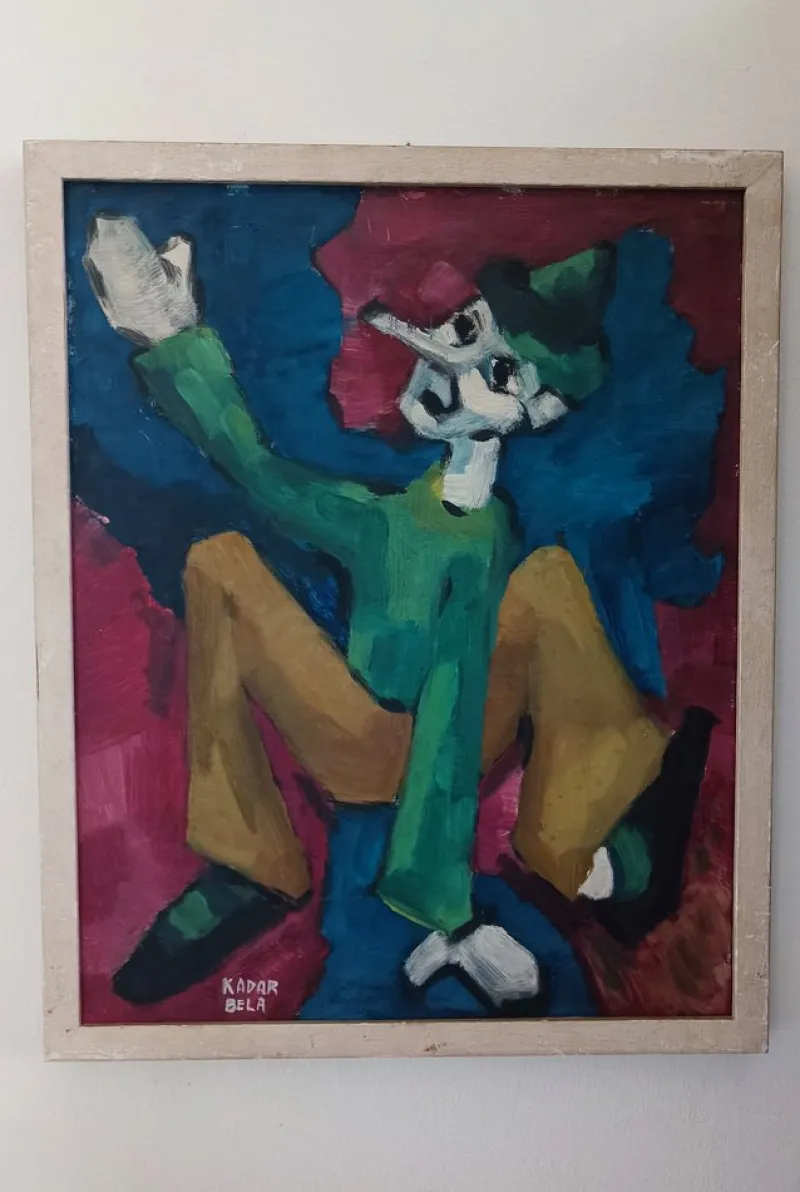
Pamono Bela Kadar, Pinocchio, 1920, Painting, Framed> Impressionist
$120.89
Early Bela Kadar / Béla Kádár “Pinocchio” painting. Here he experiments with Cubism. Typical color use from that peri…
Early Bela Kadar / Béla Kádár “Pinocchio” painting. Here he experiments with Cubism. Typical color use from that period. Nice firm and energetic brush strokes.
Kádár never dated his paintings.
An art historian which has looked at the work says it is made about 1920.
The work is Painted on board.
Mostly he wrote his name with the “acute accent” and some times he didn’t.
Short bio:
Béla Kádár was a Hungarian painter and one of the most famous members of the early 20th-century Hungarian avant-garde. He notably employed aesthetics from a range of movements, such as Constructivism, Cubism, and German Expressionism, and focused on traditional Hungarian folklore to inspire his imagery. Whether depicting scenes of abstracted figures, objects, landscapes, or interiors, his work features bright, jewel-toned palettes and a fractured approach to rendering space. Born on April 7, 1877 in Budapest, Hungary to a working-class Jewish family, Kádár was forced to work from a young age after his father’s death. He initially assisted a mural painting company before visiting Berlin and Paris, where he came under the influence of the avant-garde art of the time. He befriended the fellow Hungarian painter Hugo Scheiber and settled for a time in Berlin to further exhibit his work. Today, Kádár’s works are in the collection of the Hungarian National Gallery in Budapest. The artist died on December 31, 1956 in Budapest, Hungary.
–
Kádár never dated his paintings.
An art historian which has looked at the work says it is made about 1920.
The work is Painted on board.
Mostly he wrote his name with the “acute accent” and some times he didn’t.
Short bio:
Béla Kádár was a Hungarian painter and one of the most famous members of the early 20th-century Hungarian avant-garde. He notably employed aesthetics from a range of movements, such as Constructivism, Cubism, and German Expressionism, and focused on traditional Hungarian folklore to inspire his imagery. Whether depicting scenes of abstracted figures, objects, landscapes, or interiors, his work features bright, jewel-toned palettes and a fractured approach to rendering space. Born on April 7, 1877 in Budapest, Hungary to a working-class Jewish family, Kádár was forced to work from a young age after his father’s death. He initially assisted a mural painting company before visiting Berlin and Paris, where he came under the influence of the avant-garde art of the time. He befriended the fellow Hungarian painter Hugo Scheiber and settled for a time in Berlin to further exhibit his work. Today, Kádár’s works are in the collection of the Hungarian National Gallery in Budapest. The artist died on December 31, 1956 in Budapest, Hungary.
–
The seller assumes all responsibility for this listing.
About This Piece
Early Bela Kadar / Béla Kádár “Pinocchio” painting. Here he experiments with Cubism. Typical color use from that period. Nice firm and energetic brush strokes.
Kádár never dated his paintings.
An art historian which has looked at the work says it is made about 1920.
The work is Painted on board.
Mostly he wrote his name with the “acute accent” and some times he didn’t.
Short bio:
Béla Kádár was a Hungarian painter and one of the most famous members of the early 20th-century Hungarian avant-garde. He notably employed aesthetics from a range of movements, such as Constructivism, Cubism, and German Expressionism, and focused on traditional Hungarian folklore to inspire his imagery. Whether depicting scenes of abstracted figures, objects, landscapes, or interiors, his work features bright, jewel-toned palettes and a fractured approach to rendering space. Born on April 7, 1877 in Budapest, Hungary to a working-class Jewish family, Kádár was forced to work from a young age after his father’s death. He initially assisted a mural painting company before visiting Berlin and Paris, where he came under the influence of the avant-garde art of the time. He befriended the fellow Hungarian painter Hugo Scheiber and settled for a time in Berlin to further exhibit his work. Today, Kádár’s works are in the collection of the Hungarian National Gallery in Budapest. The artist died on December 31, 1956 in Budapest, Hungary.
–
Kádár never dated his paintings.
An art historian which has looked at the work says it is made about 1920.
The work is Painted on board.
Mostly he wrote his name with the “acute accent” and some times he didn’t.
Short bio:
Béla Kádár was a Hungarian painter and one of the most famous members of the early 20th-century Hungarian avant-garde. He notably employed aesthetics from a range of movements, such as Constructivism, Cubism, and German Expressionism, and focused on traditional Hungarian folklore to inspire his imagery. Whether depicting scenes of abstracted figures, objects, landscapes, or interiors, his work features bright, jewel-toned palettes and a fractured approach to rendering space. Born on April 7, 1877 in Budapest, Hungary to a working-class Jewish family, Kádár was forced to work from a young age after his father’s death. He initially assisted a mural painting company before visiting Berlin and Paris, where he came under the influence of the avant-garde art of the time. He befriended the fellow Hungarian painter Hugo Scheiber and settled for a time in Berlin to further exhibit his work. Today, Kádár’s works are in the collection of the Hungarian National Gallery in Budapest. The artist died on December 31, 1956 in Budapest, Hungary.
–
Click here for full descriptionClose description
| Period | 1920 to 1949 |
|---|---|
| Year | 1920 |
| Production Period | 1920 to 1929 |
| Country of Manufacture | Hungary |
| Identifying Marks | This piece has an attribution mark |
| Style | Expressionist, Figurative, Impressionist |
| Detailed Condition | Very Good — This vintage/antique item has no defects, but it may show slight traces of use. |
| Restoration and Damage Details | Light wear consistent with age and use |
| Product Code | GO-1454606 |
| Materials | Paint, Wood |
| Color | Black, blonde, green, maroon, medium blue, white |
| Width | 43 cm 16.9 inch |
| Depth | 3 cm 1.2 inch |
| Height | 53 cm 20.9 inch |
Be the first to review “Pamono Bela Kadar, Pinocchio, 1920, Painting, Framed> Impressionist”
Related products

$124.99
Sale!
Dressers, Commodes & Chests
Original price was: $1,907.00.$132.89Current price is: $132.89.
$136.99
Sale!
Original price was: $11,359.00.$120.99Current price is: $120.99.

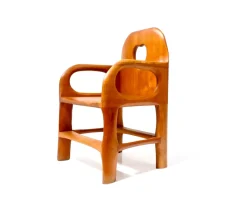
Children's Chairs
$128.89
$120.89


$136.89
$136.89
$136.89
Sale!
Original price was: $547.00.$122.89Current price is: $122.89.


Sale!
Cabinets & Wardrobes
Original price was: $1,821.00.$126.89Current price is: $126.89.


Dining Tables & Sets
New Pamono Vintage Table in Glass and Black Lacquered Metal, 1960s
$124.89
Login

Reviews
There are no reviews yet.