
Pamono Aniello Ascione, Still Life with Flowers & Fruit, 1690, Oil on Canvas, Framed> Old Masters
$138.99
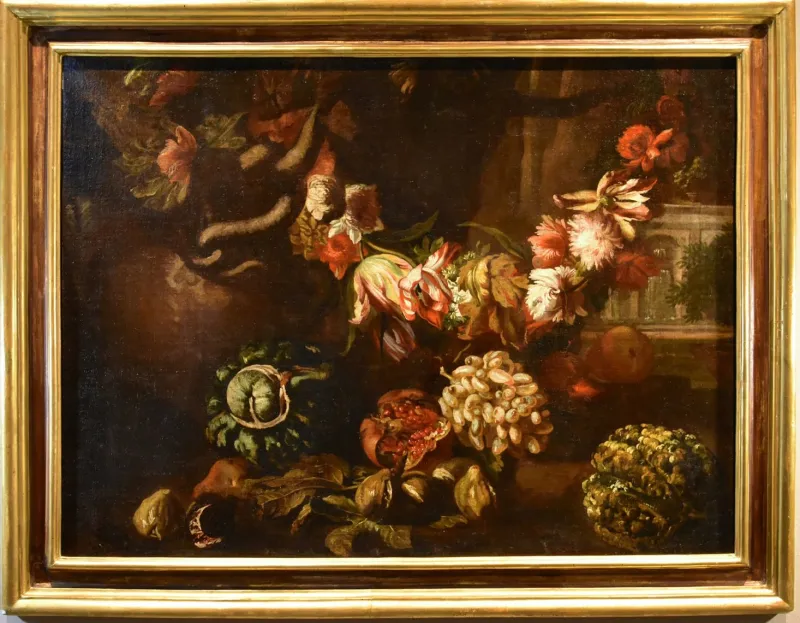
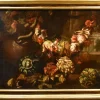
Aniello Ascione(Naples, records from 1680 to 1708)Still Life with Flower and Fruit FestoonOil on canvas,89 x 117 cm – fr…
(Naples, records from 1680 to 1708)
Still Life with Flower and Fruit Festoon
Oil on canvas,
89 x 117 cm – framed 104 x 132 cm.
with expertise and attribution study by Prof. Stefano Causa (University of Naples)
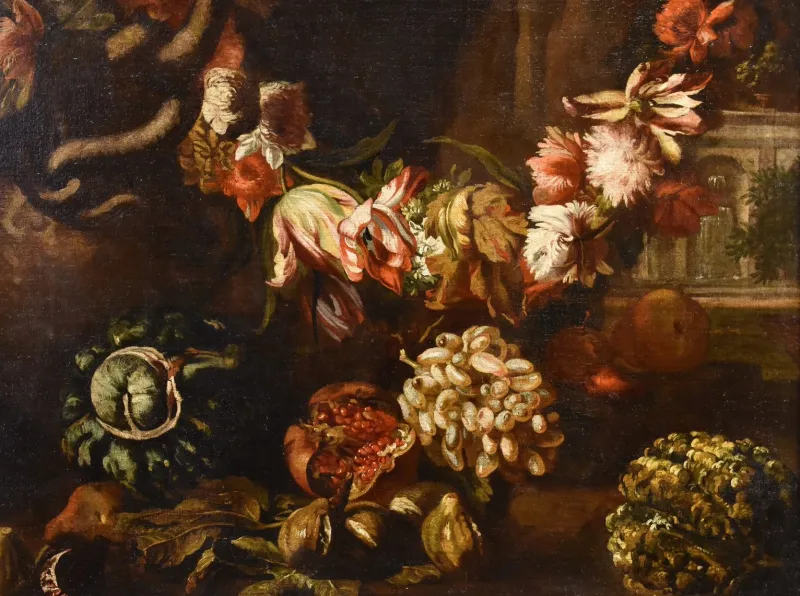
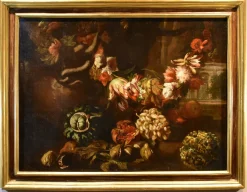
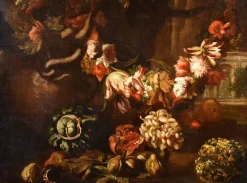
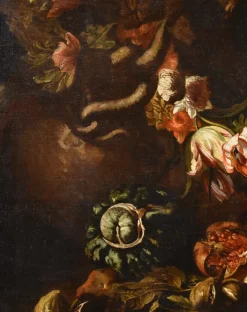
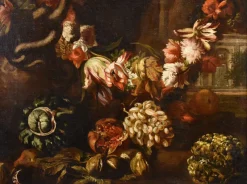
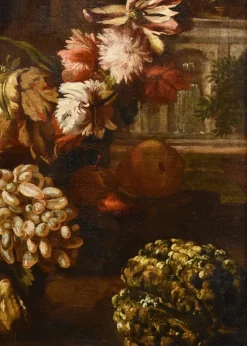
This composition of fruit with a flower festoon is by Aniello Ascione and is a significant addition to the Neapolitan still life genre—the most baroque and decorative imaginable. The naturalistic, still Caravaggesque impetus of early 17th-century specialists, from Luca Forte to Porpora, now seems a distant memory.
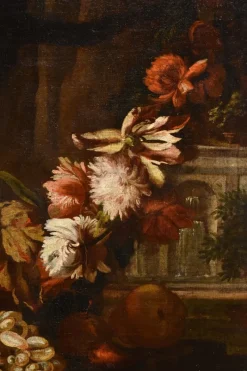
Ascione’s name also comes from a comparison with the signed Still Life in the Civic Museum of Castello Ursini in Catania, compared to which the painting under consideration qualifies as a sixteenth-scale version. It is not uncommon, moreover, for still life painters’ workshops to feature easily repeatable motifs. The melon on the right, the chasing of flowers, and, in the background, the profile of a column or fountain. We could compare them to the standardized formal types employed by great Southern composers such as Alessandro or Domenico Scarlatti (with whom, incidentally, we are roughly contemporary with our painting).
Planned with a diagonal cut, our painting connects to the Neapolitan climate divided between Giordano and Francesco Solimena (also in its connections with the contemporary Roman scene by Michelangelo da Campidoglio and Spadino). These are the years in which still life reached, so to speak, its maximum presentational volume. But let’s not get ahead of ourselves and get closer.
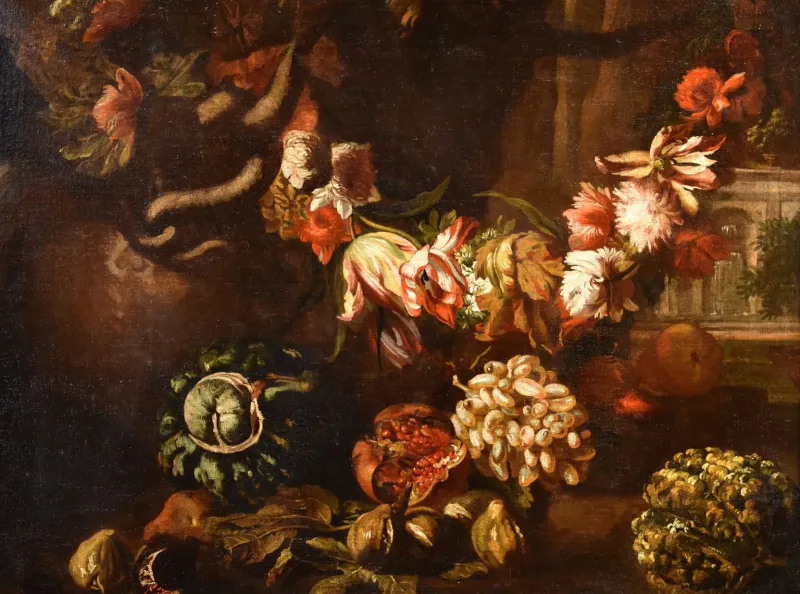
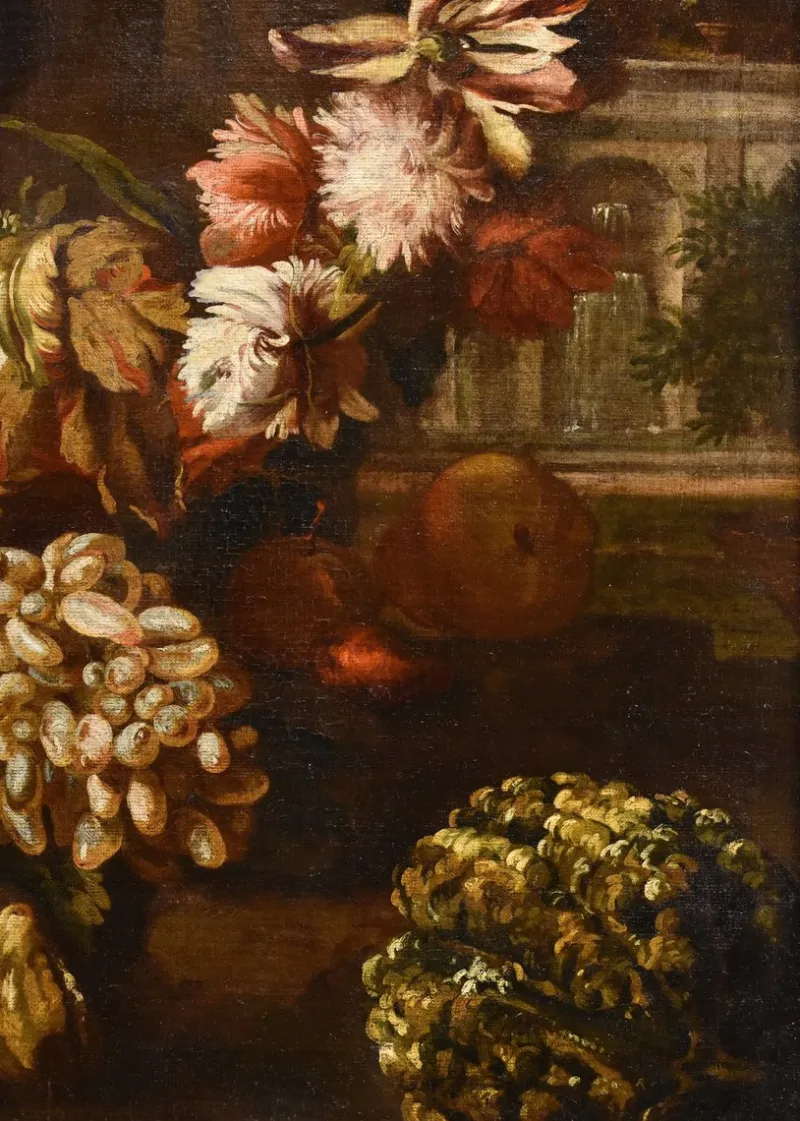
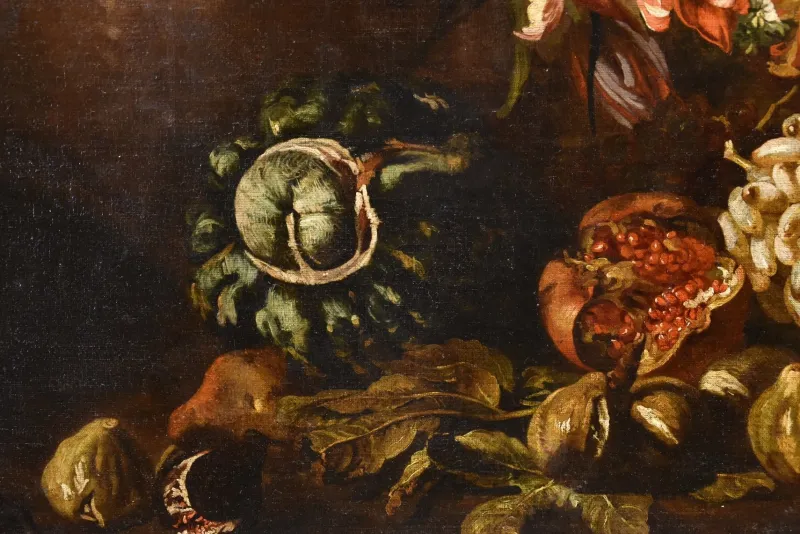
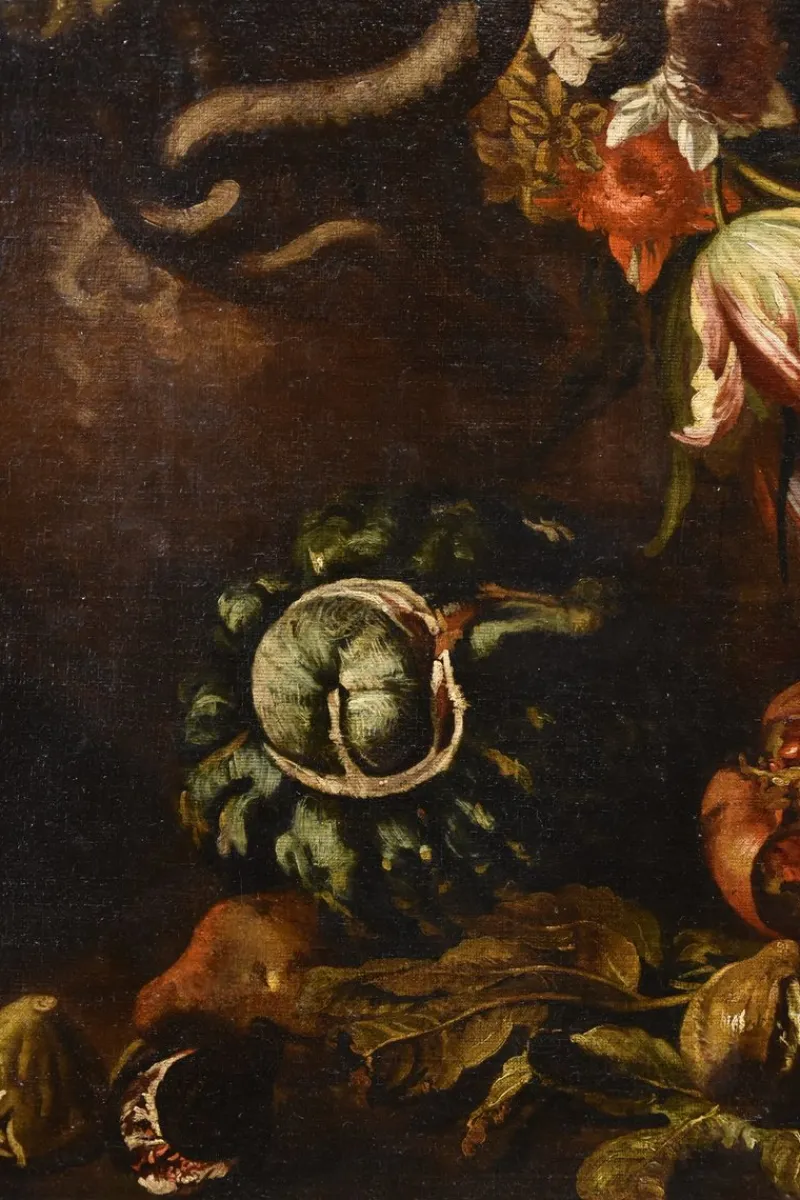
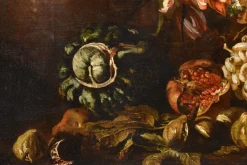
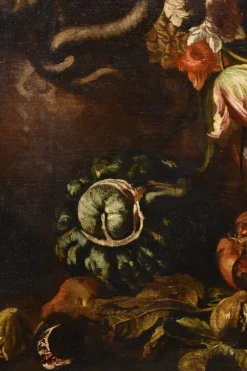
We are faced with a complex work conceived for enthusiasts willing to slowly make their way with their eyes (and sense of smell) among the fruit and flowers. Each individual element of the composition is weighed individually and conceived in relation to a larger whole. The reading of the painting is triggered by the melon on the right with its jagged rind (a trademark of the Ruoppolo family and a badge of belonging).
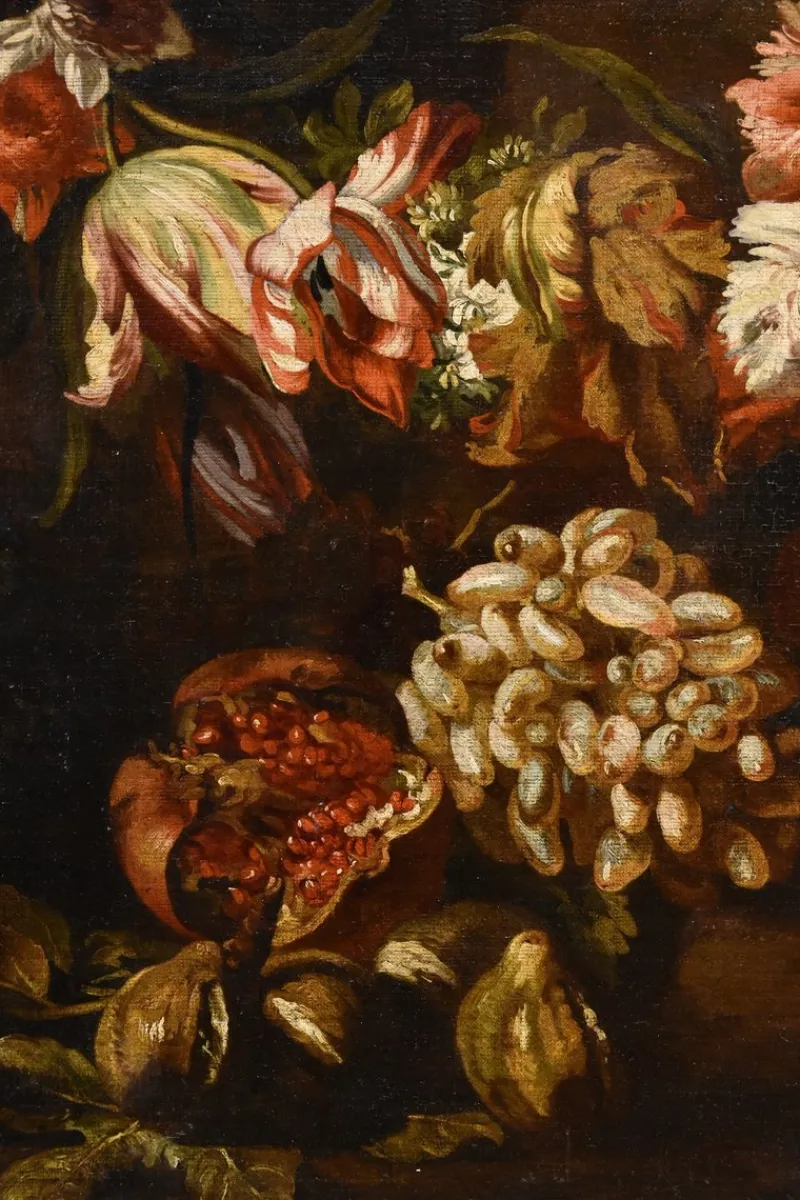
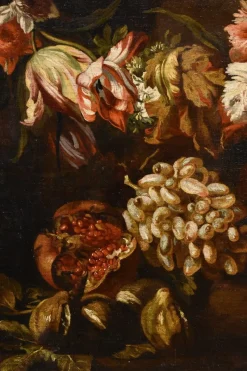
Immediately to the side, a rug of half-open figs and leaves occupies the foreground of the canvas.
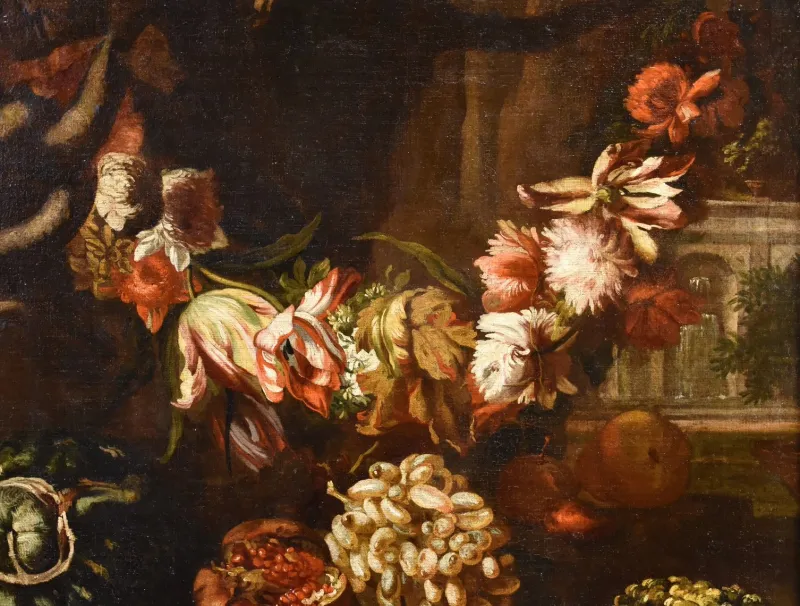
The diagonal arrangement of the fruits enlivens the composition, increasing its depth. The shadowy, almost earthy quality of the surface is expressed in the almost obscenely open pomegranate with its seeds dotted with light; further to the right, fireworks explode from the bunch of grapes (of the particular species known, in the South, as cornicella grapes).
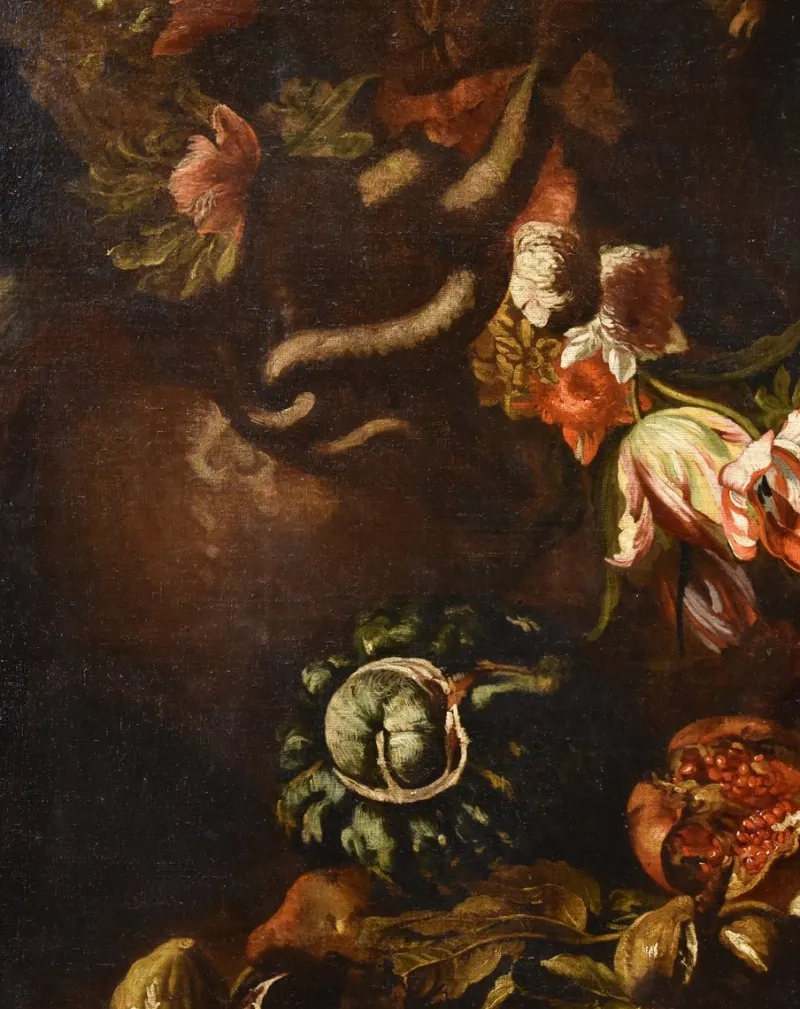
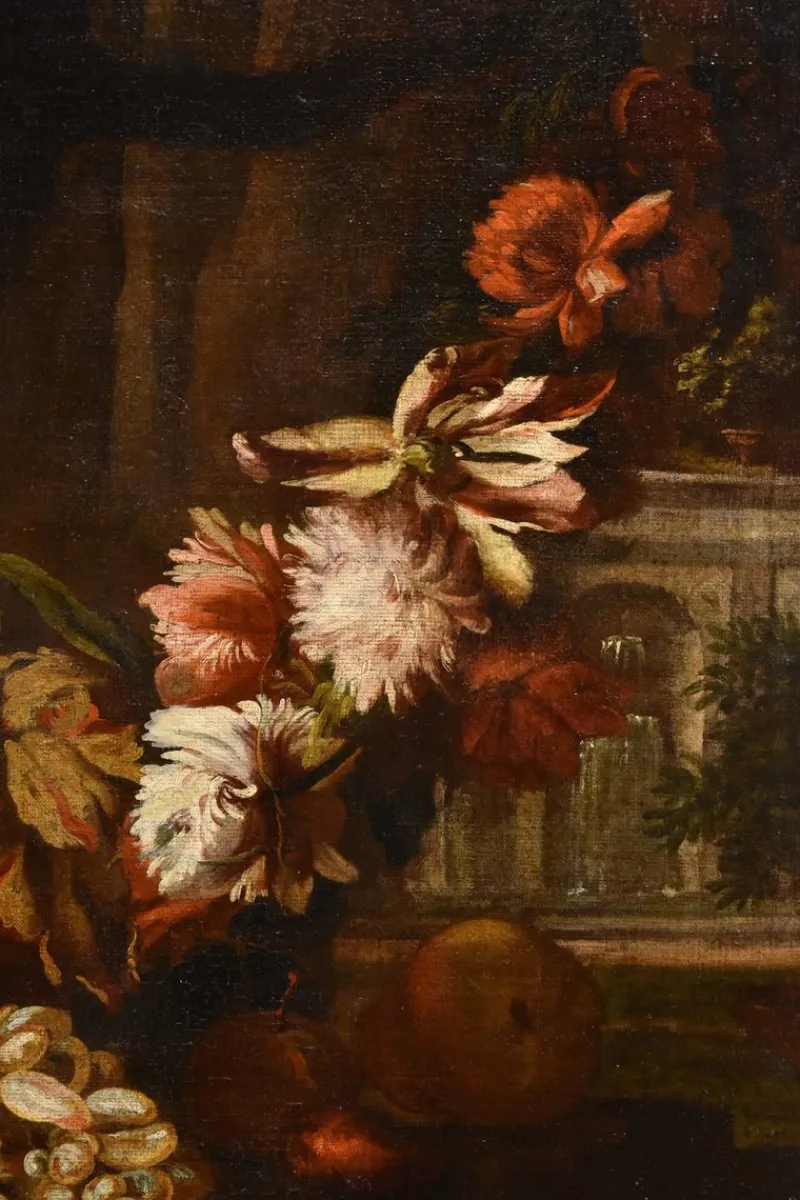
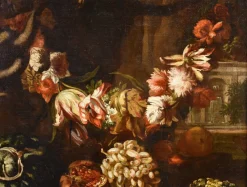
The painting’s spectacle might even end here if, in the center of the page, the festoon, resembling a multicolored hammock, didn’t assert itself as a dramatic coup and one of the beautiful ideas of the final season of still life. To use an overused metaphor, these paintings are a feast for the eyes. To the right, in the background, a piece of architecture, a fountain, peeks out as a tribute, a piece that Giordano himself would not have rendered with less fervor.[…] ”
ADDITIONAL INFORMATION:
The work being sold is completed by a beautiful gilded frame and comes with a certificate of authenticity and guarantee.
The seller assumes all responsibility for this listing.
About This Piece
(Naples, records from 1680 to 1708)
Still Life with Flower and Fruit Festoon
Oil on canvas,
89 x 117 cm – framed 104 x 132 cm.
with expertise and attribution study by Prof. Stefano Causa (University of Naples)
This composition of fruit with a flower festoon is by Aniello Ascione and is a significant addition to the Neapolitan still life genre—the most baroque and decorative imaginable. The naturalistic, still Caravaggesque impetus of early 17th-century specialists, from Luca Forte to Porpora, now seems a distant memory.
Ascione’s name also comes from a comparison with the signed Still Life in the Civic Museum of Castello Ursini in Catania, compared to which the painting under consideration qualifies as a sixteenth-scale version. It is not uncommon, moreover, for still life painters’ workshops to feature easily repeatable motifs. The melon on the right, the chasing of flowers, and, in the background, the profile of a column or fountain. We could compare them to the standardized formal types employed by great Southern composers such as Alessandro or Domenico Scarlatti (with whom, incidentally, we are roughly contemporary with our painting).
Planned with a diagonal cut, our painting connects to the Neapolitan climate divided between Giordano and Francesco Solimena (also in its connections with the contemporary Roman scene by Michelangelo da Campidoglio and Spadino). These are the years in which still life reached, so to speak, its maximum presentational volume. But let’s not get ahead of ourselves and get closer.
We are faced with a complex work conceived for enthusiasts willing to slowly make their way with their eyes (and sense of smell) among the fruit and flowers. Each individual element of the composition is weighed individually and conceived in relation to a larger whole. The reading of the painting is triggered by the melon on the right with its jagged rind (a trademark of the Ruoppolo family and a badge of belonging).
Immediately to the side, a rug of half-open figs and leaves occupies the foreground of the canvas.
The diagonal arrangement of the fruits enlivens the composition, increasing its depth. The shadowy, almost earthy quality of the surface is expressed in the almost obscenely open pomegranate with its seeds dotted with light; further to the right, fireworks explode from the bunch of grapes (of the particular species known, in the South, as cornicella grapes).
The painting’s spectacle might even end here if, in the center of the page, the festoon, resembling a multicolored hammock, didn’t assert itself as a dramatic coup and one of the beautiful ideas of the final season of still life. To use an overused metaphor, these paintings are a feast for the eyes. To the right, in the background, a piece of architecture, a fountain, peeks out as a tribute, a piece that Giordano himself would not have rendered with less fervor.[…] ”
ADDITIONAL INFORMATION:
The work being sold is completed by a beautiful gilded frame and comes with a certificate of authenticity and guarantee.
Click here for full descriptionClose description
| Period | Before 1890 |
|---|---|
| Year | 1690 |
| Production Period | Before 1890 |
| Country of Manufacture | Italy |
| Identifying Marks | This piece is attributed to the above-mentioned designer/maker. It has no attribution mark |
| Style | Classical, Grand Tour, Italian, Louis XIV, Mediterranean, Old Masters, Baroque, Rococo |
| Detailed Condition | Good — This vintage/antique item may have some wear such as scratches and other signs of ageing. |
| Restoration and Damage Details | Light wear consistent with age and use, Patina consistent with age and use, Reupholstered, Partially restored |
| Product Code | CYT-2317097 |
| Materials | Oil on Canvas |
| Color | Multicolored |
| Width | 132 cm 52.0 inch |
| Depth | 12 cm 4.7 inch |
| Height | 104 cm 40.9 inch |
Be the first to review “Pamono Aniello Ascione, Still Life with Flowers & Fruit, 1690, Oil on Canvas, Framed> Old Masters”
Related products
Coffee & Side Tables
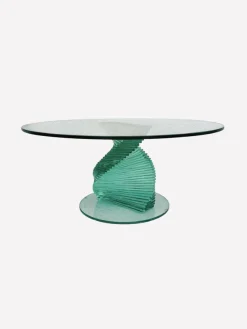
Sale Pamono Helix Spiral Sculptural Glass Coffee Table in the style of Danny Lane, 1980s


Beds & Bedroom Sets
Cabinets & Wardrobes



Login
Reviews
There are no reviews yet.