
Pamono After Michele Desubleo, Portrait of King Solomon, 1650, Oil on Canvas> Old Masters|Classical
$136.99
Michele Desubleo (Maubeuge, 1602 – Parma, 1676) – attributablePortrait of a Gentleman as Solomon, the Wise KingOil on ca…
Portrait of a Gentleman as Solomon, the Wise King
Oil on canvas
120 x 141 cm., framed in a gilded wooden frame, 134 x 162 cm.
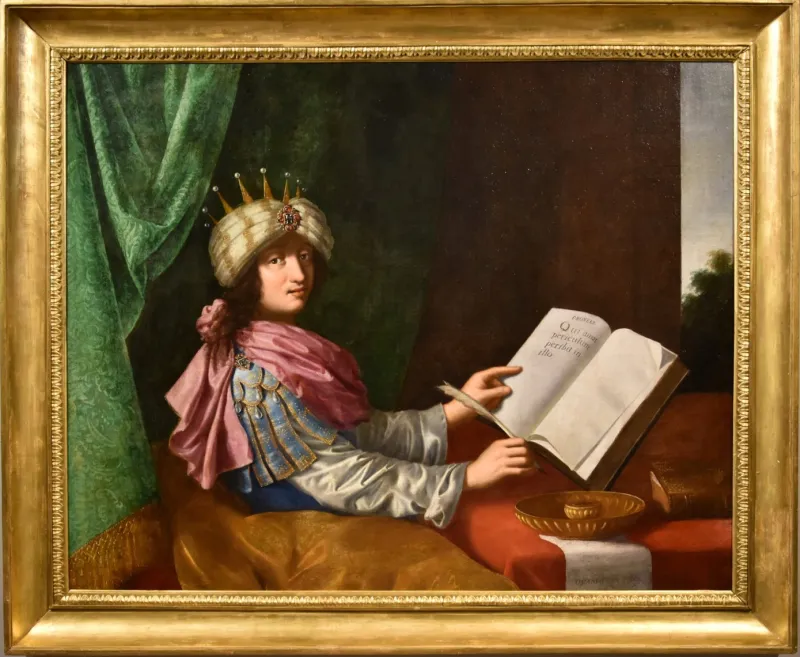
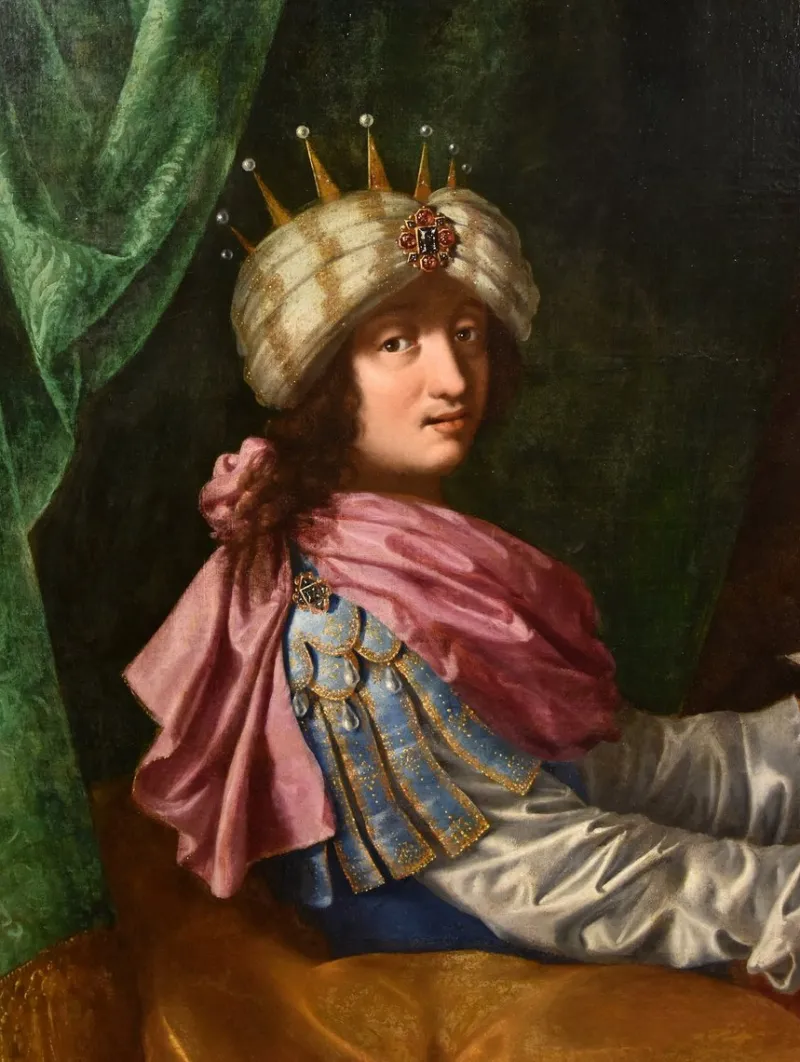
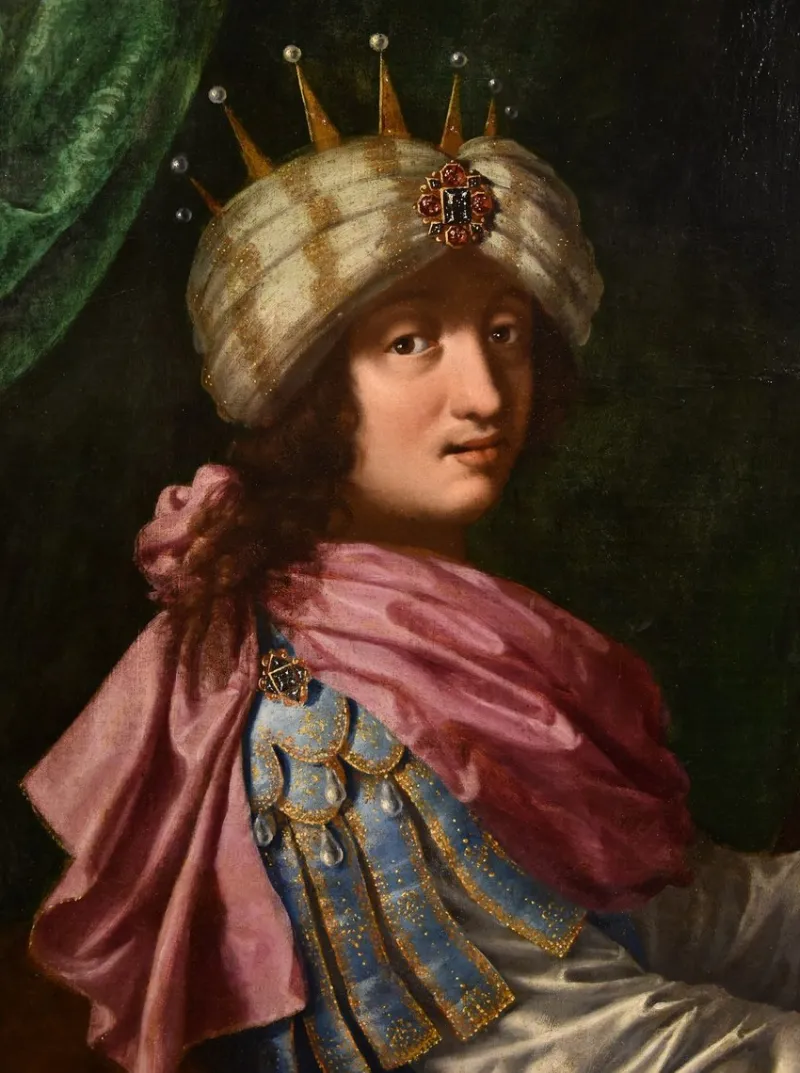
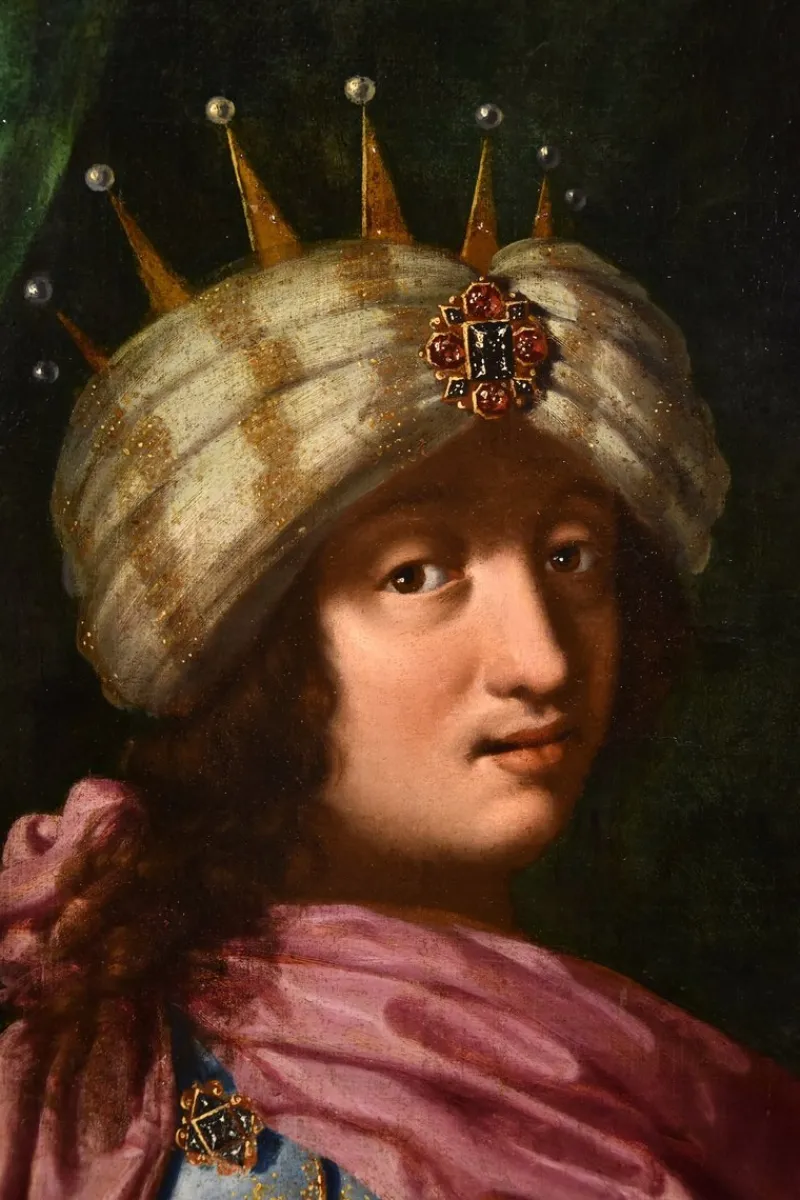
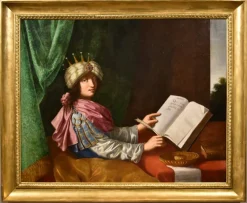
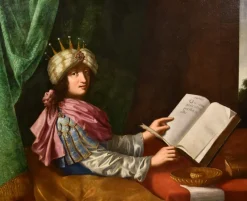
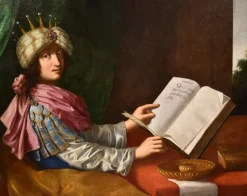
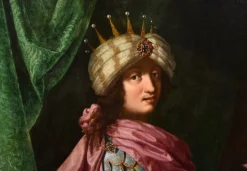
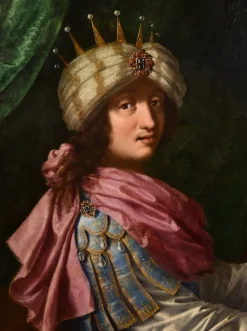
This beautiful painting depicts the famous King Solomon, a legendary biblical figure who over the centuries has become the personification of the good ruler and is proverbially recognized as one of the wisest politicians in history. The sitter’s features presumably represent the work’s patron, who wanted to emphasize his own image by personifying a figure of legendary fame.
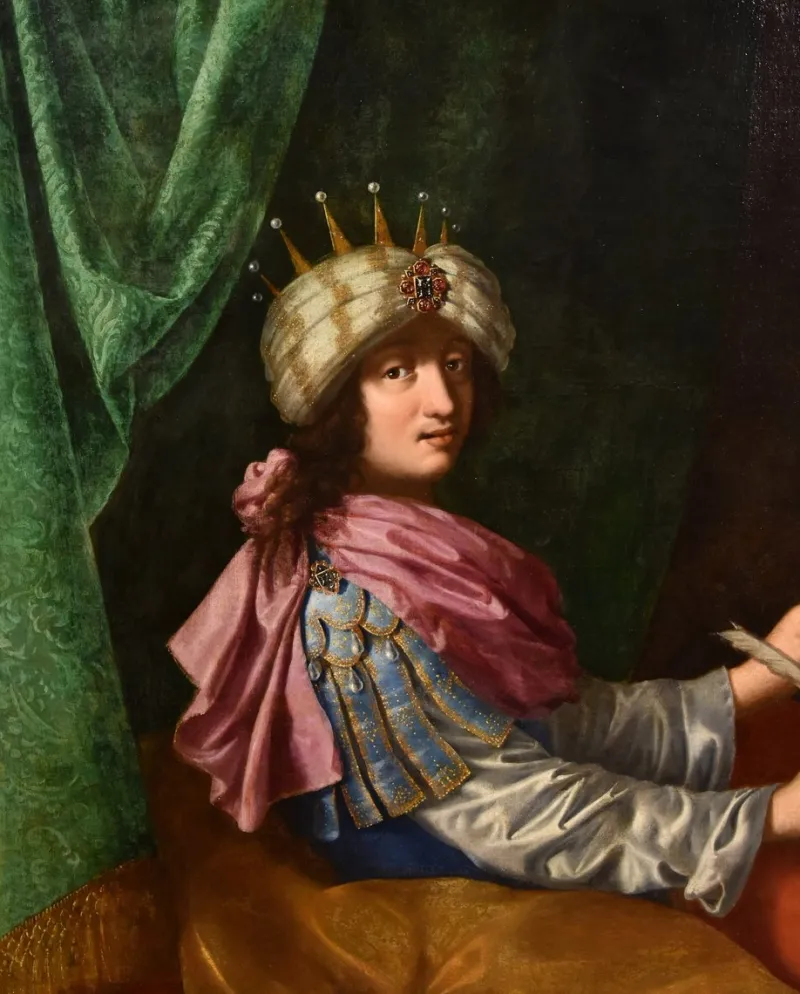
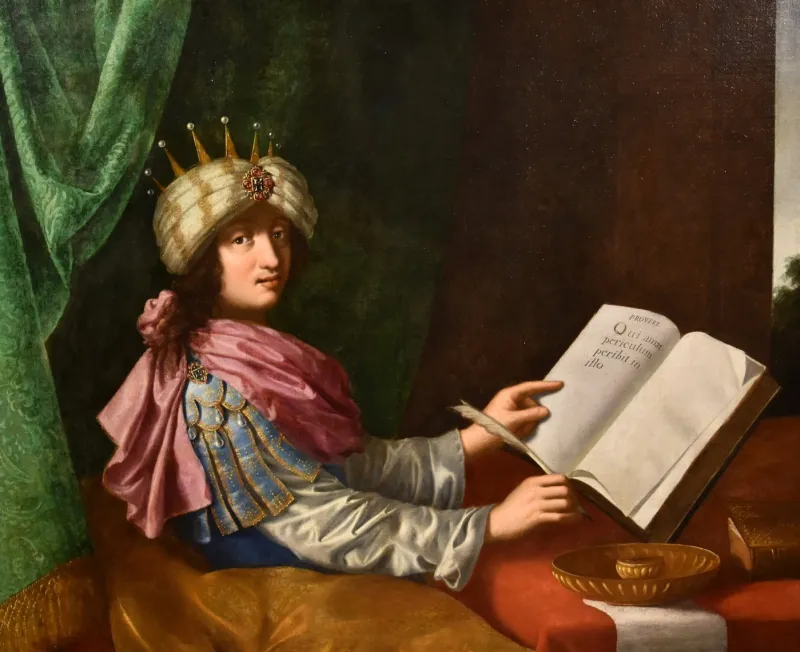
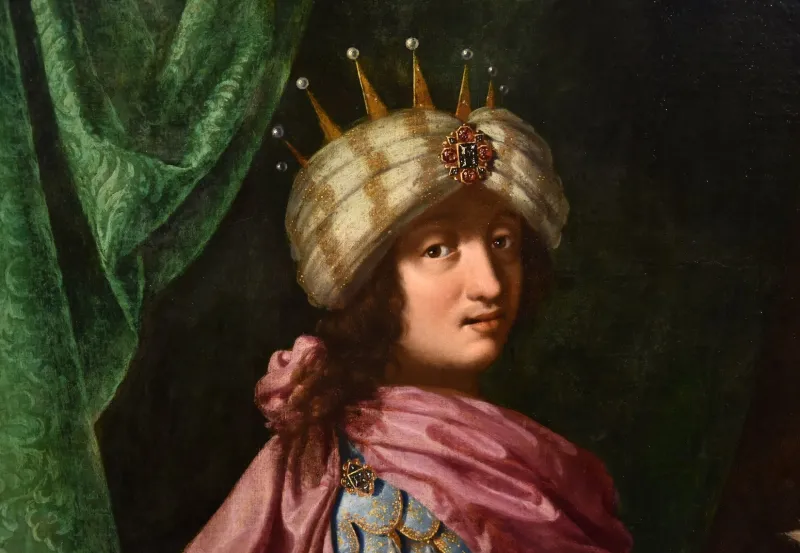
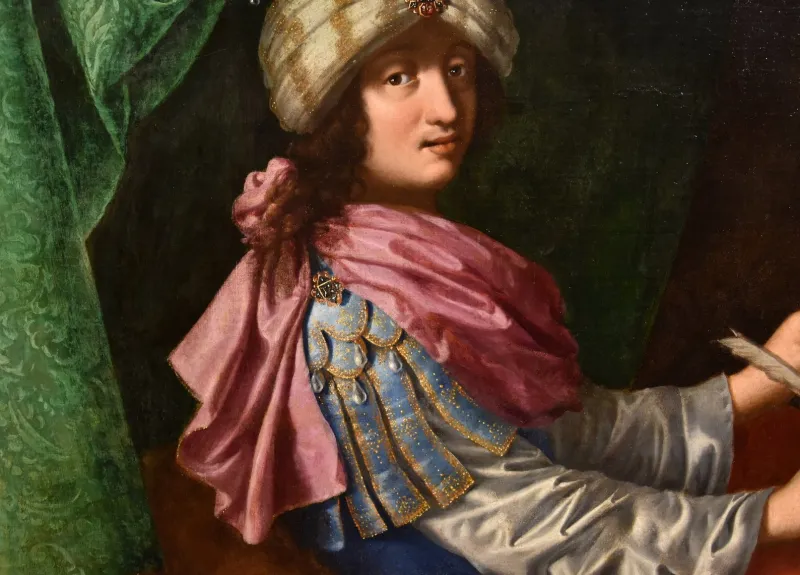
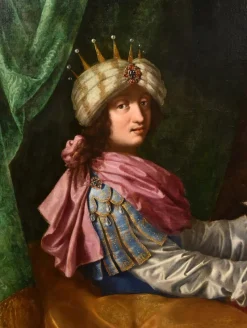
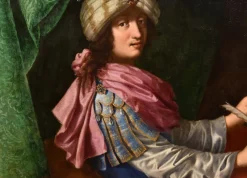
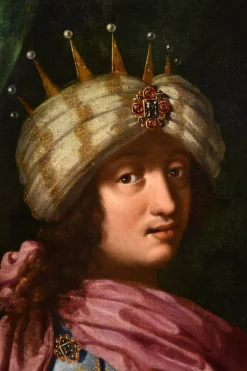
The ruler, wearing an elegant oriental-style crowned headdress, is dressed in sumptuous robes of silk, precious brocade, and pearls draped around his shoulders. He wears regal jewels and is depicted writing with a quill pen.
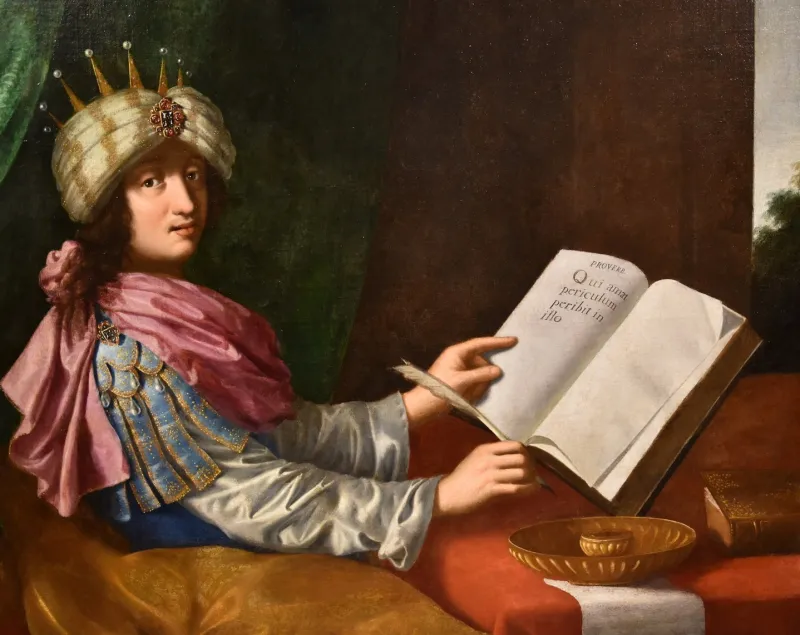
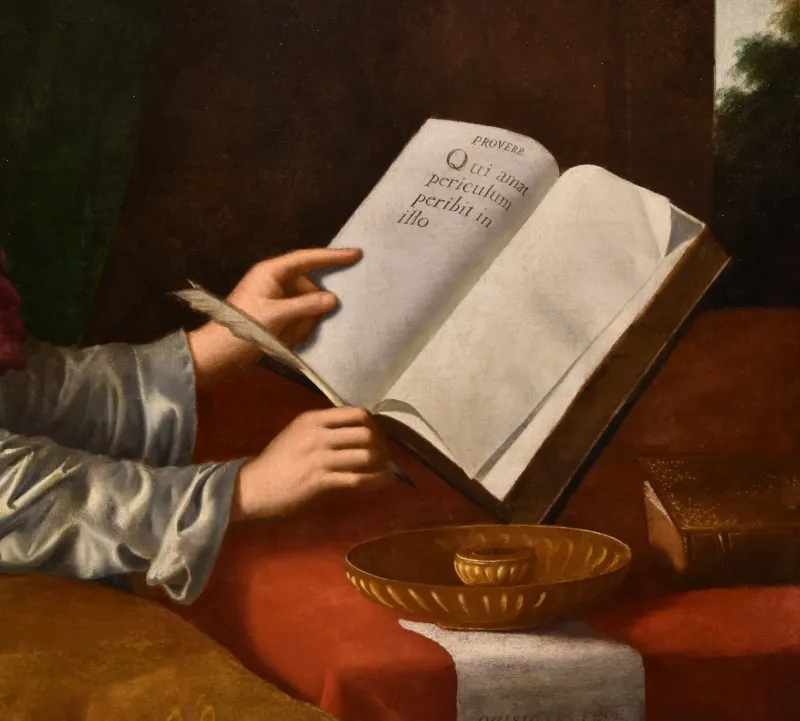
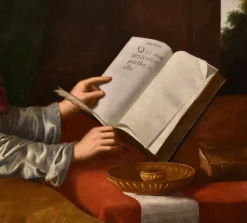
Reinforcing his image of wisdom, he holds an open book in his hands, which contains a Latin phrase from Ecclesiastes, one of the short books of the Old Testament dedicated to moral ethics and written by King Solomon himself. This detail, of great semantic refinement, suggests that the patron was not merely an art collector but a man of culture.
The phrase “Qui amat periculum, peribit in illo” (Ecclesiastes, III-27) – “He who loves danger will perish in it” – alludes to anyone who willingly places himself in danger by succumbing to temptation and sin, destined to perish.
At the bottom of the composition is a sheet bearing a second inscription, related to the first, “Ocasiones fugit,” a sort of exhortation the wise ruler wishes to offer the viewer. Anyone who desires a virtuous life, directed toward good, must not only abandon sin, but also the opportunity to sin, thus drawing on their moral virtue.
Turning now to the stylistic characteristics of our precious canvas, their analysis leads us to place its origins in the magnificent classicist expressiveness of seventeenth-century Bolognese culture, with clear references to the master Guido Reni.
The compositional details, first and foremost the enameling of the facial skin, rendered with incredible brilliance, as well as the precious details of the clothing and the emerald green damask drape, lead us to attribute the work to the great Franco-Flemish painter Michele Desubleo (Maubeuge, 1602 – Parma, 1676). Considered one of Reni’s finest students, he owes his great collector’s success to his extraordinary ability to blend the best of Bolognese tradition with his Nordic origins and Roman influences, elements that translate into a lexicon of balanced and rare elegance.
In detail, while the masterful use of bright, enameled colors attests to the Nordic origins of his style, and the shadows of the ample draperies betray a connection, especially with the works of Simon Vouet in Rome, where he is documented in 1624 alongside his half-brother Nicolas Regnier, the contours of his figures, confident yet always oriented towards a refined form, bring him closer to the style of the masterpieces of his master, Guido Reni.
Accompanied by a legally compliant photographic certificate of authenticity.
We would like to inform you that, given the fragility of some antique frames, there is a possibility that small cracks in the gilding may occur during transport, despite the utmost care in packaging.
The seller assumes all responsibility for this listing.
About This Piece
Portrait of a Gentleman as Solomon, the Wise King
Oil on canvas
120 x 141 cm., framed in a gilded wooden frame, 134 x 162 cm.
This beautiful painting depicts the famous King Solomon, a legendary biblical figure who over the centuries has become the personification of the good ruler and is proverbially recognized as one of the wisest politicians in history. The sitter’s features presumably represent the work’s patron, who wanted to emphasize his own image by personifying a figure of legendary fame.
The ruler, wearing an elegant oriental-style crowned headdress, is dressed in sumptuous robes of silk, precious brocade, and pearls draped around his shoulders. He wears regal jewels and is depicted writing with a quill pen.
Reinforcing his image of wisdom, he holds an open book in his hands, which contains a Latin phrase from Ecclesiastes, one of the short books of the Old Testament dedicated to moral ethics and written by King Solomon himself. This detail, of great semantic refinement, suggests that the patron was not merely an art collector but a man of culture.
The phrase “Qui amat periculum, peribit in illo” (Ecclesiastes, III-27) – “He who loves danger will perish in it” – alludes to anyone who willingly places himself in danger by succumbing to temptation and sin, destined to perish.
At the bottom of the composition is a sheet bearing a second inscription, related to the first, “Ocasiones fugit,” a sort of exhortation the wise ruler wishes to offer the viewer. Anyone who desires a virtuous life, directed toward good, must not only abandon sin, but also the opportunity to sin, thus drawing on their moral virtue.
Turning now to the stylistic characteristics of our precious canvas, their analysis leads us to place its origins in the magnificent classicist expressiveness of seventeenth-century Bolognese culture, with clear references to the master Guido Reni.
The compositional details, first and foremost the enameling of the facial skin, rendered with incredible brilliance, as well as the precious details of the clothing and the emerald green damask drape, lead us to attribute the work to the great Franco-Flemish painter Michele Desubleo (Maubeuge, 1602 – Parma, 1676). Considered one of Reni’s finest students, he owes his great collector’s success to his extraordinary ability to blend the best of Bolognese tradition with his Nordic origins and Roman influences, elements that translate into a lexicon of balanced and rare elegance.
In detail, while the masterful use of bright, enameled colors attests to the Nordic origins of his style, and the shadows of the ample draperies betray a connection, especially with the works of Simon Vouet in Rome, where he is documented in 1624 alongside his half-brother Nicolas Regnier, the contours of his figures, confident yet always oriented towards a refined form, bring him closer to the style of the masterpieces of his master, Guido Reni.
Accompanied by a legally compliant photographic certificate of authenticity.
We would like to inform you that, given the fragility of some antique frames, there is a possibility that small cracks in the gilding may occur during transport, despite the utmost care in packaging.
Click here for full descriptionClose description
| Period | Before 1890 |
|---|---|
| Year | 1650 |
| Production Period | Before 1890 |
| Country of Manufacture | Italy |
| Identifying Marks | This piece is attributed to the above-mentioned designer/maker. It has no attribution mark |
| Style | Belgian, Classical, Figurative, Italian, Louis XIII, Medieval, Mediterranean, Old Masters, Portraiture, Renaissance, Antique, Baroque, Belgian, Classical, Figurative, Italian, Louis XIII, Medieval, Mediterranean, Old Masters, Portraiture, Renaissance, Baroque |
| Detailed Condition | Good — This vintage/antique item may have some wear such as scratches and other signs of ageing. |
| Restoration and Damage Details | Light wear consistent with age and use, Patina consistent with age and use, Reupholstered, Partially restored |
| Product Code | CYT-2326330 |
| Materials | Oil on Canvas |
| Color | Multicolored |
| Width | 162 cm 63.8 inch |
| Depth | 14 cm 5.5 inch |
| Height | 134 cm 52.8 inch |
Be the first to review “Pamono After Michele Desubleo, Portrait of King Solomon, 1650, Oil on Canvas> Old Masters|Classical”
Related products
Beds & Bedroom Sets



Cabinets & Wardrobes

Coffee & Side Tables
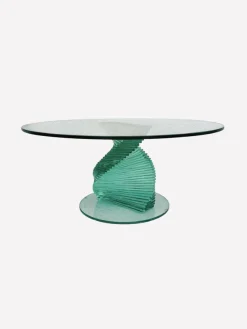
Sale Pamono Helix Spiral Sculptural Glass Coffee Table in the style of Danny Lane, 1980s


Children's Chairs
Dressers, Commodes & Chests
Daybeds & Chaises Lounges
New Pamono Antique Victorian Oak Chaise Longue in Green Leather with Brass Castors
Login

Reviews
There are no reviews yet.