
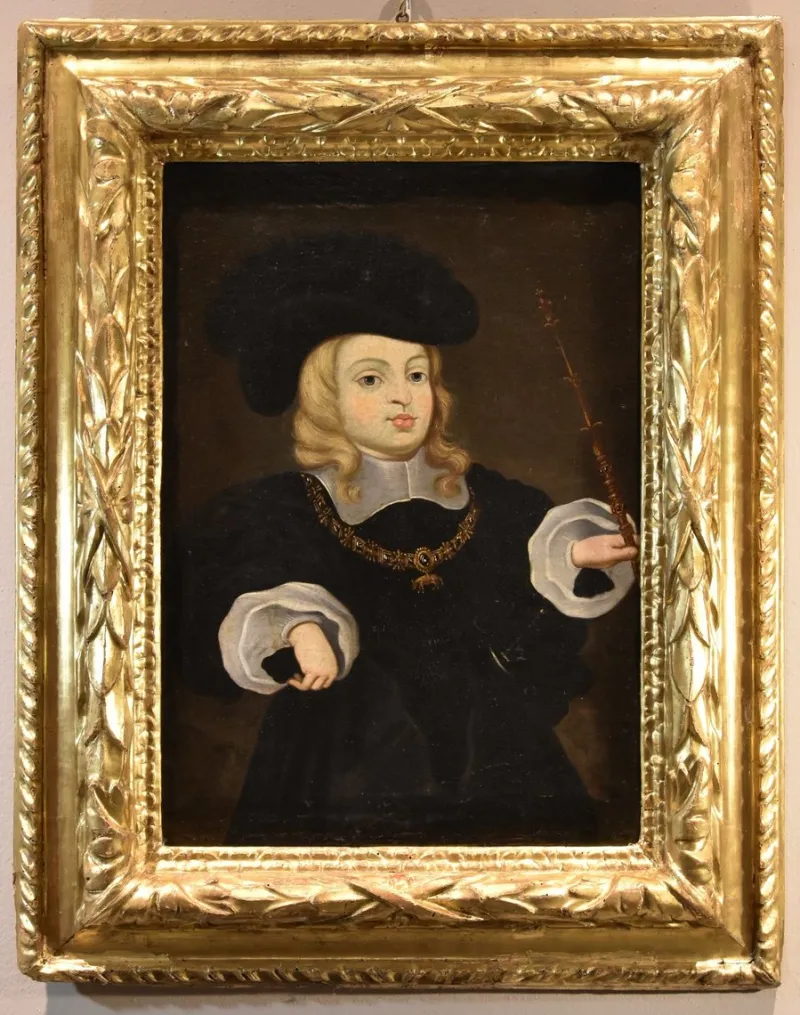
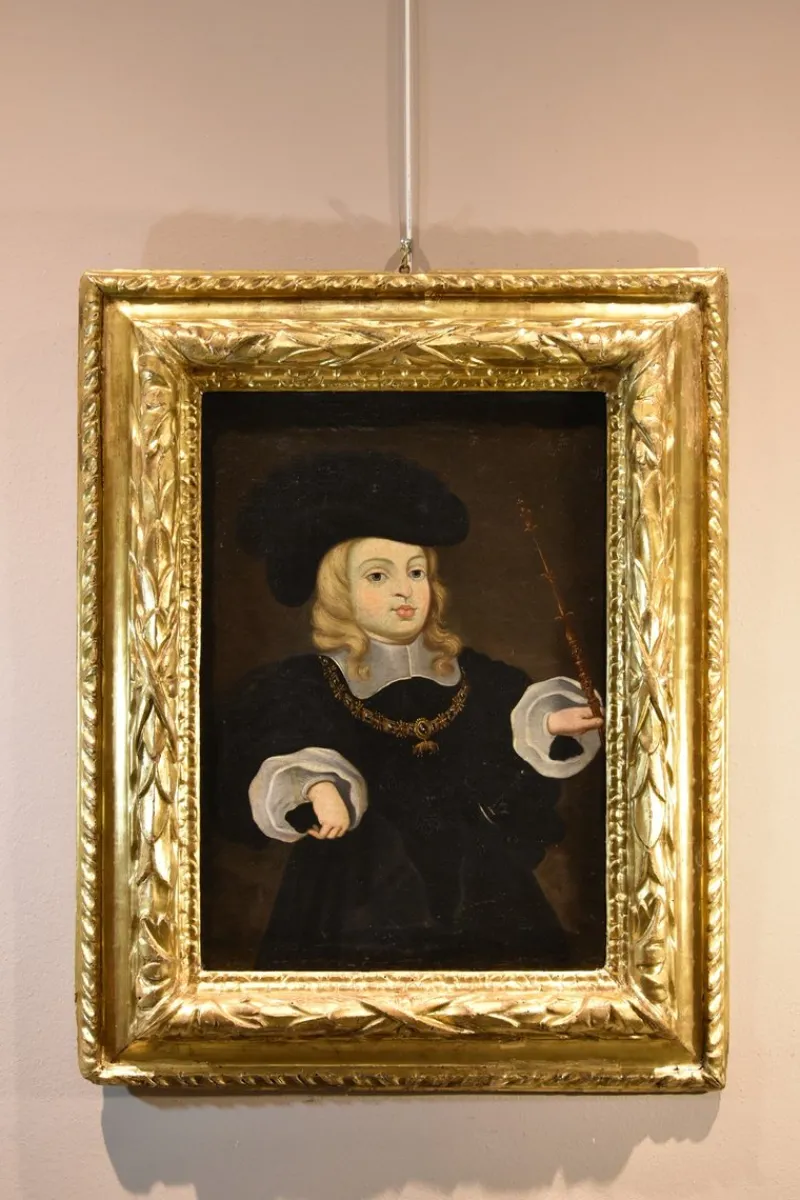
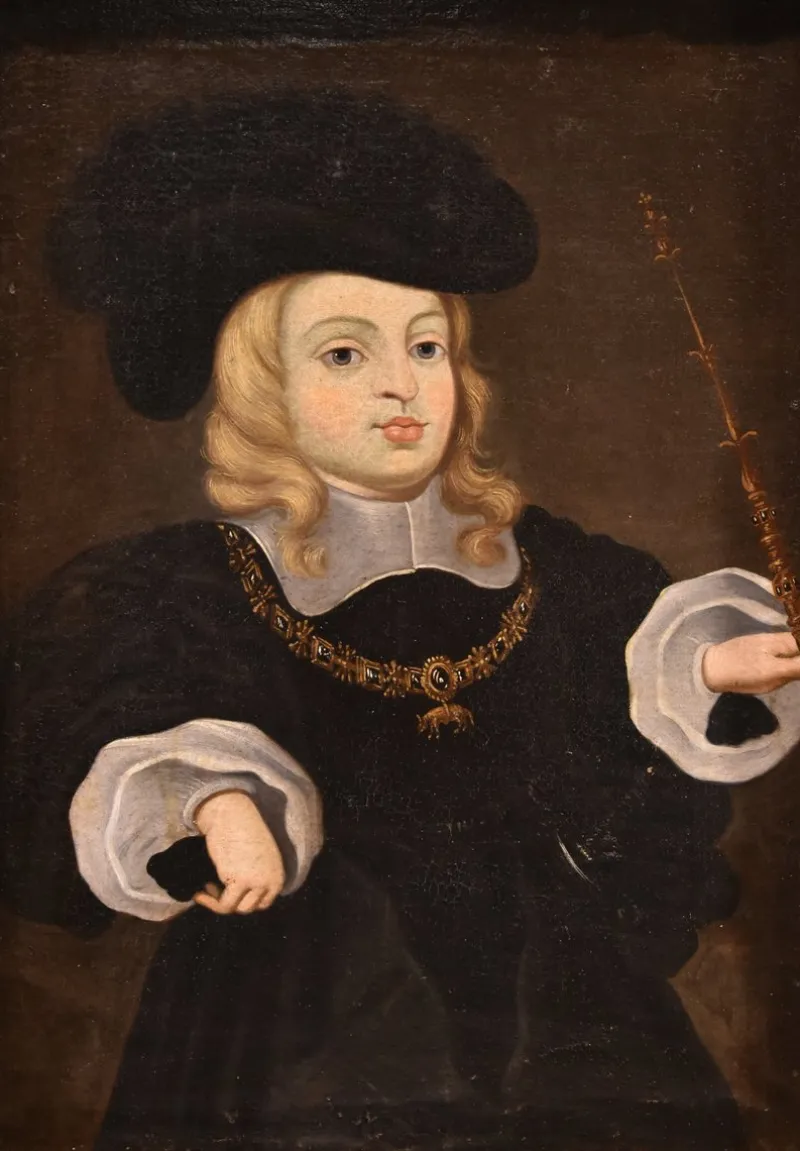
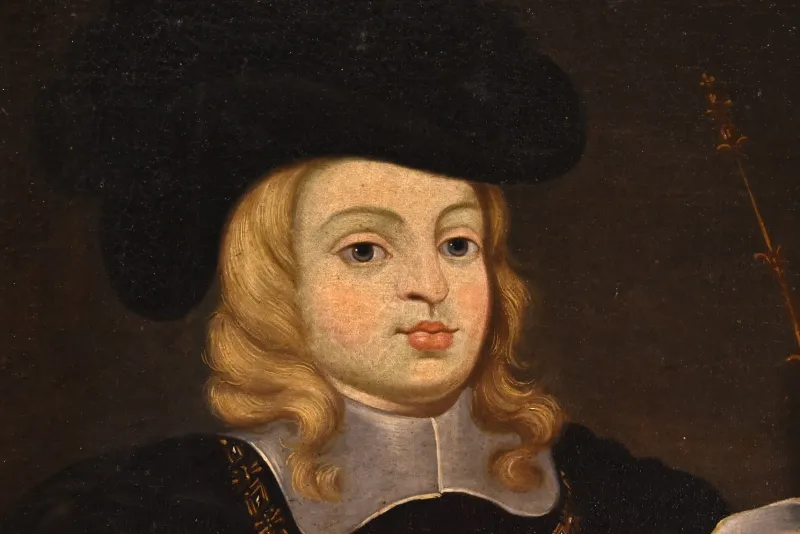
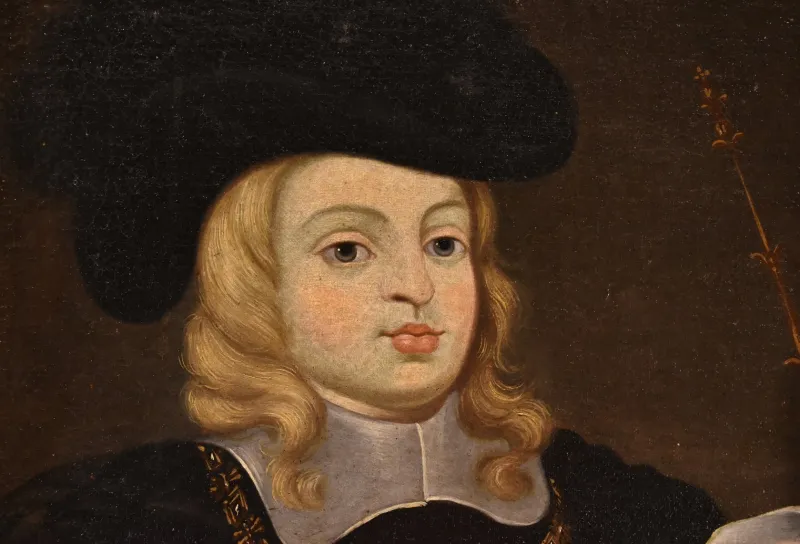
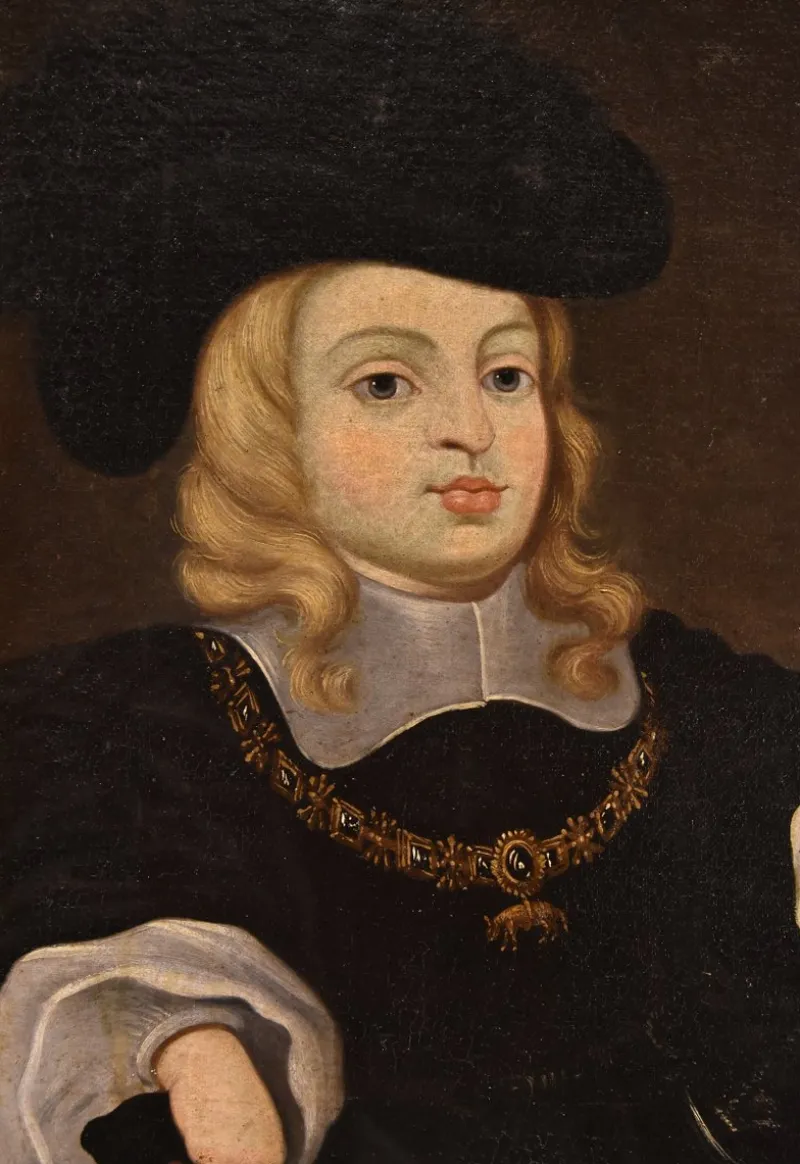
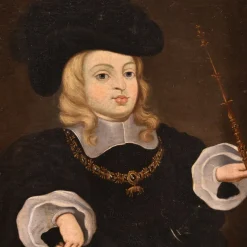
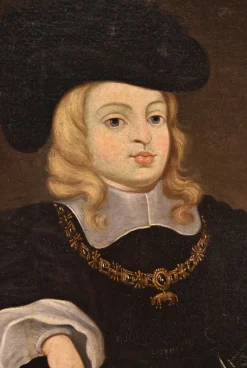
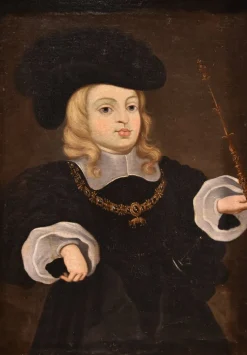
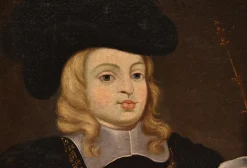
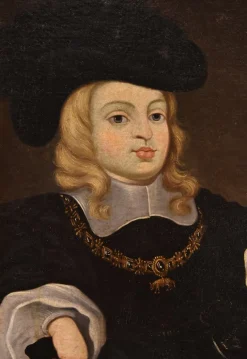
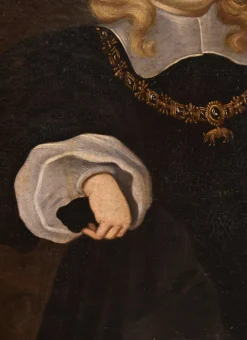
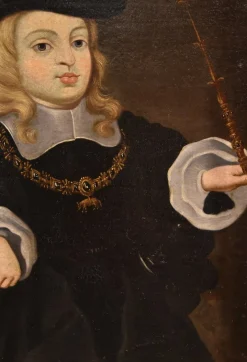
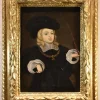
Pamono After Juan Bautista Martínez Del Mazo, Charles II King of Spain Portrait as a Child, 1667, Oil on Canvas, Framed> Old Masters|Classical
$130.89
Attributable to Juan Bautista Martínez del Mazo (Castilla 1611 – Madrid 1667)a student and collaborator of Diego Veláz…
a student and collaborator of Diego Velázquez
Portrait of Charles II, King of Spain, as a Child (1661-1700)
Spain, c. 1670
Oil on canvas (68 x 49 cm – In an antique frame 96 x 75 cm)
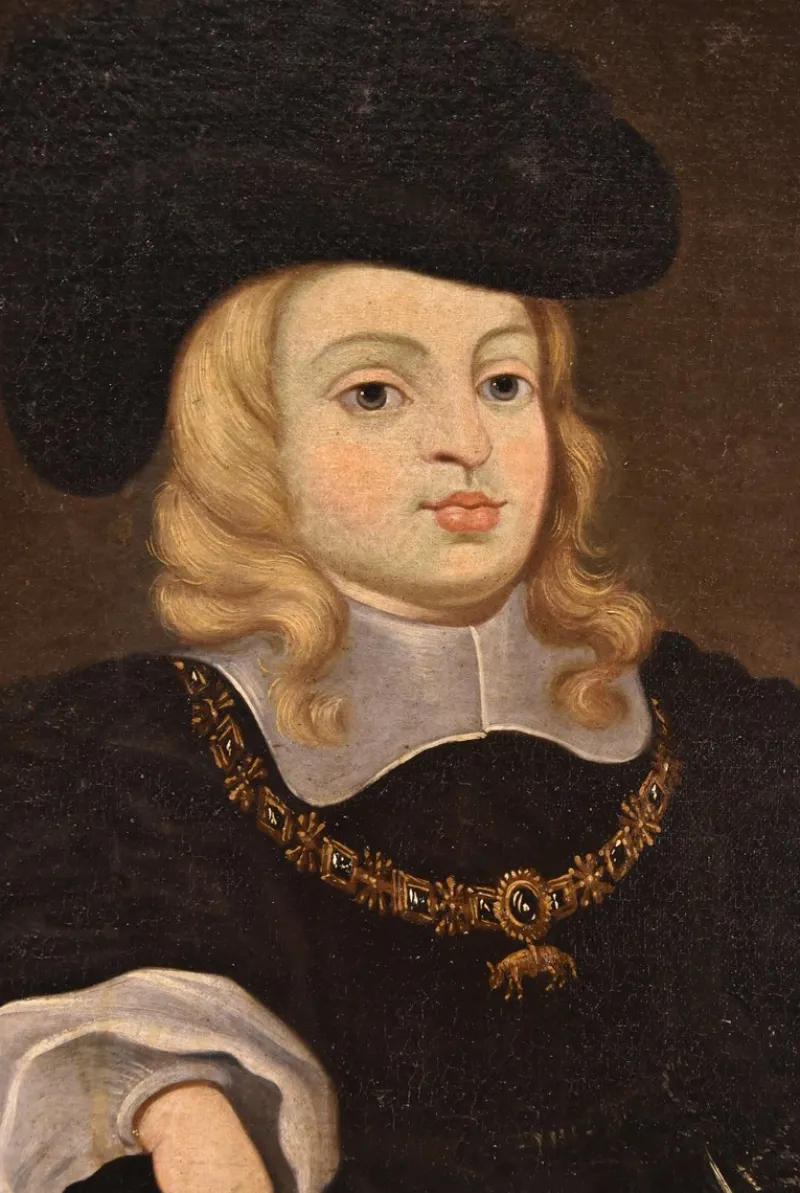
The analysis of this portrait, and in particular the typology with which its features were depicted, brings us back to the great tradition of the 17th-century Spanish school.
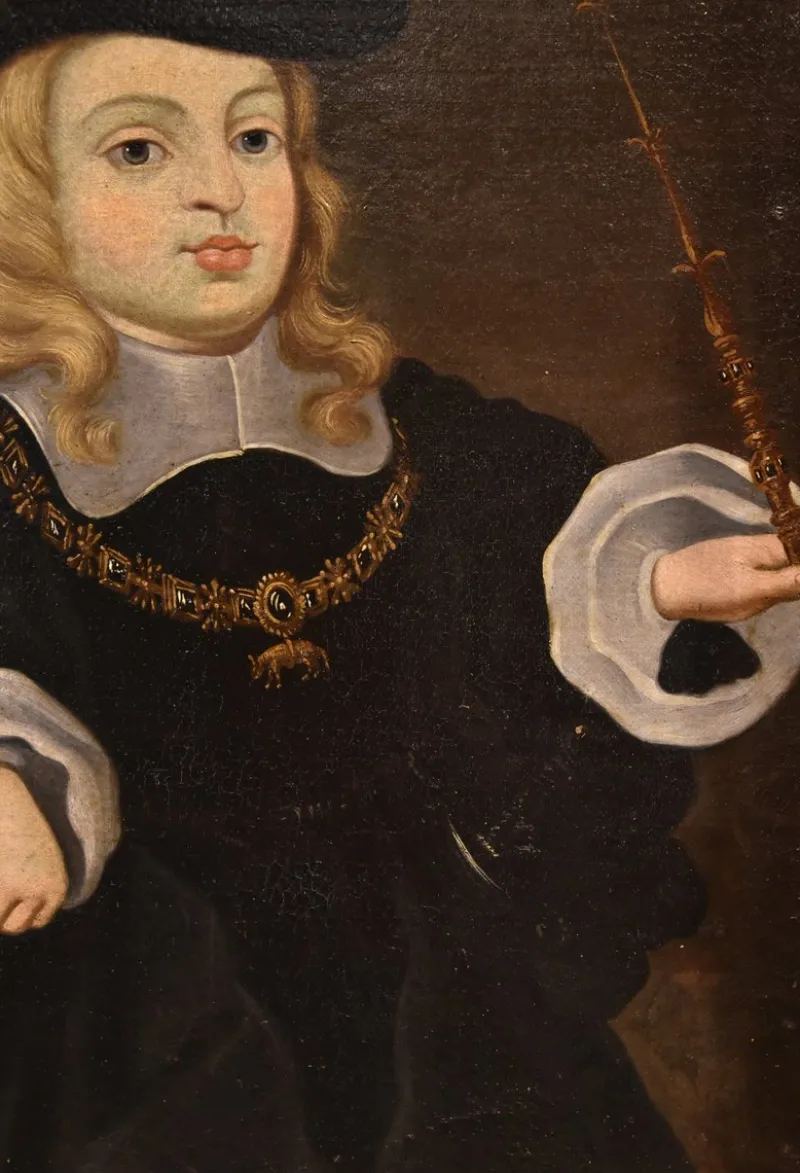
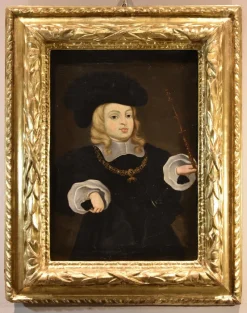
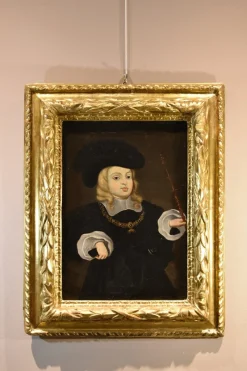
It depicts King Charles II of Spain, at a young age and dressed in typical Spanish fashion, the youngest child and only son of Philip IV of Spain and his second wife Maria Anna of Austria, as well as the last of the Habsburg dynasty to rule Spain.
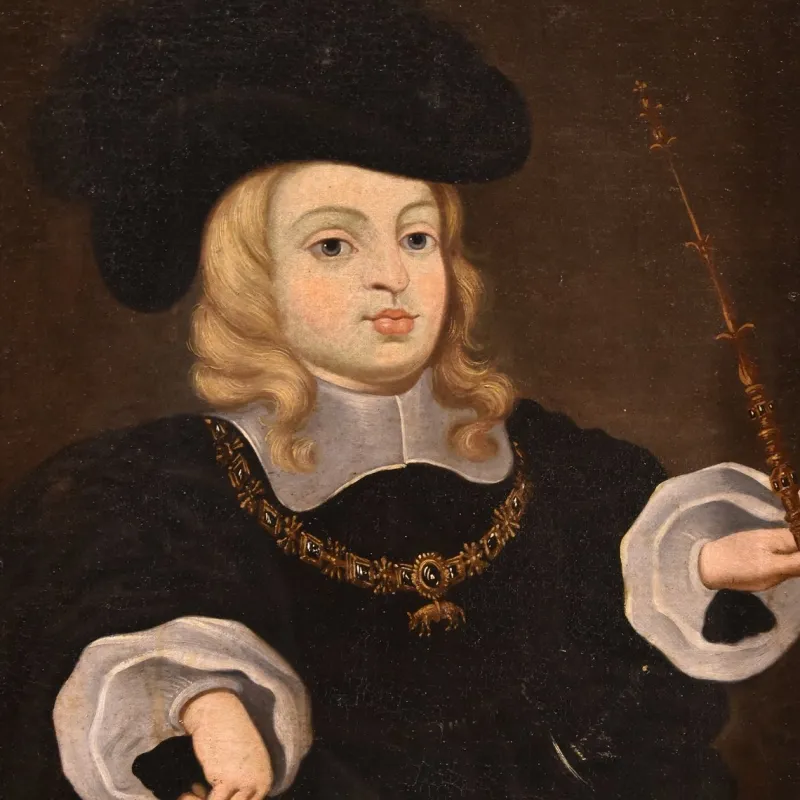
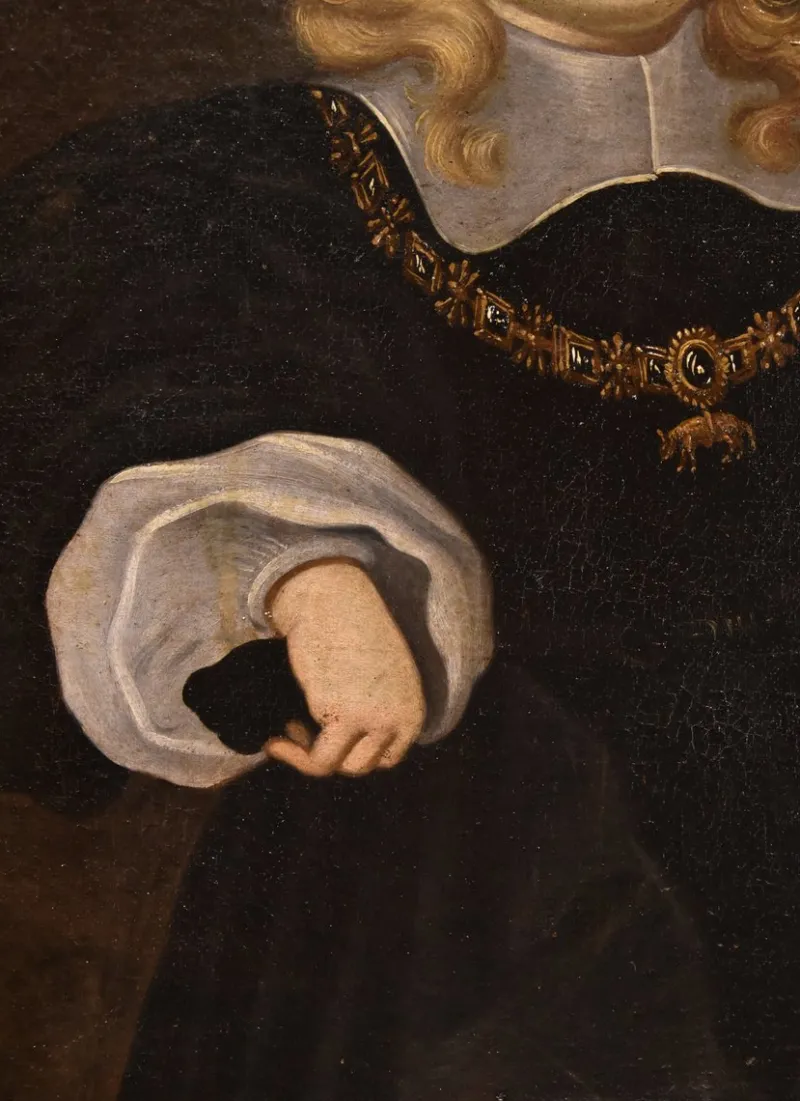
The work echoes the large composition, now in the Royal Collection, which portrayed the young ruler full-length at the age of four (dated 1665), dressed in a black robe and cloak, and a large plumed hat, presumably shortly after the death of his father, Philip IV, to celebrate the young king’s accession to the throne and his proclamation as King of Spain. (See photo for details.)
He holds a scepter in his left hand and wears the Order of the Golden Fleece, while a silver-ornamented sword hilt is visible from his left cuff, heightening the formality and solemnity of the portrait.
The original composition, like the proposed one, initially attributed to Veleasquez (Seville 1599 – Madrid 1660), was later placed in the pictorial production of his son-in-law Juan Bautista Martínez del Mazo, a pupil of Velázquez and his collaborator for nearly three decades in the production of court portraits.
The long period of closeness allowed him to fully assimilate the master’s style, creating compositions that strongly reveal his direct influence. After Velázquez’s death in 1660, Mazo succeeded his father-in-law as court painter to Philip IV of Spain, then to Charles II until his death in 1667.
Our canvas is a replica of the large painting in the Royal Collection, created by Mazo himself in a smaller format, presenting the ruler in half-length, presumably as a formal gift.
Several other similar versions of the composition are known; An anonymous work in the Royal Monastery of San Lorenzo de El Escorial, in which the child king holds an orb and a scepter, is otherwise similar to the painting in the Royal Collection. Another anonymous version in the Prado Museum (P002534) is also available. The reclining lion is missing from the latter, and a dog has been added.
ADDITIONAL INFORMATION:
The work is sold with a certificate of authenticity and an iconographic .
The seller assumes all responsibility for this listing.
About This Piece
a student and collaborator of Diego Velázquez
Portrait of Charles II, King of Spain, as a Child (1661-1700)
Spain, c. 1670
Oil on canvas (68 x 49 cm – In an antique frame 96 x 75 cm)
The analysis of this portrait, and in particular the typology with which its features were depicted, brings us back to the great tradition of the 17th-century Spanish school.
It depicts King Charles II of Spain, at a young age and dressed in typical Spanish fashion, the youngest child and only son of Philip IV of Spain and his second wife Maria Anna of Austria, as well as the last of the Habsburg dynasty to rule Spain.
The work echoes the large composition, now in the Royal Collection, which portrayed the young ruler full-length at the age of four (dated 1665), dressed in a black robe and cloak, and a large plumed hat, presumably shortly after the death of his father, Philip IV, to celebrate the young king’s accession to the throne and his proclamation as King of Spain. (See photo for details.)
He holds a scepter in his left hand and wears the Order of the Golden Fleece, while a silver-ornamented sword hilt is visible from his left cuff, heightening the formality and solemnity of the portrait.
The original composition, like the proposed one, initially attributed to Veleasquez (Seville 1599 – Madrid 1660), was later placed in the pictorial production of his son-in-law Juan Bautista Martínez del Mazo, a pupil of Velázquez and his collaborator for nearly three decades in the production of court portraits.
The long period of closeness allowed him to fully assimilate the master’s style, creating compositions that strongly reveal his direct influence. After Velázquez’s death in 1660, Mazo succeeded his father-in-law as court painter to Philip IV of Spain, then to Charles II until his death in 1667.
Our canvas is a replica of the large painting in the Royal Collection, created by Mazo himself in a smaller format, presenting the ruler in half-length, presumably as a formal gift.
Several other similar versions of the composition are known; An anonymous work in the Royal Monastery of San Lorenzo de El Escorial, in which the child king holds an orb and a scepter, is otherwise similar to the painting in the Royal Collection. Another anonymous version in the Prado Museum (P002534) is also available. The reclining lion is missing from the latter, and a dog has been added.
ADDITIONAL INFORMATION:
The work is sold with a certificate of authenticity and an iconographic .
Click here for full descriptionClose description
| Period | Before 1890 |
|---|---|
| Year | 1667 |
| Production Period | Before 1890 |
| Country of Manufacture | Spain |
| Identifying Marks | This piece is attributed to the above-mentioned designer/maker. It has no attribution mark |
| Style | Classical, Figurative, Gothic, Italian, Louis XIII, Medieval, Mediterranean, Old Masters, Portraiture, Renaissance, Spanish, Baroque |
| Detailed Condition | Good — This vintage/antique item may have some wear such as scratches and other signs of ageing. |
| Restoration and Damage Details | Light wear consistent with age and use, Patina consistent with age and use, Reupholstered, Partially restored |
| Product Code | CYT-2331788 |
| Materials | Oil on Canvas |
| Color | Multicolored |
| Width | 75 cm 29.5 inch |
| Depth | 12 cm 4.7 inch |
| Height | 96 cm 37.8 inch |
Be the first to review “Pamono After Juan Bautista Martínez Del Mazo, Charles II King of Spain Portrait as a Child, 1667, Oil on Canvas, Framed> Old Masters|Classical”
Related products




Coffee & Side Tables
Sale Pamono Helix Spiral Sculptural Glass Coffee Table in the style of Danny Lane, 1980s



Cabinets & Wardrobes

Children's Chairs
Cabinets & Wardrobes
Login
Reviews
There are no reviews yet.