
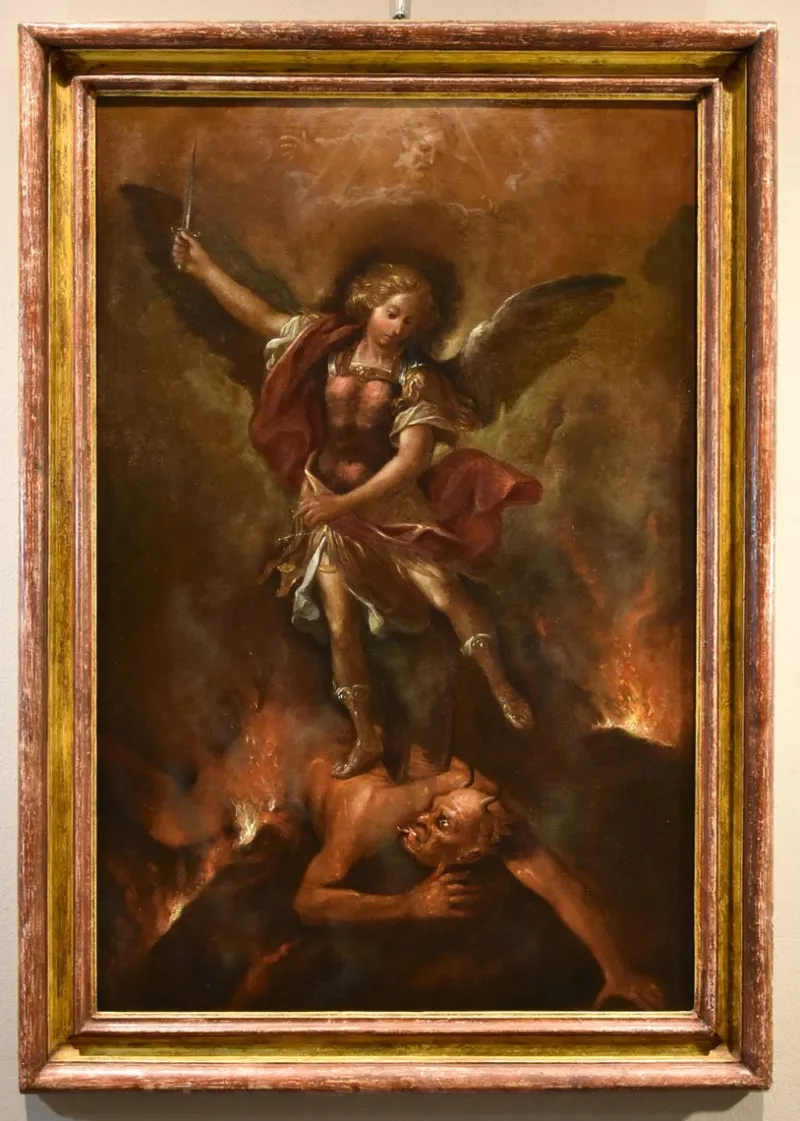
Outlet Pamono Roman Artist, Saint Michael the Archangel, 1700, Oil on Canvas, Framed
$132.89
Saint Michael the Archangel VictoriousRoman painter, 17th-18th centuryOil on canvas (112 x 74 cm – Framed 128 x 91 cm)Th…
Roman painter, 17th-18th century
Oil on canvas (112 x 74 cm – Framed 128 x 91 cm)
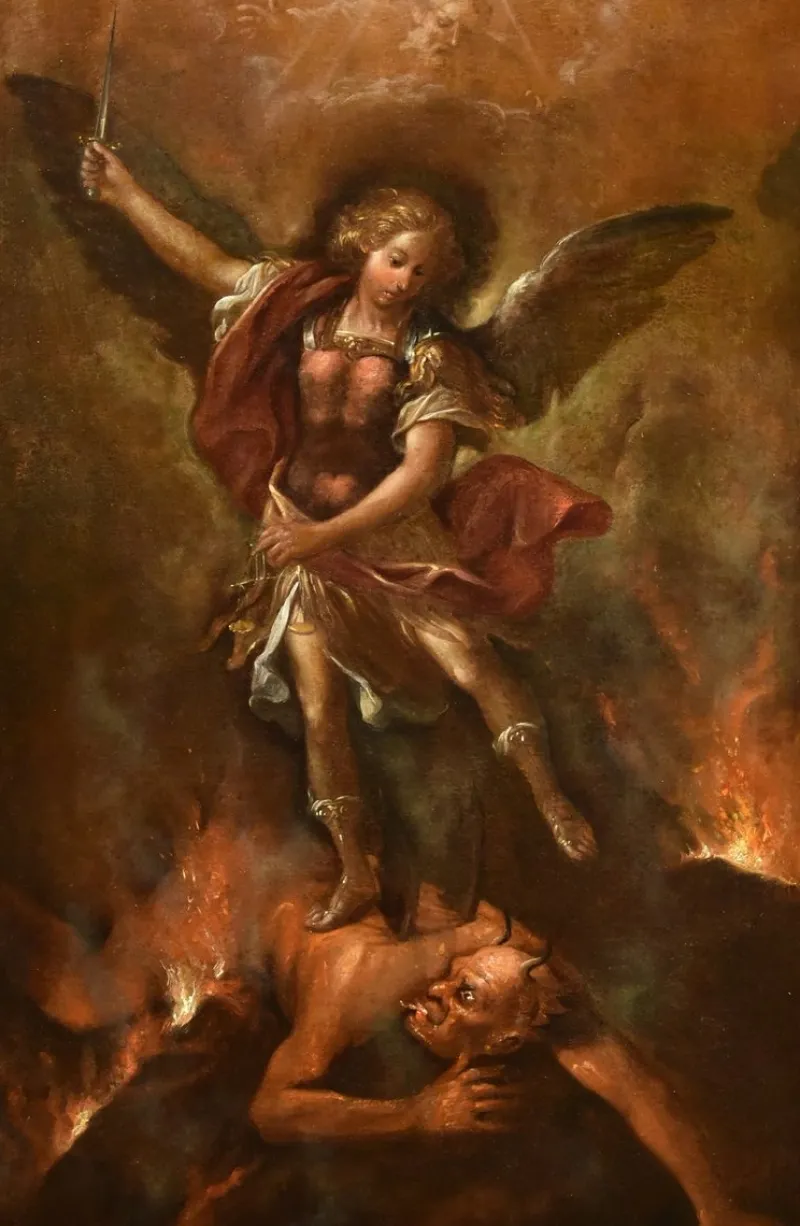
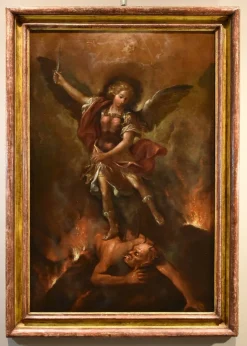
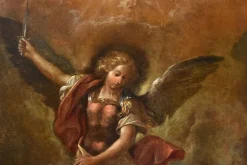
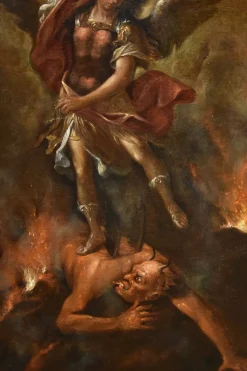
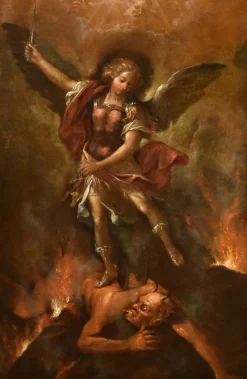
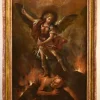
This interesting Saint Michael the Archangel Subduing the Devil is a powerful work by a Roman painter active between the 17th and 18th centuries, distinguished by a still baroque style that is particularly powerful and visually striking.
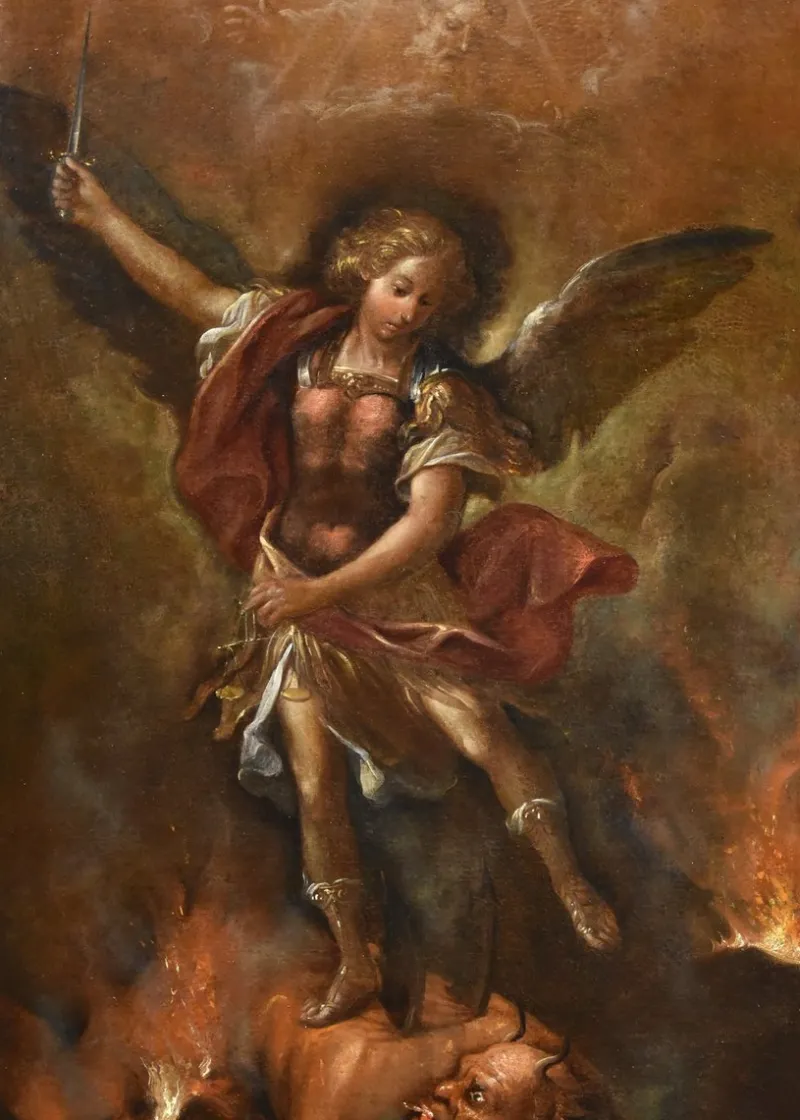
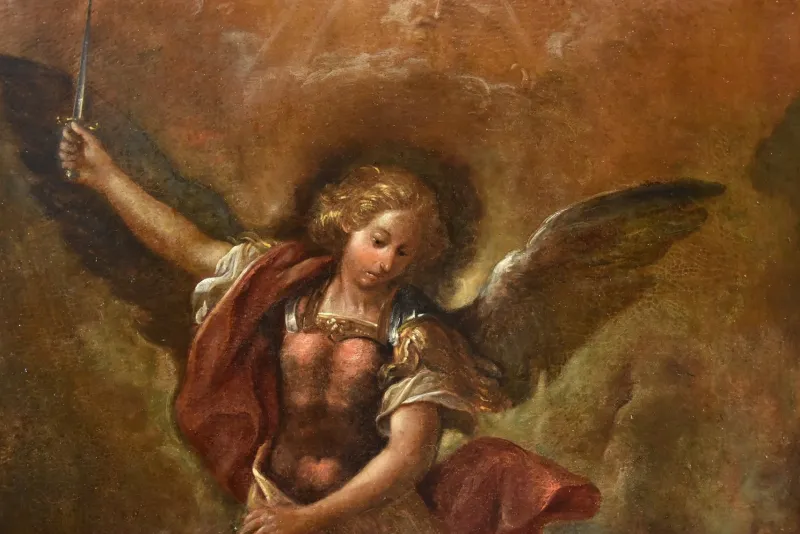
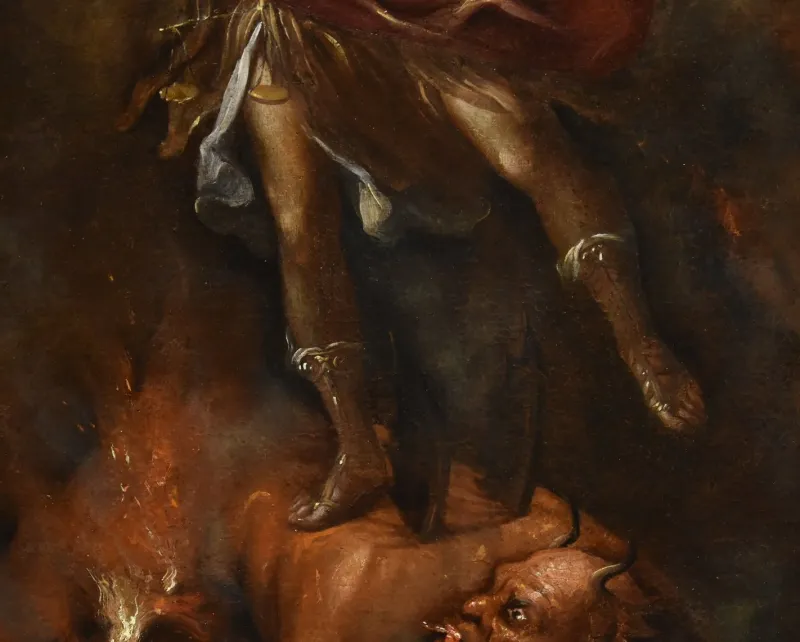
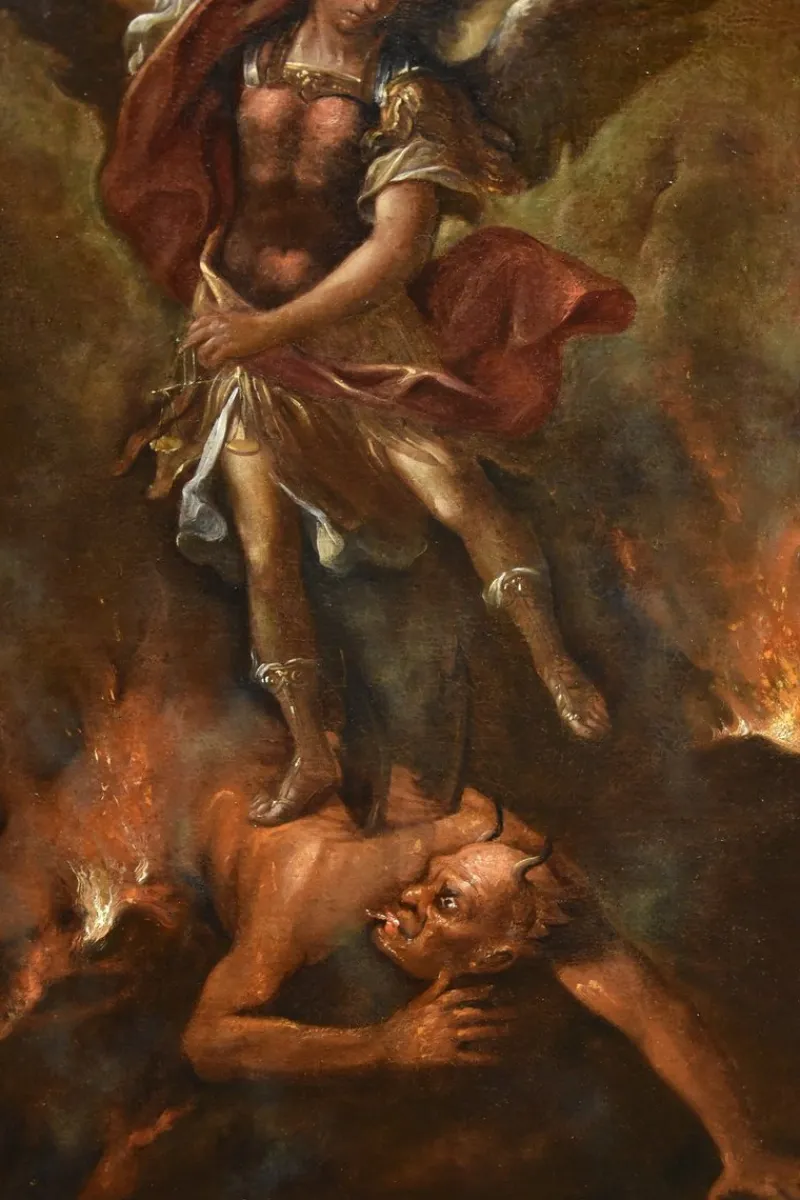
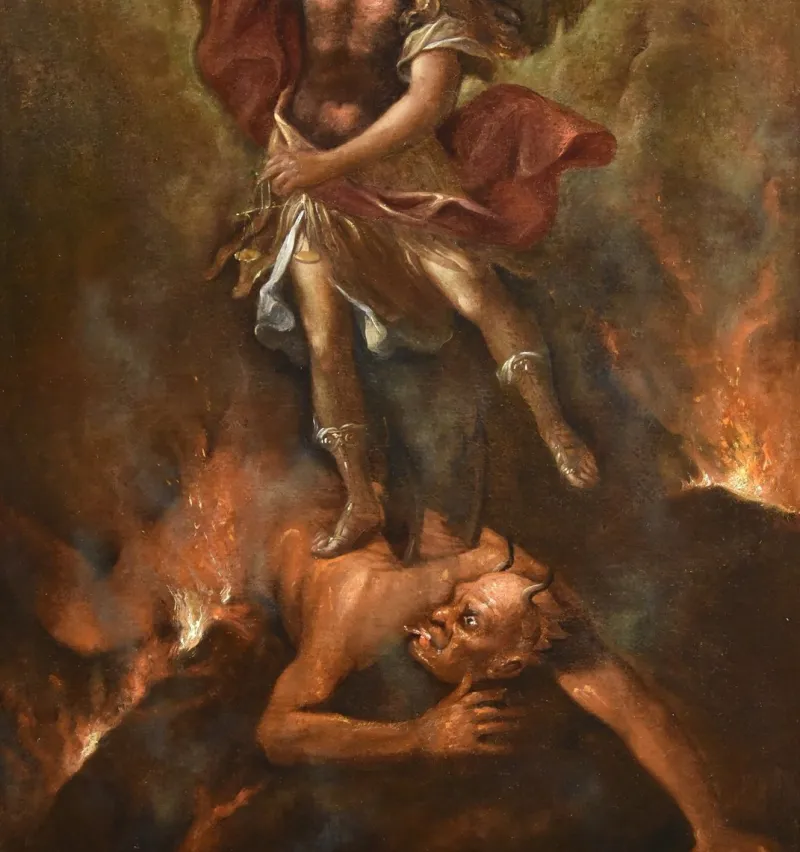
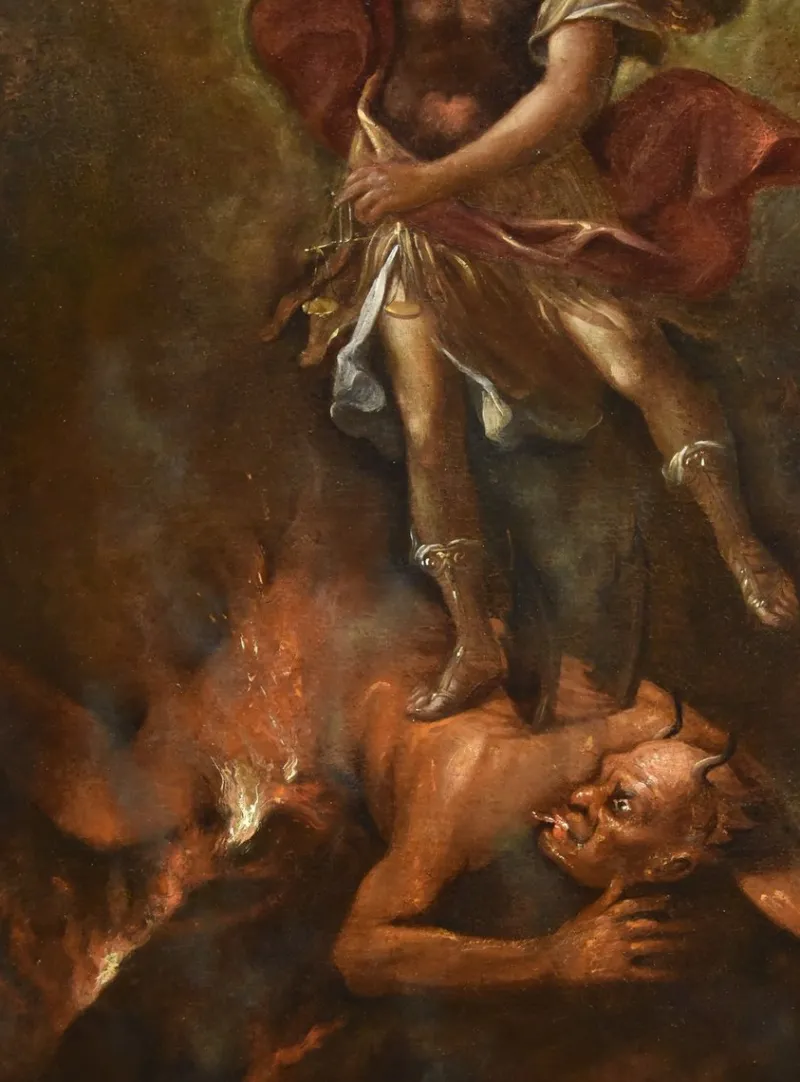
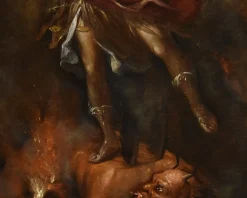
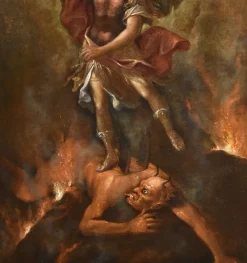
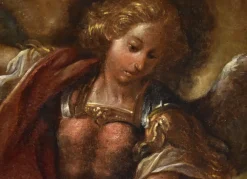
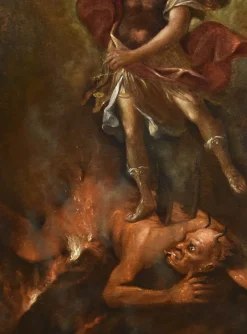
The composition follows the traditional iconographic scheme: the angel with outstretched wings, depicted as a youth of ethereal beauty, resembles a warrior, both strong and delicate, grasping his sword, ready to strike the victory blow at the rebel angel, lying at his feet in the flames of hell.
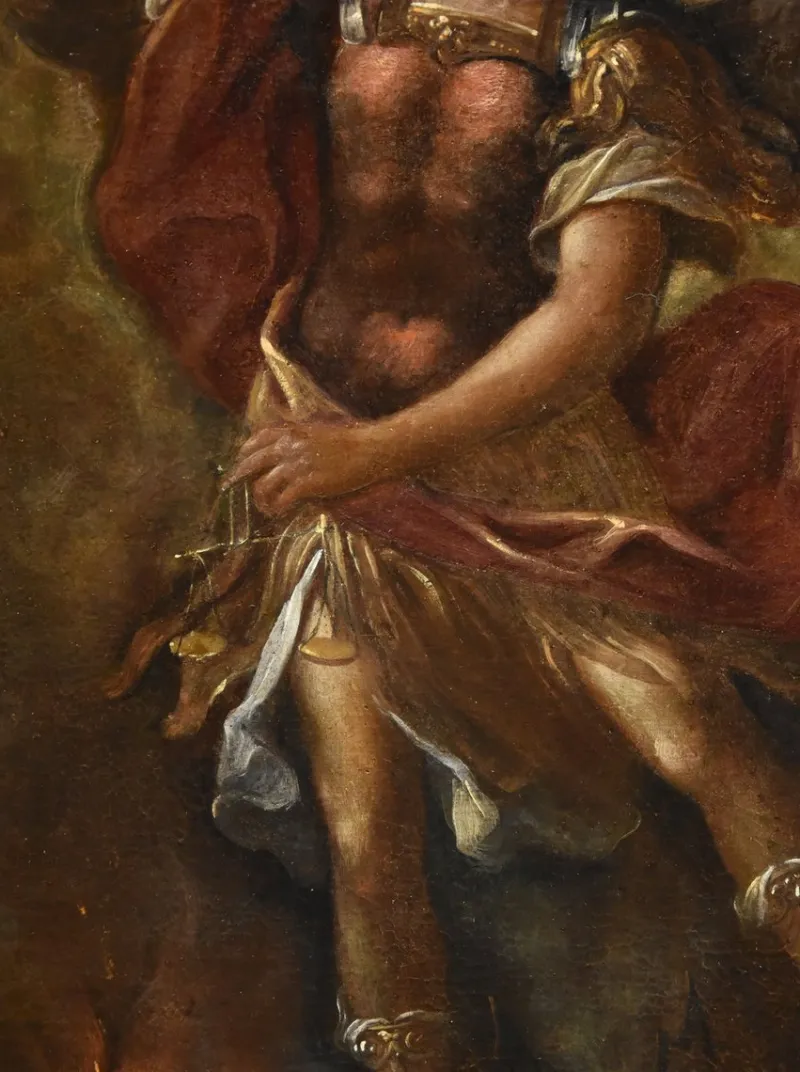
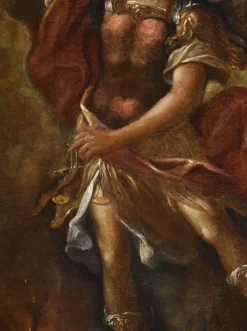
with his other hand, he holds the scales, his signature attribute, also alluding to his role in the Last Judgment, where he will use this instrument to “weigh” souls: for the elect, there will be the ascension to Heaven towards God the Father, depicted at the top of the canvas, while for the damned, the fall into the fires of hell.
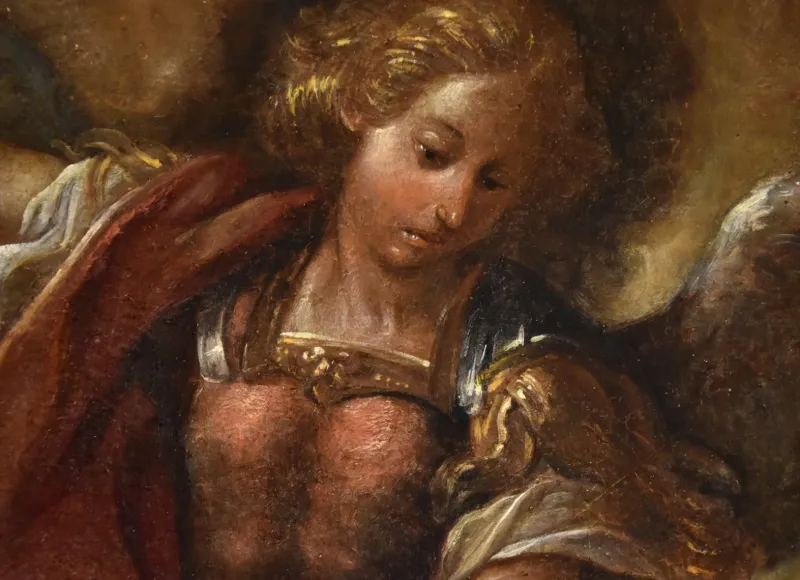
As the supreme commander of the angelic hosts, the figure of Saint Michael embodies a powerful symbolism, representing the victory of Good over Evil: we see him beautiful and with a serene face, symbolizing goodness, while the demon appears on the ground, submissive, in pain, in a contorted pose and with a tense gaze, recalling his wickedness.
The stylistic features of the painting demonstrate its belonging to Roman figurative culture, undoubtedly influenced in its iconographic choice by the famous Saint Michael the Archangel created by Guido Reni in 1635 for the Capuchin Church on Via Veneto in Rome (fig. 1).
Indeed, it mirrors the pose of the body, with the distinctive twist of the torso pivoting on the right foot, with that unmistakable style characterized by its elegance and softness, which made it a model of ideal beauty, so much so that numerous contemporary artists replicated the composition to satisfy collectors of the time.
Among these, along with another painting certainly inspiring for our painter, we can mention the Saint Michael the Archangel created by Guercino in 1644 for the church of San Nicolò in Fabriano (fig. 2). It was inspired by the beauty of Reni’s painting, but translated the same subject with a more dramatic tone, which we find clearly in our canvas.
The work is in good condition. It is completed by a beautiful gilded and lacquered wooden frame.
ADDITIONAL INFORMATION:
The painting comes with a certificate of authenticity and a descriptive iconographic sheet.
The seller assumes all responsibility for this listing.
About This Piece
Roman painter, 17th-18th century
Oil on canvas (112 x 74 cm – Framed 128 x 91 cm)
This interesting Saint Michael the Archangel Subduing the Devil is a powerful work by a Roman painter active between the 17th and 18th centuries, distinguished by a still baroque style that is particularly powerful and visually striking.
The composition follows the traditional iconographic scheme: the angel with outstretched wings, depicted as a youth of ethereal beauty, resembles a warrior, both strong and delicate, grasping his sword, ready to strike the victory blow at the rebel angel, lying at his feet in the flames of hell.
with his other hand, he holds the scales, his signature attribute, also alluding to his role in the Last Judgment, where he will use this instrument to “weigh” souls: for the elect, there will be the ascension to Heaven towards God the Father, depicted at the top of the canvas, while for the damned, the fall into the fires of hell.
As the supreme commander of the angelic hosts, the figure of Saint Michael embodies a powerful symbolism, representing the victory of Good over Evil: we see him beautiful and with a serene face, symbolizing goodness, while the demon appears on the ground, submissive, in pain, in a contorted pose and with a tense gaze, recalling his wickedness.
The stylistic features of the painting demonstrate its belonging to Roman figurative culture, undoubtedly influenced in its iconographic choice by the famous Saint Michael the Archangel created by Guido Reni in 1635 for the Capuchin Church on Via Veneto in Rome (fig. 1).
Indeed, it mirrors the pose of the body, with the distinctive twist of the torso pivoting on the right foot, with that unmistakable style characterized by its elegance and softness, which made it a model of ideal beauty, so much so that numerous contemporary artists replicated the composition to satisfy collectors of the time.
Among these, along with another painting certainly inspiring for our painter, we can mention the Saint Michael the Archangel created by Guercino in 1644 for the church of San Nicolò in Fabriano (fig. 2). It was inspired by the beauty of Reni’s painting, but translated the same subject with a more dramatic tone, which we find clearly in our canvas.
The work is in good condition. It is completed by a beautiful gilded and lacquered wooden frame.
ADDITIONAL INFORMATION:
The painting comes with a certificate of authenticity and a descriptive iconographic sheet.
Click here for full descriptionClose description
| Period | Before 1890 |
|---|---|
| Year | 1700 |
| Production Period | Before 1890 |
| Country of Manufacture | Italy |
| Identifying Marks | This piece is attributed to the above-mentioned designer/maker. It has no attribution mark |
| Style | Classical, Figurative, Gothic, Italian, Louis XIV, Medieval, Mediterranean, Old Masters, Portraiture, Antique, Baroque |
| Detailed Condition | Good — This vintage/antique item may have some wear such as scratches and other signs of ageing. |
| Restoration and Damage Details | Light wear consistent with age and use, Patina consistent with age and use, Reupholstered, Partially restored |
| Product Code | CYT-2287048 |
| Materials | Oil on Canvas |
| Color | Multicolored |
| Width | 91 cm 35.8 inch |
| Depth | 12 cm 4.7 inch |
| Height | 128 cm 50.4 inch |
Be the first to review “Outlet Pamono Roman Artist, Saint Michael the Archangel, 1700, Oil on Canvas, Framed”
Related products
Cabinets & Wardrobes



Children's Chairs
Beds & Bedroom Sets
Dressers, Commodes & Chests
Login
Reviews
There are no reviews yet.