
New Pamono Lombard School Artist, Christ on the Column, 1580, Oil on Board, Framed
$136.99
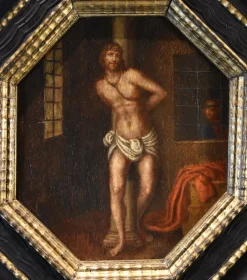
16th-Century Lombard School – Christ at the ColumnOil on octagonal panel24 x 21 cm. – Framed 42 x 39 cm.The painting, ri…
Oil on octagonal panel
24 x 21 cm. – Framed 42 x 39 cm.
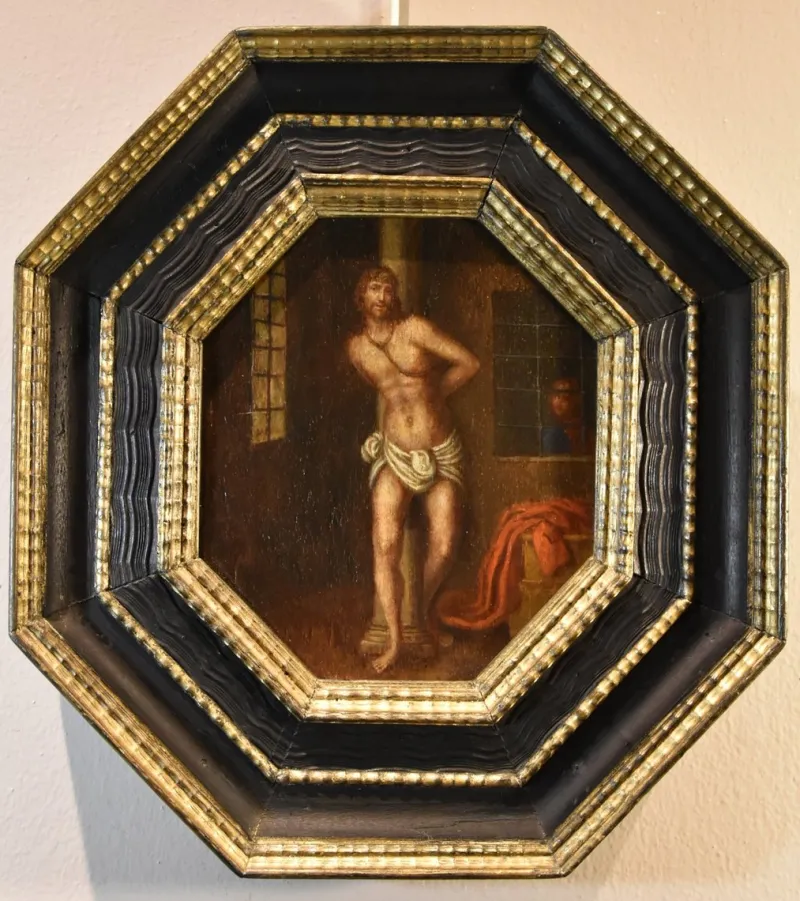
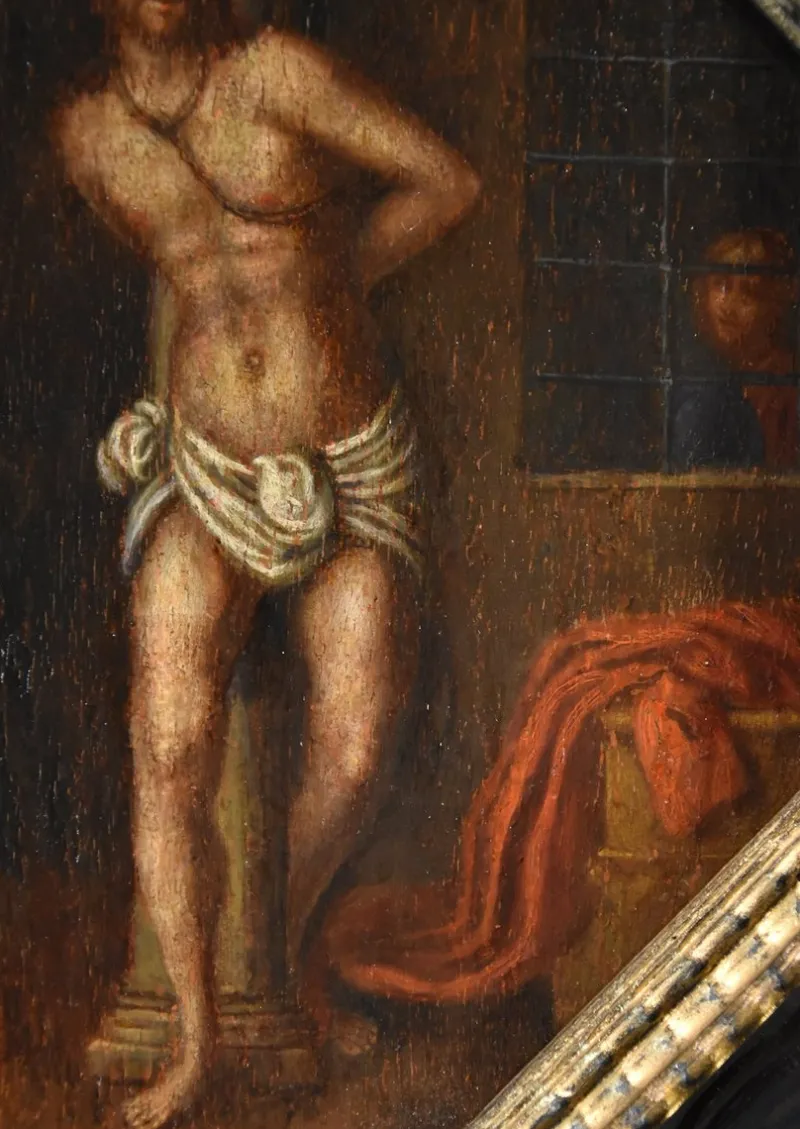
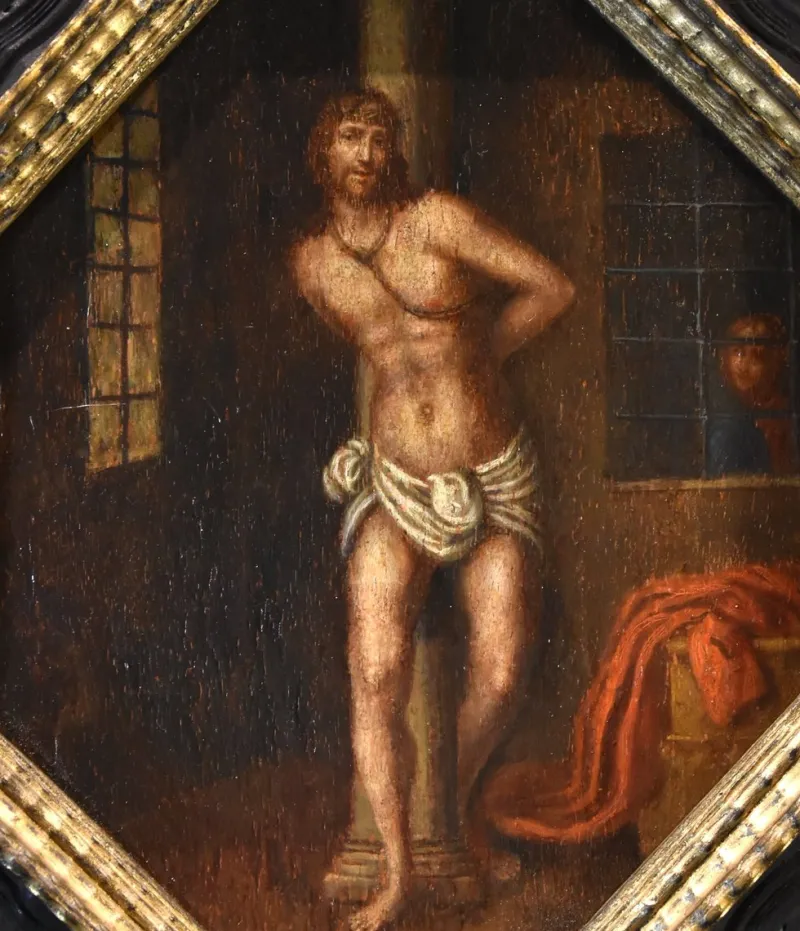
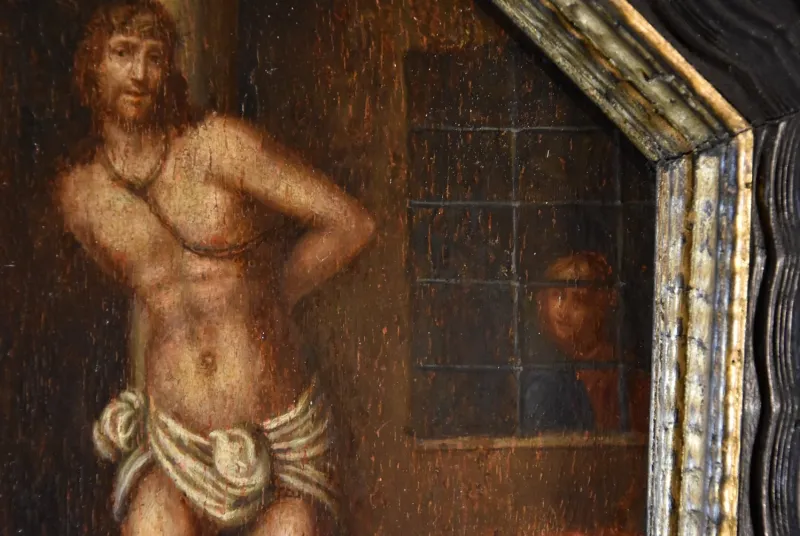
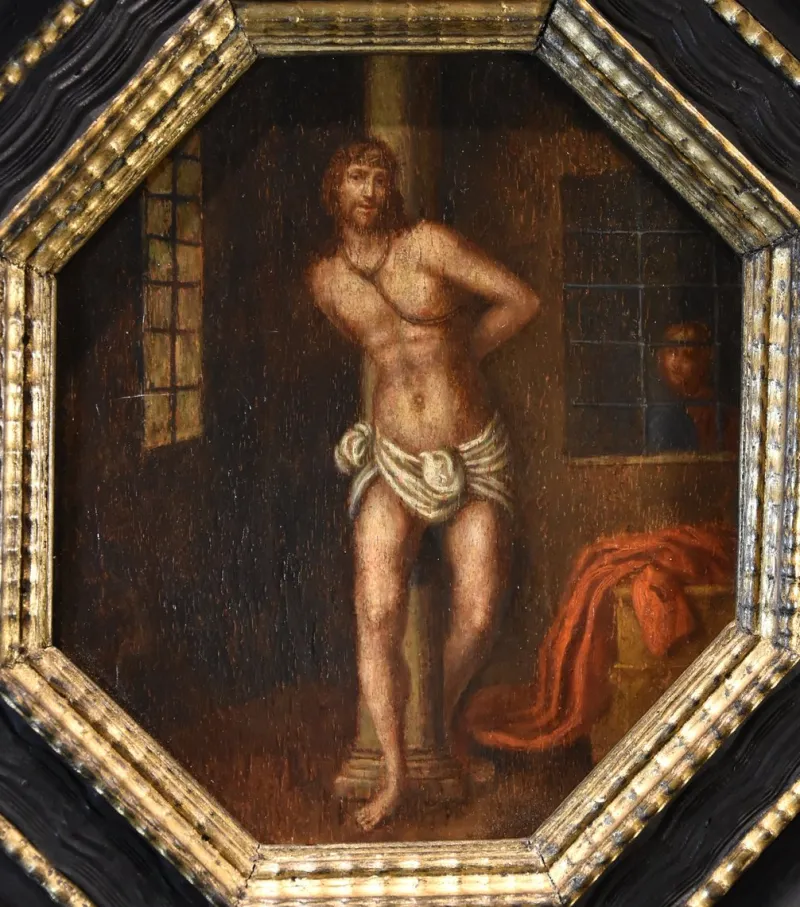
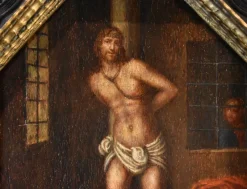
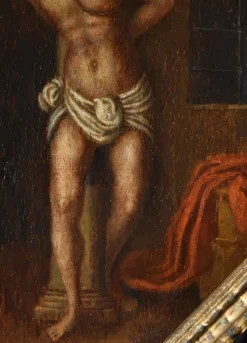
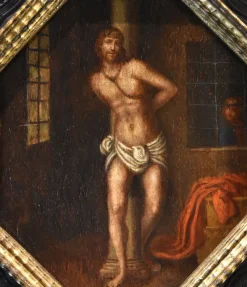
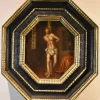
The painting, rich in pathos and strong spirituality, depicts a moment from the Passion: “Christ at the Column,” a recurring iconographic subject in Christian art, depicting Jesus bound during the flagellation, an episode narrated in the Gospels.
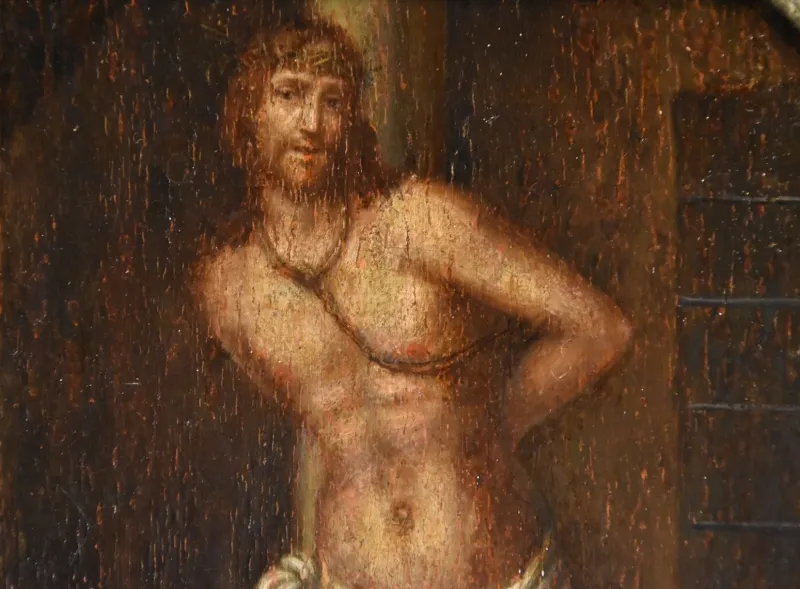
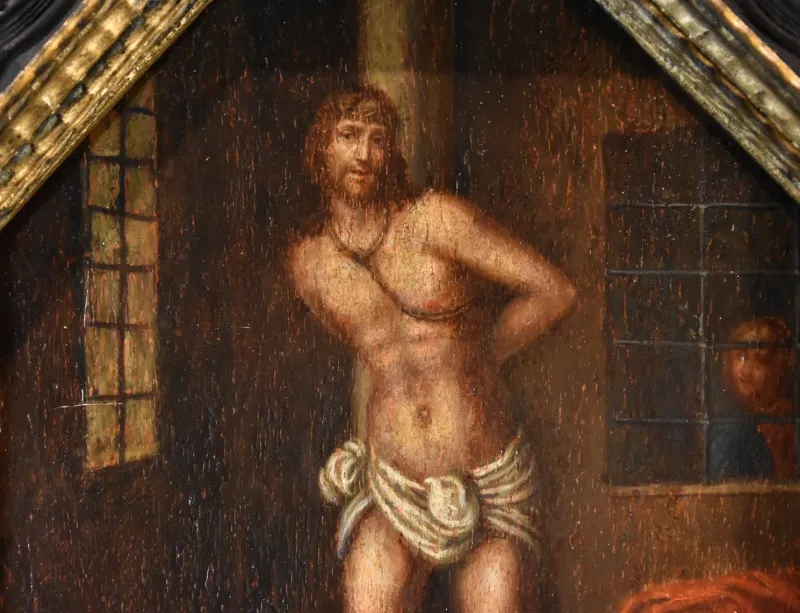
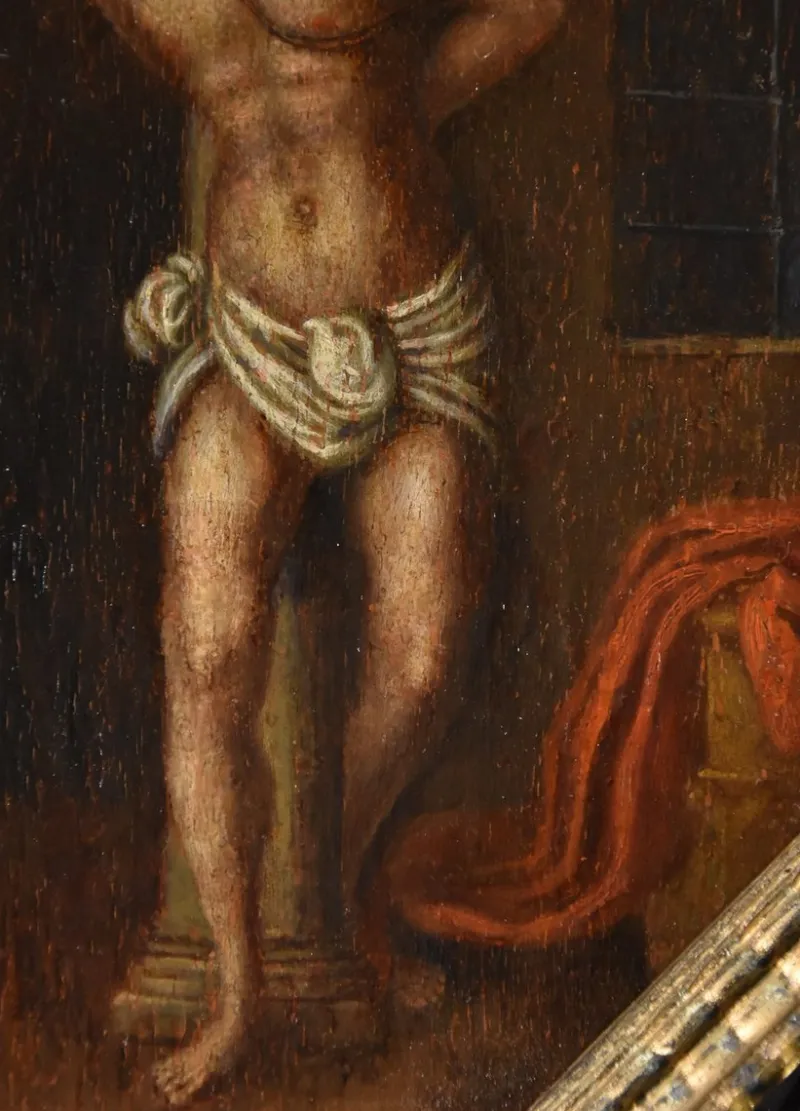
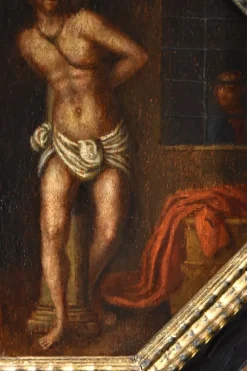
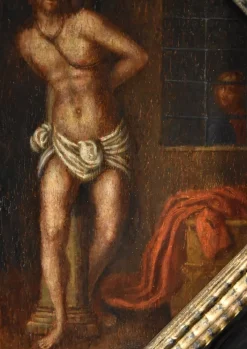
The body of Christ, still bound in a prison cell, is here portrayed full-length and modeled with strong chiaroscuro. This is a fine example of late Renaissance painting from Northern Italy in the Lombardy region, reminiscent of 16th-century models and presumably based on a model by Giampietrino.
A similar, larger painting is housed in the Church of Sant’Alessandro in Milan.
“Christ at the Column” is an image charged with religious meaning, evoking physical and spiritual suffering. We see him with an expression of quiet suffering; his acceptance of fate is an example of divine mercy and love, a central message in Christian theology.
The symbolism it embodies is also interesting: the column itself represents not only the instrument of punishment, but also a symbol of stability and moral strength, which for the faithful represents Christ’s unwavering faith.
The window on the left, which plays a crucial role in illuminating the scene and emphasizing the approach of the divine call, is also a symbol of openness to grace and the action of Christ.
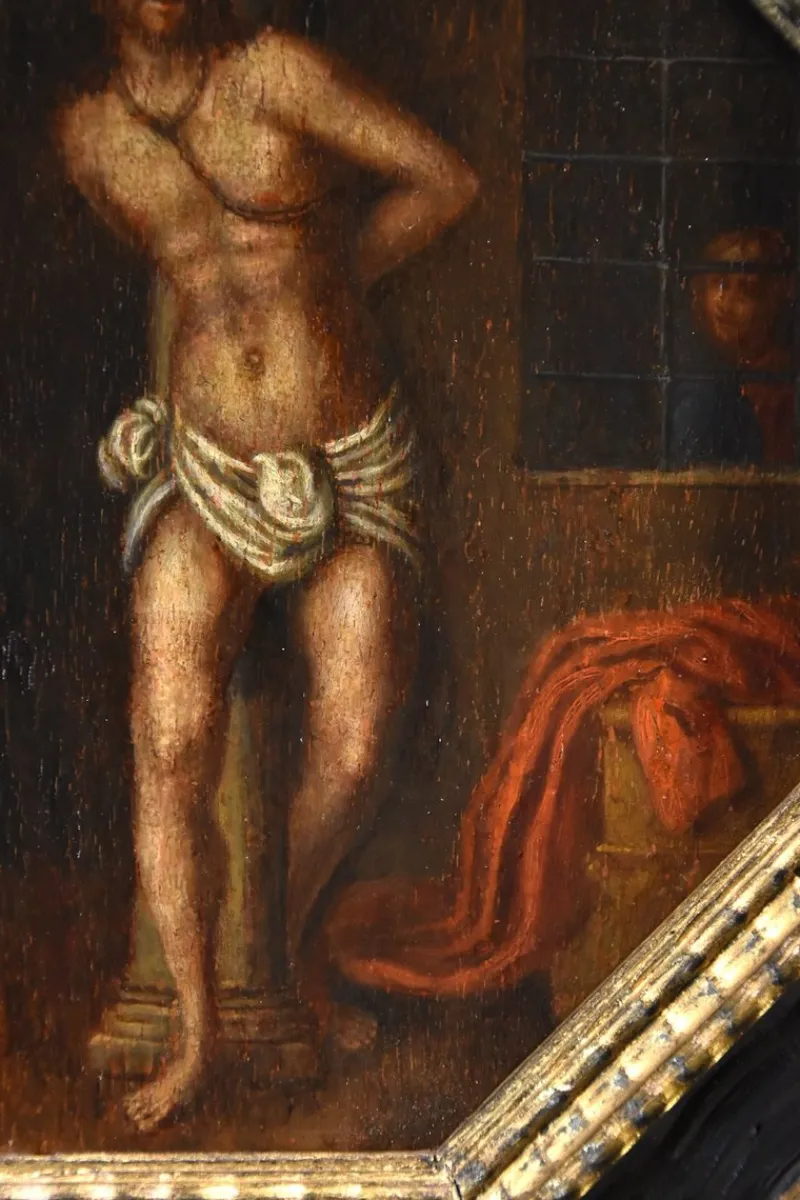
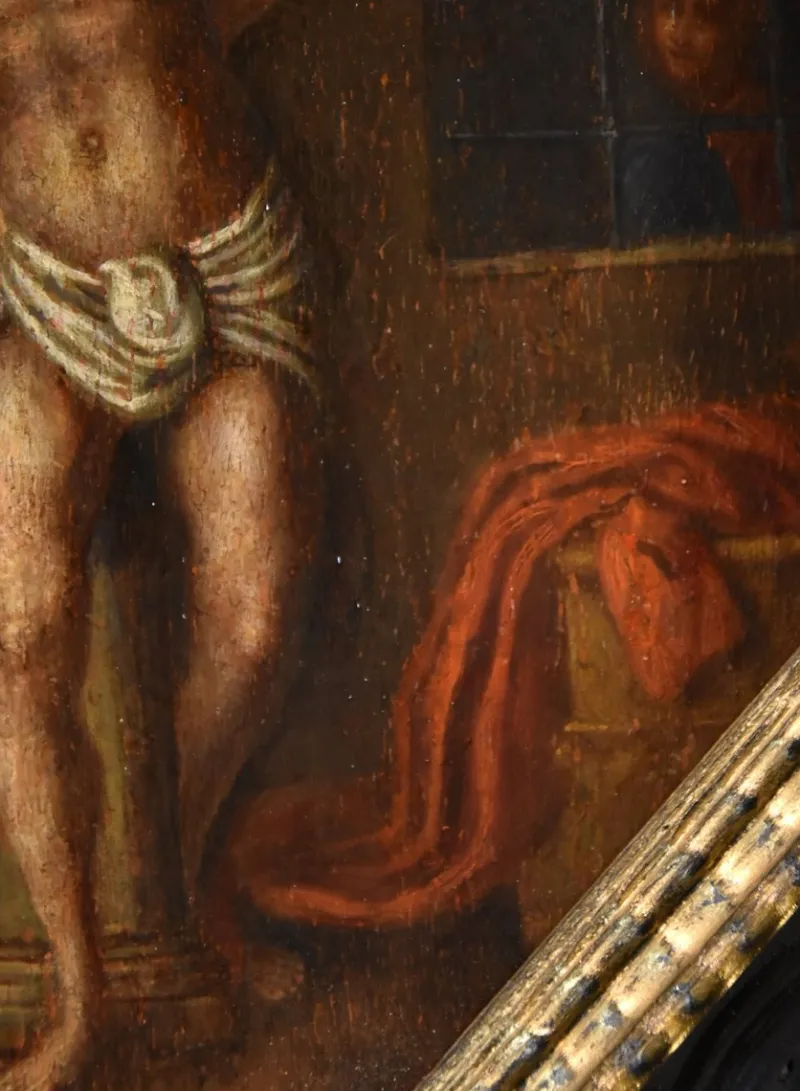
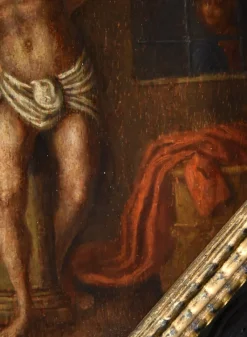
Finally, there is the red cloth that was used to wrap Christ, a symbol of his passion and the blood he shed, alluding to his physical and spiritual suffering during his Passion.
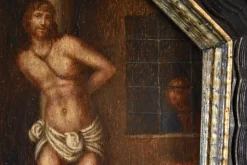
Although the iconography of “Christ at the Column” rarely features other figures, in our case, the subtle presence of the Virgin Mary is interesting; not at his side but behind grates, spiritually present in her son’s suffering, highlighting the strong bond between mother and son, even during the most painful ordeal.
ADDITIONAL INFORMATION:
The work is framed and is sold with a certificate of authenticity and a descriptive iconographic sheet.
The seller assumes all responsibility for this listing.
About This Piece
Oil on octagonal panel
24 x 21 cm. – Framed 42 x 39 cm.
The painting, rich in pathos and strong spirituality, depicts a moment from the Passion: “Christ at the Column,” a recurring iconographic subject in Christian art, depicting Jesus bound during the flagellation, an episode narrated in the Gospels.
The body of Christ, still bound in a prison cell, is here portrayed full-length and modeled with strong chiaroscuro. This is a fine example of late Renaissance painting from Northern Italy in the Lombardy region, reminiscent of 16th-century models and presumably based on a model by Giampietrino.
A similar, larger painting is housed in the Church of Sant’Alessandro in Milan.
“Christ at the Column” is an image charged with religious meaning, evoking physical and spiritual suffering. We see him with an expression of quiet suffering; his acceptance of fate is an example of divine mercy and love, a central message in Christian theology.
The symbolism it embodies is also interesting: the column itself represents not only the instrument of punishment, but also a symbol of stability and moral strength, which for the faithful represents Christ’s unwavering faith.
The window on the left, which plays a crucial role in illuminating the scene and emphasizing the approach of the divine call, is also a symbol of openness to grace and the action of Christ.
Finally, there is the red cloth that was used to wrap Christ, a symbol of his passion and the blood he shed, alluding to his physical and spiritual suffering during his Passion.
Although the iconography of “Christ at the Column” rarely features other figures, in our case, the subtle presence of the Virgin Mary is interesting; not at his side but behind grates, spiritually present in her son’s suffering, highlighting the strong bond between mother and son, even during the most painful ordeal.
ADDITIONAL INFORMATION:
The work is framed and is sold with a certificate of authenticity and a descriptive iconographic sheet.
Click here for full descriptionClose description
| Period | Before 1890 |
|---|---|
| Year | 1580 |
| Production Period | Before 1890 |
| Country of Manufacture | Italy |
| Identifying Marks | This piece is attributed to the above-mentioned designer/maker. It has no attribution mark |
| Style | Classical, Figurative, Italian, Louis XIV, Mediterranean, Old Masters, Religious, Renaissance, Antique, Baroque, Rococo |
| Detailed Condition | Good — This vintage/antique item may have some wear such as scratches and other signs of ageing. |
| Restoration and Damage Details | Light wear consistent with age and use, Patina consistent with age and use, Reupholstered, Partially restored |
| Product Code | CYT-2315014 |
| Materials | Oil on Board |
| Color | Multicolored |
| Width | 39 cm 15.4 inch |
| Depth | 12 cm 4.7 inch |
| Height | 42 cm 16.5 inch |
Be the first to review “New Pamono Lombard School Artist, Christ on the Column, 1580, Oil on Board, Framed”
Related products




Daybeds & Chaises Lounges




Coffee & Side Tables
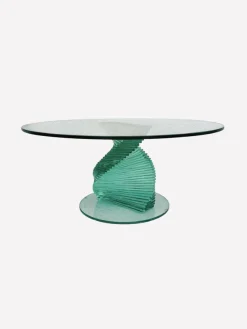
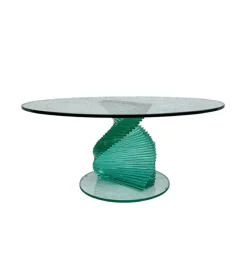
Sale Pamono Helix Spiral Sculptural Glass Coffee Table in the style of Danny Lane, 1980s




Dressers, Commodes & Chests

Beds & Bedroom Sets


Cabinets & Wardrobes
Login
Reviews
There are no reviews yet.